


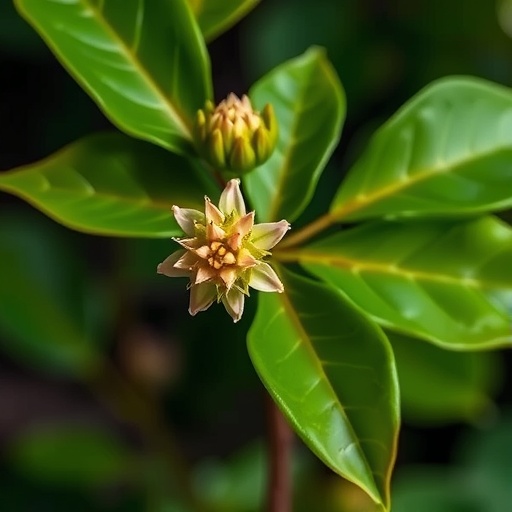
In a groundbreaking development in the fight against one of the most aggressive brain cancers, glioblastoma multiforme, researchers have turned to nature’s pharmacy to explore innovative treatment avenues. A recent in vitro study has demonstrated promising anti-glioblastoma effects of methanolic fruit extracts derived from Emblica officinalis, commonly known as Indian gooseberry or amla, alongside green-synthesized nanoparticles. This research offers a beacon of hope for patients facing limited treatment options and grim prognoses.
The investigation utilized U87-MG cells, a well-established human glioblastoma cell line, to evaluate the therapeutic potential of Emblica officinalis methanolic fruit extract and its nanoparticle formulation. Glioblastoma is notoriously resistant to conventional therapies, underscoring the urgent need for novel approaches. The research team employed sophisticated in vitro assays to assess cytotoxicity, apoptosis induction, and molecular pathway modulation, with results indicating multifaceted mechanisms of tumor suppression.
Amla, employed traditionally in Ayurvedic medicine, has long been recognized for its rich composition of bioactive compounds, including tannins, flavonoids, and vitamin C. The study capitalized on the antioxidant and anti-inflammatory properties inherent in the fruit, hypothesizing that these phytochemicals could exert synergistic effects against glioblastoma cells. The methanolic extraction ensured a concentrated phytochemical profile, enhancing therapeutic efficacy.
Remarkably, the study highlights that green nanoparticle synthesis from the methanolic extract further amplifies the anticancer potential. Green nanoparticles harness plant-based materials to reduce metal ions, resulting in biocompatible nanostructures that can facilitate targeted drug delivery and improve cellular uptake. This biogenic approach addresses toxicity concerns often associated with chemically synthesized nanoparticles, marking an elegant convergence of nanotechnology and phytotherapy.
The researchers meticulously characterized the nanoparticles using advanced techniques such as transmission electron microscopy and dynamic light scattering to determine size distribution and surface morphology. These parameters are critical as they influence cellular interaction, biodistribution, and therapeutic outcomes. The synthesized nanoparticles demonstrated a spherical morphology with a size range conducive to efficient penetration of cellular membranes, including the restrictive blood-brain barrier.
Functional assays revealed that both the methanolic extract alone and its nanoparticle-conjugated form induced significant apoptosis in U87-MG cells. The underlying molecular mechanisms involved modulation of key apoptotic regulators such as caspases and Bcl-2 family proteins, shifting the balance towards programmed cell death. This apoptotic induction is pivotal, given that glioblastoma cells often evade apoptosis, contributing to their aggressive nature.
Moreover, the data elucidated a marked increase in reactive oxygen species (ROS) generation within treated glioblastoma cells. Elevated ROS levels disrupt cellular homeostasis and inflict oxidative stress, leading to mitochondrial dysfunction and cell cycle arrest. The enhanced ROS production underscores the extract’s pro-oxidant activity selectively toxic to cancer cells while sparing normal tissues, a feature highly desirable in anticancer therapeutics.
Further exploration revealed that the treatments also inhibited critical signaling pathways that sustain glioblastoma cell proliferation and invasion, specifically targeting the PI3K/Akt/mTOR axis. Dysregulation of this pathway is a hallmark of glioblastoma’s malignancy, driving tumor growth and resistance to therapy. By attenuating these signals, the extract and nanoparticles curtailed the aggressive phenotype of U87-MG cells.
An intriguing aspect of this work is the comparison between the free methanolic extract and its nanoparticle-bound counterpart. The nanocarriers markedly enhanced bioavailability and cytotoxic efficacy, emphasizing the importance of formulation strategies in natural product-based drug development. Nanoparticle-mediated delivery ensures sustained release and improved penetration, potentially addressing the challenge of drug resistance and tumor heterogeneity characteristic of glioblastoma.
Safety profiles were also assessed by examining the effects on non-cancerous glial cells, revealing minimal cytotoxicity, thereby establishing a therapeutic window. This selective cytotoxicity is vital for clinical translation, as preserving healthy brain tissue during anticancer intervention remains a paramount concern. The biocompatible nature of both the extract and green nanoparticles heralds a promising step towards safe, effective glioblastoma therapies.
This comprehensive investigation, conducted in vitro, lays a rigorous foundation for subsequent in vivo studies and clinical trials. The combination of traditional botanical knowledge with cutting-edge nanotechnology embodies a multidisciplinary approach to cancer treatment that could revolutionize current paradigms. Emblica officinalis methanolic fruit extract and its green nanoparticles represent a novel class of anticancer agents with enhanced potency and specificity.
Experts in neuro-oncology and pharmacognosy alike are lauding these findings for their innovation and potential impact. Given glioblastoma’s dismal five-year survival rate, the urgency for therapeutics that can bypass or disrupt tumor defense mechanisms cannot be overstated. Harnessing natural compounds in sophisticated delivery systems offers an exciting frontier in oncological research.
Importantly, this study contributes to the growing body of evidence supporting plant-based nanomedicine as a viable strategy against challenging malignancies. The scalability and sustainability of green nanoparticle synthesis further add to its appeal, suggesting that such treatments could be developed at a reasonable cost and with reduced environmental burden—a crucial consideration in global healthcare.
While the leap from petri dish to patient involves considerable challenges, including pharmacokinetic profiling, biodistribution, and immune interactions, this research represents a compelling start. The elucidation of precise molecular targets and mechanisms provides a roadmap for optimizing formulations and dosages to maximize clinical efficacy while minimizing side effects.
In conclusion, the innovative blend of Emblica officinalis methanolic fruit extract and green nanoparticle technology embodies a paradigm shift in glioblastoma treatment research. By integrating phytochemistry and nanoscience, this study not only illuminates novel therapeutic pathways but also invigorates hope for more effective, targeted, and less toxic interventions against a devastating brain tumor.
Cite Scienmag News
Nathaniel Bowman. (October 14, 2025). Emblica officinalis Extract Shows Anti-Glioblastoma Effects In Vitro. Scienmag. https://scienmag.com/emblica-officinalis-extract-shows-anti-glioblastoma-effects-in-vitro/
Nathaniel Bowman. "Emblica officinalis Extract Shows Anti-Glioblastoma Effects In Vitro." Scienmag, 14 October 2025, https://scienmag.com/emblica-officinalis-extract-shows-anti-glioblastoma-effects-in-vitro/. Accessed 5 September 2026.
Nathaniel Bowman. "Emblica officinalis Extract Shows Anti-Glioblastoma Effects In Vitro." Scienmag. October 14, 2025. https://scienmag.com/emblica-officinalis-extract-shows-anti-glioblastoma-effects-in-vitro/


