


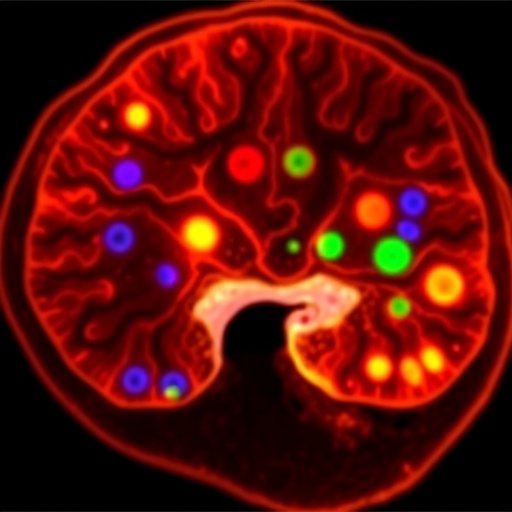
A groundbreaking study conducted by researchers at Umeå University and Karolinska Institutet in Sweden has unveiled a pivotal role of the protein HIF2α in modulating the aggressive nature of neuroblastoma, a childhood cancer impacting the sympathetic nervous system. This discovery challenges long-held assumptions about the protein’s function and opens new avenues for understanding tumor biology and potential therapeutic interventions.
Neuroblastoma primarily affects young children and arises from immature nerve cells of the sympathetic nervous system, which controls involuntary bodily functions such as heart rate and blood pressure. The disease is notoriously heterogeneous, ranging from spontaneous regression to aggressive forms marked by rapid proliferation and poor prognosis. Of particular concern are tumors containing multiple copies of the MYCN gene, a well-established oncogene that drives tumor aggressiveness and resistance to treatment.
In this innovative research, the investigative team focused on the protein hypoxia-inducible factor 2 alpha (HIF2α), encoded by the EPAS1 gene. HIF2α is traditionally recognized for its role in cellular response to low oxygen levels, or hypoxia, often contributing to tumor adaptation and survival. Contrary to previous beliefs suggesting a pro-tumorigenic role, the new findings reveal that high levels of HIF2α actually attenuate MYCN protein expression in neuroblastoma cells, thereby suppressing malignant progression.
Experimental induction of elevated HIF2α in neuroblastoma cells harboring MYCN amplification resulted in a stark decrease in MYCN protein levels. Simultaneously, there was an upregulation of genes characteristic of mature noradrenergic cells, which are specialized nerve cells in the adrenal medulla responsible for producing neurotransmitters such as noradrenaline. This gene expression shift signals differentiation of the tumor cells into a less aggressive, more benign phenotype.
Furthermore, these cells displayed morphological changes consistent with maturation, including the development of extended cellular projections, and a significant reduction in proliferation rates. Such differentiation is crucial because mature sympathetic nervous system cells typically exhibit reduced malignancy compared to their proliferative, undifferentiated precursors. This phenotypic transition aligns with a fundamental principle in cancer biology: inducing differentiation can mitigate tumor growth and invasiveness.
The team validated their in vitro findings using a well-established mouse model of neuroblastoma. Tumors with experimentally elevated HIF2α levels demonstrated markedly slower growth, indicating a functional tumor-suppressing effect of the protein in vivo. These preclinical outcomes underscore the translational potential of manipulating HIF2α pathways to develop innovative treatment strategies for high-risk neuroblastoma patients.
Corroborating the experimental results, patient sample analysis revealed a strong inverse correlation between EPAS1 gene expression and MYCN protein levels. Tumors expressing high EPAS1 showed molecular signatures typical of more differentiated sympatic nervous system cells and were associated with improved clinical outcomes. This association positions EPAS1 expression as a prospective prognostic biomarker for neuroblastoma, especially in cases with MYCN amplification.
Critically, this study redefines the biological role of HIF2α in neuroblastoma tumorigenesis and contradicts earlier hypotheses that labeled it strictly as a cancer promoter under hypoxic conditions. Instead, HIF2α emerges as a context-dependent modulator that can suppress oncogenic drivers and foster tumor cell differentiation, thereby attenuating disease severity.
Despite the promising mechanistic insights, the researchers emphasize that these findings represent preliminary steps towards therapeutic applications. The complexity of neuroblastoma pathology and the multifaceted roles of HIF proteins in cellular metabolism necessitate extensive future research to harness this axis therapeutically without unintended consequences.
Johan Holmberg, professor of molecular tumor biology at Umeå University and lead author of the study, notes, “Our work illustrates the nuanced interplay between oncogenes and differentiation factors in neuroblastoma. Understanding how HIF2α downregulates MYCN and drives a noradrenergic, low-risk phenotype may revolutionize treatment paradigms, but clinical translation remains a significant challenge.”
Neuroblastoma remains a significant pediatric oncology challenge, constituting roughly six percent of childhood cancer cases. Advances in chemotherapy, surgery, and immunotherapy have elevated survival rates, yet outcomes for high-risk neuroblastoma patients with MYCN amplification remain suboptimal. The identification of molecular pathways that can convert aggressive tumors into less malignant states offers a beacon of hope in this landscape.
This research not only pioneers a novel understanding of neuroblastoma biology but also reinforces the concept that reprogramming tumor cells towards differentiation can be a powerful anti-cancer strategy. Targeting HIF2α or its downstream signaling pathways may thus represent a transformative approach to managing high-risk neuroblastomas, tailored to the tumor’s molecular profile.
In conclusion, the study’s revelations about HIF2α’s dualistic role challenge established dogma and exemplify the dynamic nature of cancer biology. By bridging molecular insights with clinical phenomena, the research charts a promising course for future therapies aimed at subduing one of the most challenging pediatric malignancies.
News Publication Date: 21-Oct-2025
Web References: http://dx.doi.org/10.1073/pnas.2516922122
Cite Scienmag News
Nathaniel Bowman. (October 23, 2025). Elevated Levels of Specific Protein Linked to Impaired Progression in High-Risk Pediatric Neuroblastoma. Scienmag. https://scienmag.com/elevated-levels-of-specific-protein-linked-to-impaired-progression-in-high-risk-pediatric-neuroblastoma/
Nathaniel Bowman. "Elevated Levels of Specific Protein Linked to Impaired Progression in High-Risk Pediatric Neuroblastoma." Scienmag, 23 October 2025, https://scienmag.com/elevated-levels-of-specific-protein-linked-to-impaired-progression-in-high-risk-pediatric-neuroblastoma/. Accessed 4 September 2026.
Nathaniel Bowman. "Elevated Levels of Specific Protein Linked to Impaired Progression in High-Risk Pediatric Neuroblastoma." Scienmag. October 23, 2025. https://scienmag.com/elevated-levels-of-specific-protein-linked-to-impaired-progression-in-high-risk-pediatric-neuroblastoma/


