


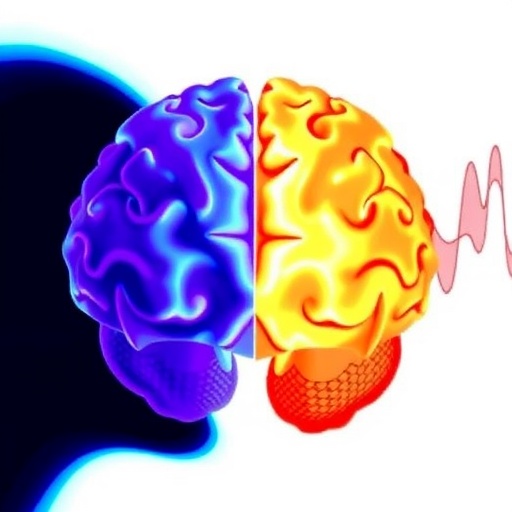
In the realm of neurodegenerative diseases, Alzheimer’s disease (AD) and Mild Cognitive Impairment (MCI) stand as two of the most pressing medical challenges of our time. Recent research conducted by a team comprising Rabie, Ghofrani, and Barghamadi, among others, has turned the spotlight on advanced signal processing techniques that could pave the way for early diagnosis and treatment options. Their study, titled “EFD in Comparison with EWT for Synthetic and EEG Signal Decomposition and Classification of Alzheimer’s Disease and Mild Cognitive Impairment,” has sparked considerable interest in the scientific community.
The study investigates two distinct methodologies: Empirical Fourier Decomposition (EFD) and Empirical Wavelet Transform (EWT), both of which serve as potent analytical tools for processing synthetic and electroencephalography (EEG) signals associated with AD and MCI. These methodologies are critical as they break down complex signals into more manageable components, allowing for a nuanced understanding of the brain’s electrical activity. This level of analysis is essential in discerning the subtle changes that occur in the brain as these debilitating conditions progress.
One of the key challenges researchers face in the study of Alzheimer’s and MCI is the complexity inherent in the EEG signals. These signals are a direct representation of neuronal activity, yet their multifaceted nature makes analysis difficult. To surmount this obstacle, Rabie et al. employed EFD and EWT to isolate significant features from the raw EEG data. By dissecting the signals into fundamental frequency components, the researchers were able to identify patterns that might indicate the presence of cognitive decline.
The empirical Fourier decomposition technique has gained traction for its effectiveness in removing noise from EEG records, thereby enhancing the signal-to-noise ratio. In this study, EFD was utilized to extract the most relevant oscillatory components from EEG signals, facilitating a clearer assessment of cognitive states. Such extraction is pivotal for developing reliable diagnostic tools that can accurately differentiate between healthy individuals and those at risk for AD or MCI.
Conversely, the empirical wavelet transform offers a robust alternative to traditional signal processing methods by allowing for both time and frequency localization. This dual capability makes it particularly suitable for analyzing non-stationary signals, such as those recorded during clinical EEG assessments. In this study, EWT was applied to pinpoint critical events and anomalies in EEG recordings, thereby offering insights into the temporal evolution of cognitive impairment.
One of the significant findings of Rabie and colleagues revealed that EFD and EWT could effectively classify EEG signals associated with AD against those of MCI. This classification could potentially lead to a better understanding of how these conditions manifest differently at the EEG level, thus aiding in tailored treatment strategies. By improving diagnostic accuracy, healthcare professionals could intervene earlier, potentially altering the disease trajectory for many patients.
The researchers also closely examined synthetic signals, which serve as a standardized method to test and refine analytical techniques before applying them to real-world data. By generating synthetic EEG signals that mimic the electrical activity of individuals with Alzheimer’s and MCI, the team was able to evaluate the performance of both EFD and EWT in a controlled environment. This comparison not only elucidated the strength and weaknesses of each technique but also provided a solid foundation for future research individuals.
Notably, the accuracy achieved by employing both methodologies demonstrated the potential to transform how neurologists and researchers approach the diagnosis of cognitive disorders. High sensitivity and specificity were reported, indicating that these methods could reduce the incidence of false positives and negatives in clinical settings. As a result, clinicians may rely on these advanced signal processing techniques in practical applications, enhancing the robustness of cognitive assessments.
Moreover, the implications of this research extend beyond merely diagnostic capabilities; they open avenues for therapeutic interventions. Understanding how EEG signals differ between healthy individuals and those experiencing cognitive decline could foster the development of targeted therapies. Consequently, this aligns with the broader goal of personalizing treatment plans based on individual neural signatures, leading to better outcomes for patients.
In sum, the research conducted by Rabie et al. represents a significant stride towards innovative methodologies that encompass EFD and EWT in EEG signal analysis. By establishing a detailed comparison between these two advanced techniques, the study offers valuable insights into not only clinical applications but also the foundational understanding of neurodegenerative diseases.
Furthermore, these advancements in signal analytics may very well inform future technological innovations, such as AI-based diagnostic tools that leverage machine learning algorithms to further refine cognitive assessments. The continuous evolution of technology in healthcare could result in systems that accurately predict cognitive decline before clinical symptoms arise, which is a tantalizing prospect for early intervention.
Moving forward, the scientific community must embrace such integrative approaches that meld traditional neuropsychology with cutting-edge computational techniques. This response to Alzheimer’s disease and MCI emphasizes the necessity of interdisciplinary collaboration, reminding us that the pursuit of scientific knowledge is inherently a collective endeavor focused on bettering human health.
The validation of EFD and EWT in neuroscience research fortifies the need for ongoing studies that explore further variations and combinations of these methodologies. As the landscape of cognitive decline research continues to evolve, it is crucial for researchers to remain vigilant in adopting innovative techniques that promise to enhance our understanding and treatment of these debilitating conditions.
In conclusion, the promising results from Rabie et al.’s study indicate a bright future for EEG signal processing as a keystone in early Alzheimer’s and MCI diagnosis. The integration of advanced analytical methods underscores our commitment to exploring every avenue for solutions to the challenges posed by neurodegenerative diseases. As we refine these techniques, we stand on the threshold of potentially shifting paradigms in cognitive health.
Cite Scienmag News
Cassandra Pierce. (November 16, 2025). EFD vs. EWT: Advancing Alzheimer’s Detection Through Signal Analysis. Scienmag. https://scienmag.com/efd-vs-ewt-advancing-alzheimers-detection-through-signal-analysis/
Cassandra Pierce. "EFD vs. EWT: Advancing Alzheimer’s Detection Through Signal Analysis." Scienmag, 16 November 2025, https://scienmag.com/efd-vs-ewt-advancing-alzheimers-detection-through-signal-analysis/. Accessed 7 September 2026.
Cassandra Pierce. "EFD vs. EWT: Advancing Alzheimer’s Detection Through Signal Analysis." Scienmag. November 16, 2025. https://scienmag.com/efd-vs-ewt-advancing-alzheimers-detection-through-signal-analysis/


