


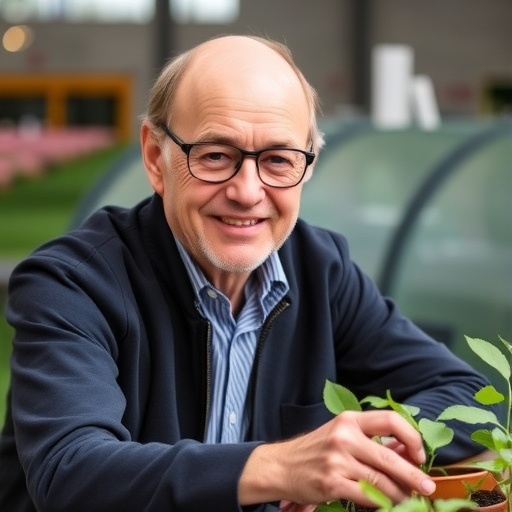
A scientist who conducted molecular genetics research behind the Iron Curtain, built international collaborations before German reunification, and helped reveal how chloroplasts communicate with the cell nucleus is being celebrated as one of Germany’s pioneering plant geneticists. Professor Thomas Börner, whose work spans plastid DNA, mitochondrial genomes, organellar RNA polymerases, cyanobacterial toxins and fungal identification, turns 80 this year. An editorial published in Molecular Genetics and Genomics presents his career as both a scientific landmark and a story of perseverance under political and material constraints.
Börner was born in Leipzig on July 11, 1946, and studied biology at Martin Luther University Halle-Wittenberg between 1965 and 1969. There, in the laboratory of plant geneticist Rudolf Hagemann, he became fascinated by a question that was still largely unexplored: how is genetic information organized and expressed inside cellular structures other than the nucleus? Plant cells contain two genetic systems outside the nucleus, in chloroplasts and mitochondria. These organelles are descendants of ancient bacteria and retain their own DNA, but they depend heavily on proteins encoded by nuclear genes. Understanding how these genetic systems cooperate became the central theme of Börner’s scientific life.
In 1974, Börner completed his doctoral research on mutations in the chloroplast genome of higher plants. His habilitation, awarded in 1979, examined how plastid genes interact with nuclear genes during chloroplast development. His studies helped establish an idea now known as plastid-to-nucleus retrograde signaling. In simple terms, chloroplasts do not merely receive instructions from the nucleus; they also send molecular signals back, informing the nucleus about their developmental and physiological state. These signals can influence nuclear genes whose products are required for photosynthesis and chloroplast construction. At the time, this concept challenged the idea that genetic control flowed mainly in one direction.
Börner’s early research was conducted in East Germany, where access to equipment, chemicals and international travel was severely restricted. Yet in 1977 he received unusual permission to visit laboratories in the United Kingdom. The scientific exchange produced research that was published in Nature in 1979. The paper suggested that plastid-synthesized RNA could control the production of plastid proteins in the cell’s cytoplasm, providing evidence for communication between the organelle and the rest of the cell. For a scientist working behind the Iron Curtain, publication in one of the world’s most prestigious scientific journals was a remarkable achievement and a sign that his research had international importance.
In 1982, Börner moved to Humboldt University of Berlin, where he became a full-time lecturer in genetics and head of a newly established Genetics Division. He was appointed professor of genetics in 1984 and built a major center for molecular genetics in East Berlin. Even before the Berlin Wall fell, he maintained active scientific contacts with researchers in West Germany and West Berlin, including scientists at the Institute for Gene-Biology Research. When the Wall came down on November 9, 1989, those connections suddenly acquired historic significance. German reunification, however, brought major upheaval. The contracts of Humboldt University professors were terminated, and Börner had to compete again for his own position. He ultimately retained a professorship through a competitive selection process, becoming one of the scientists who helped reshape Berlin’s biological research landscape after reunification.
His institutional influence expanded dramatically in 1999, when he persuaded the German Research Foundation to fund Collaborative Research Centre 429. The large-scale program, focused on molecular physiology, energetics and the regulation of primary plant metabolism, united researchers from Humboldt University, Free University Berlin, Technical University Berlin, the University of Potsdam and the Max Planck Institute of Molecular Plant Physiology in Potsdam-Golm. These institutions had previously been divided by the political geography of the Cold War. Börner served as spokesperson from 1999 to 2010, transforming a scientific collaboration into a lasting network for plant molecular biology across the Berlin region.
The scientific problems pursued by Börner’s group were fundamental to modern cell biology. His research examined the structure, expression and inheritance of plastid DNA, including how chloroplast genomes behave in variegated plants and mutants lacking functional plastid ribosomes. His team also investigated chloroplast transcription, RNA processing, intron splicing and RNA editing. These mechanisms are essential because chloroplast genes are not simply copied into proteins in a single step. Their transcripts must be accurately initiated, processed and sometimes edited before they can support photosynthesis or organelle development. Work from Börner’s laboratory helped clarify how nuclear and plastid-encoded systems coordinate these processes.
A major achievement involved the discovery and characterization of nucleus-encoded, phage-like RNA polymerases that operate in plant chloroplasts and mitochondria. Unlike the multisubunit bacterial-type polymerases encoded partly by organelle genomes, these enzymes are produced from nuclear genes and imported into organelles. Börner and his collaborators showed that related polymerases can direct transcription in different genetic compartments, and in some cases that one enzyme can serve two genomes. This revealed an unexpected layer of genetic integration: plant organelles retain bacterial-style genomes, but their gene expression is increasingly controlled by proteins that evolved in, and are encoded by, the nucleus.
One of Börner’s most persistent scientific mysteries began with the barley mutant albostrians, a plant that develops white and green leaf sectors because some plastids fail to mature into photosynthetically competent chloroplasts. The mutant lacks plastid ribosomes, leaving its chloroplasts unable to produce essential proteins. Börner began studying the system in 1972, and the underlying nuclear mutation remained unidentified for decades. In 2019, seven years after his official retirement, researchers finally traced the defect to a truncated CCT-domain gene related to the chloroplast import apparatus gene CHLOROPLAST IMPORT APPARATUS2. The discovery connected a classic genetic mutant with the machinery that transports nuclear-encoded proteins into chloroplasts, closing a mystery that had lasted nearly half a century.
Börner’s scientific interests extended well beyond plant organelles. His group investigated cyanobacteria, helping characterize phytochrome-like photoreceptors that detect light in prokaryotic cells. They also contributed to the molecular study of non-ribosomal peptide synthesis in cyanobacteria, including the genes responsible for producing microcystins, toxins associated with blooms of Microcystis aeruginosa. These studies linked gene regulation, environmental conditions and toxin production, providing tools for understanding how cyanobacterial organisms adapt and become hazardous in aquatic ecosystems. In microbiology and mycology, his laboratory helped pioneer DNA fingerprinting and PCR-based methods for differentiating filamentous fungi and yeasts. Such techniques improved the identification, classification and tracking of fungal strains, including industrial and pathogenic organisms.
The article portrays Börner’s legacy as extending far beyond his publication record. He led Humboldt University’s Interdisciplinary Center for Biotechnology, served as dean of biology during the politically transformative years around reunification, and held senior positions in German genetics and research organizations. His honors included the Carl Correns Medal, the Goethe Prize and the Miescher-Ishida Prize, as well as election to the Berlin-Brandenburg Academy of Sciences and the German National Academy of Sciences Leopoldina. Yet former students and colleagues emphasize mentorship as one of his greatest contributions. They describe a scientist who encouraged independence, skepticism and curiosity while offering calm, practical support. His laboratory trained researchers who later became professors, group leaders and specialists across Europe and beyond. Even after retiring in 2012, Börner remained active in the scientific community, demonstrating how a research legacy can persist not only in data and discoveries but also through the people who carry scientific questions into the future.
Cite Scienmag News
Juliet Wilcox. (August 26, 2026). East German Plant Genetics Pioneer Thomas Börner Celebrates 80th Birthday. Scienmag. https://scienmag.com/east-german-plant-genetics-pioneer-thomas-borner-celebrates-80th-birthday/
Juliet Wilcox. "East German Plant Genetics Pioneer Thomas Börner Celebrates 80th Birthday." Scienmag, 26 August 2026, https://scienmag.com/east-german-plant-genetics-pioneer-thomas-borner-celebrates-80th-birthday/. Accessed 4 September 2026.
Juliet Wilcox. "East German Plant Genetics Pioneer Thomas Börner Celebrates 80th Birthday." Scienmag. August 26, 2026. https://scienmag.com/east-german-plant-genetics-pioneer-thomas-borner-celebrates-80th-birthday/


