


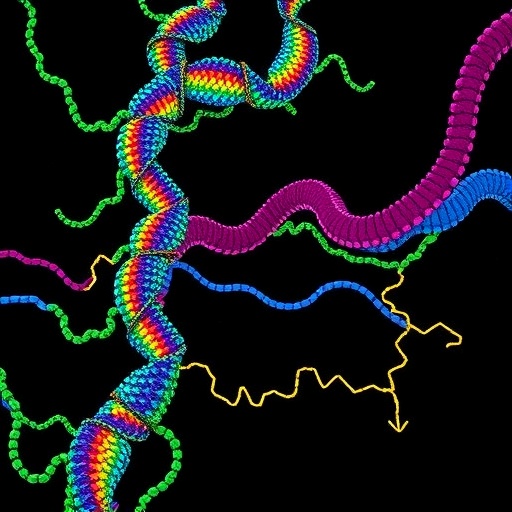
Parkinson’s disease may begin damaging cells long before tremors, stiffness, and slowed movement become visible. A new study published in Nature Communications identifies an early molecular failure that could help explain how the disease gains momentum: the Parkinson’s-linked protein α-synuclein interferes with the cell’s ability to deliver newly made proteins into the endoplasmic reticulum, or ER. This disruption strikes a fundamental step in protein production and could leave vulnerable neurons struggling to maintain their internal systems years before widespread cell death occurs.
The finding places α-synuclein at the center of a process known as co-translational protein translocation. Many proteins destined for secretion, cell membranes, or specialized cellular compartments are manufactured by ribosomes attached to the surface of the ER. As these proteins are being synthesized, they are guided through a molecular channel called the Sec61 translocon. This passage allows the growing protein chain to enter the ER while translation is still taking place. The system is highly coordinated: targeting signals, ribosomes, messenger RNA, and the translocon must work together with precise timing.
Lam, Gatford, Aragón-González, and colleagues report that α-synuclein can disrupt this process at an early stage of Parkinson’s disease. Rather than acting only as a toxic aggregate that accumulates inside neurons, α-synuclein appears to interfere directly with the machinery responsible for moving newly synthesized proteins into the ER. The study suggests that this obstruction can occur before the extensive protein clumps and severe neuronal degeneration traditionally associated with advanced disease.
The ER is not simply a cellular storage compartment. It is the main entry point for proteins that will be secreted, inserted into membranes, or transported through the secretory pathway. Once inside the ER, many proteins are folded, chemically modified, and checked for quality. If they fail to enter correctly, they may never reach their proper destinations. A sustained slowdown in ER translocation could therefore affect receptors, channels, enzymes, and signaling proteins simultaneously, creating a broad disturbance rather than a single isolated defect.
This kind of disturbance may be particularly damaging in neurons. Neurons possess long cellular projections and depend on the continual delivery of proteins over considerable distances. They also require intense membrane maintenance to support communication at synapses. If the ER cannot efficiently process and route newly produced proteins, neuronal function may decline even while many cells remain alive. The research consequently points to a possible explanation for why molecular dysfunction can precede the visible symptoms of Parkinson’s disease by a substantial margin.
α-Synuclein is normally associated with synaptic terminals, where it is thought to participate in the organization of synaptic vesicles and neurotransmitter release. In Parkinson’s disease, however, changes in the protein’s concentration, structure, location, or interactions with membranes can alter its behavior. The new work expands the list of cellular systems that may be affected by abnormal α-synuclein. By linking the protein to ER translocation, it connects Parkinson’s pathology with the broader biology of protein trafficking, folding, and quality control.
The consequences may extend beyond a simple traffic jam. When proteins fail to enter the ER properly, the cell can interpret the problem as a form of proteotoxic stress. This may activate the unfolded protein response, a surveillance network that reduces protein synthesis, increases folding capacity, and removes damaged proteins. In the short term, that response can protect the cell. If the blockage persists, however, prolonged ER stress can interfere with metabolism, disturb calcium regulation, impair communication between organelles, and contribute to programmed cell death.
The study’s emphasis on an early stage is especially important for therapeutic research. Treatments aimed only at removing mature α-synuclein aggregates may arrive after essential cellular systems have already been compromised. If α-synuclein begins obstructing ER translocation before large inclusions develop, early intervention might need to preserve the Sec61 translocon, stabilize protein-targeting interactions, or prevent harmful forms of α-synuclein from associating with the ER. Such strategies remain a research possibility rather than an established treatment, but the mechanism offers a more precise target than the general goal of “reducing α-synuclein.”
The findings also raise questions about why certain neurons are more vulnerable than others. Dopamine-producing neurons in the substantia nigra are among the cells most severely affected in Parkinson’s disease, yet the reasons for their susceptibility remain unresolved. Their high energy demands, extensive axonal architecture, calcium-handling requirements, and dependence on precise protein delivery could make them especially sensitive to even modest ER disruption. Understanding how translocation failure interacts with these features may help researchers explain the selective pattern of neuronal loss.
By identifying interference with co-translational protein translocation as an early consequence of α-synuclein activity, the research shifts attention toward the hidden cellular events that precede clinical Parkinson’s disease. The work does not present a single explanation for the disorder, which involves genetics, aging, environmental influences, mitochondrial dysfunction, inflammation, and multiple forms of protein stress. It does, however, reveal a potentially decisive point of failure in the cell’s protein-production pipeline. Detecting and correcting that failure early could become an important direction in the search for therapies capable of slowing Parkinson’s disease before irreversible neuronal damage takes hold.
Cite Scienmag News
Diana Fleming. (August 6, 2026). Early Parkinson’s disease: α-Synuclein disrupts co-translational protein transport into the endoplasmic reticulum. Scienmag. https://scienmag.com/early-parkinsons-disease-%ce%b1-synuclein-disrupts-co-translational-protein-transport-into-the-endoplasmic-reticulum/
Diana Fleming. "Early Parkinson’s disease: α-Synuclein disrupts co-translational protein transport into the endoplasmic reticulum." Scienmag, 6 August 2026, https://scienmag.com/early-parkinsons-disease-%ce%b1-synuclein-disrupts-co-translational-protein-transport-into-the-endoplasmic-reticulum/. Accessed 3 September 2026.
Diana Fleming. "Early Parkinson’s disease: α-Synuclein disrupts co-translational protein transport into the endoplasmic reticulum." Scienmag. August 6, 2026. https://scienmag.com/early-parkinsons-disease-%ce%b1-synuclein-disrupts-co-translational-protein-transport-into-the-endoplasmic-reticulum/


