


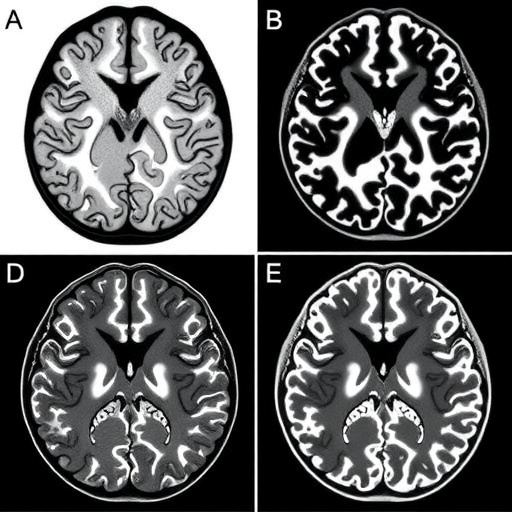
A new study in Translational Psychiatry reports that schizophrenia-spectrum disorders show measurable departures from typical brain structure long before symptoms reach their full clinical expression. The findings spotlight subtle but systematic changes in both brain-wide morphology and the microscopic features of the cortex, suggesting that risk-related neurodevelopment may begin early and persist over time.
Using advanced neuroimaging, the research team compared individuals affected by schizophrenia-spectrum conditions with neurotypical controls. Rather than focusing on a single brain region, the analysis emphasized network-level patterns, identifying where the brain’s overall shape and regional organization deviate from established normative trajectories.
Crucially, the work also probed cortical microstructure—an imaging-derived proxy for how cortical layers and cellular organization may differ. This approach moves beyond conventional measurements like volume or thickness, aiming to capture texture-like properties that may reflect cytoarchitectural differences shaped by early development.
The authors describe “early deviations” that are not simply late-stage consequences of illness. Instead, the patterns align with the idea that abnormal cortical maturation begins during critical developmental windows, potentially creating a biological substrate for later emergence of psychiatric symptoms.
Several technical strategies were used to increase interpretability, including rigorous normalization to standard anatomical space and statistical models designed to separate disease-related effects from normal variation. By leveraging multimodal structural signals, the study strengthens the case that morphology and microstructure alterations are linked, not independent phenomena.
The results also point to a broader implication for biomarkers: if microstructural signatures reliably distinguish groups, they may eventually support earlier identification or risk stratification. Such biomarkers could help clinicians intervene sooner, when treatments might be most beneficial.
In the context of viral science news, the study is notable because it converts a complex hypothesis—early neurodevelopmental disruption—into measurable imaging endpoints. That brings the field closer to turning theoretical models of schizophrenia into testable, observable biology.
Overall, the study frames schizophrenia-spectrum disorders as rooted in early brain development, with detectable structural and microstructural divergences emerging before trajectories fully converge on clinical diagnosis. Future work will determine how stable these signals are over time and whether they respond to early therapeutic strategies.
Cite Scienmag News
Glenn Wilkins. (July 15, 2026). Early Brain Morphology and Cortical Microstructure Deviations in Schizophrenia Spectrum. Scienmag. https://scienmag.com/early-brain-morphology-and-cortical-microstructure-deviations-in-schizophrenia-spectrum/
Glenn Wilkins. "Early Brain Morphology and Cortical Microstructure Deviations in Schizophrenia Spectrum." Scienmag, 15 July 2026, https://scienmag.com/early-brain-morphology-and-cortical-microstructure-deviations-in-schizophrenia-spectrum/. Accessed 4 September 2026.
Glenn Wilkins. "Early Brain Morphology and Cortical Microstructure Deviations in Schizophrenia Spectrum." Scienmag. July 15, 2026. https://scienmag.com/early-brain-morphology-and-cortical-microstructure-deviations-in-schizophrenia-spectrum/


