

Friday, September 4, 2026
Science
No Result
View All Result
  • Login
  • HOME
  • SCIENCE NEWS
  • CONTACT US
  • HOME
  • SCIENCE NEWS
  • CONTACT US
No Result
View All Result
Scienmag
No Result
View All Result
Home Science News Psychology & Psychiatry

Early Adversity Tunes Brain and Behavior’s Oxytocin Response in Altruism

July 28, 2026
in Psychology & Psychiatry
Cassandra Pierce
By Cassandra Pierce Scienmag Editorial Profile - Systems Neuroscience
Reading Time: 2 mins read
0
Early Adversity Tunes Brain and Behavior’s Oxytocin Response in Altruism

Early Adversity Tunes Brain and Behavior’s Oxytocin Response in Altruism

65
SHARES
587
VIEWS
Share on FacebookShare on Twitter
ADVERTISEMENT

Early life adversity can leave subtle biological fingerprints, even decades later. In a new study published in Translational Psychiatry, researchers report that experiences early in life reshape how the brain and behavior respond to oxytocin, a hormone widely associated with social bonding and prosocial behavior.

The team investigated altruistic decision-making using a controlled framework in which participants faced choices that either benefited others at a personal cost. Oxytocin, administered in a standardized way, served as the experimental lever to test whether the same social “chemistry” produces similar effects across individuals.

What emerged was not a uniform oxytocin story. Instead, people with greater adversity in their early years showed distinct behavioral patterns during altruistic choices compared with those with fewer such experiences. In other words, early stress appears to calibrate the social decision system, changing how strongly oxytocin supports costly generosity.

The novelty goes beyond behavior. Using neurobiological measures, the researchers identified altered neural responses linked to oxytocin exposure during the decision task. These brain signals suggest that early adversity may influence the pathways through which oxytocin modulates valuation, empathy-related processing, or social confidence.

Mechanistically, the findings fit a growing view that hormones do not act in isolation; their effects are shaped by lifetime history and internal circuitry. Oxytocin may amplify or redirect socially relevant computations depending on how stress during development has tuned the brain’s sensitivity to social cues.

For readers, the big takeaway is that oxytocin-based narratives—often oversimplified as “one hormone, one outcome”—may miss important individual variability. Two people can receive the same treatment and still show different social and neural outcomes.

This has potential implications for designing interventions aimed at improving social functioning in the aftermath of early adversity. If oxytocin’s effects depend on prior experiences, then future therapies may need personalization rather than one-size-fits-all dosing or protocols.

The study also raises a viral-science-worthy question: could early stress create a long-term “oxytocin response signature” that predicts when the hormone will promote altruism—and when it will do less?

As the authors emphasize, understanding the brain–hormone interaction offers a clearer route toward targeted approaches. With more research, biomarkers of early adversity and neural sensitivity to oxytocin could become key tools for translating hormone science into real-world social support.

Subject of Research: Oxytocin responses in relation to early life adversity and altruistic decision-making
Article Title: Early life adversity shapes neural and behavioural responses to oxytocin during altruistic decision-making.
Article References: Marsh, N., Jeske, V., Babasiz, M. et al. Early life adversity shapes neural and behavioural responses to oxytocin during altruistic decision-making. Transl Psychiatry 16, 381 (2026). https://doi.org/10.1038/s41398-026-04302-0
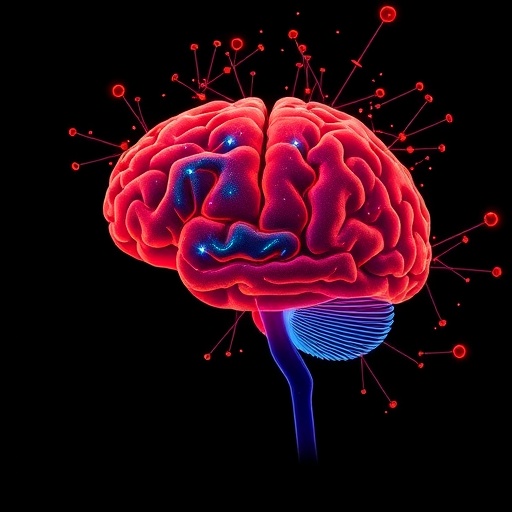
Image Credits: AI Generated
DOI: 10.1038/s41398-026-04302-0
Keywords:

Article Title: Early Adversity Tunes Brain and Behavior’s Oxytocin Response in Altruism

Article References: Marsh, N., Jeske, V., Babasiz, M., Herscheid, A., Kreuder, A.-K., Stirnberg, R., Stoecker, T., Marsh, A. A., Schultz, J., & Hurlemann, R. (2026). Early life adversity shapes neural and behavioural responses to oxytocin during altruistic decision-making. Translational Psychiatry, 16(1), Article 381. https://doi.org/10.1038/s41398-026-04302-0

Image Credits: AI Generated

DOI: 10.1038/s41398-026-04302-0

Keywords: behavioral effects of oxytocin in altruism, biological fingerprints of childhood trauma, brain pathways affected by early stress, early-life adversity, hormonal modulation of social decision-making, impact of early adversity on empathy and social confidence, influence of childhood stress on prosocial behavior, lifetime impact of early adversity on social hormones, neural mechanisms of altruism, neurobiological effects of early trauma, oxytocin and social bonding, oxytocin response variability based on childhood experiences

Cite Scienmag News

Cassandra Pierce. (July 28, 2026). Early Adversity Tunes Brain and Behavior’s Oxytocin Response in Altruism. Scienmag. https://scienmag.com/early-adversity-tunes-brain-and-behaviors-oxytocin-response-in-altruism/

Cassandra Pierce. "Early Adversity Tunes Brain and Behavior’s Oxytocin Response in Altruism." Scienmag, 28 July 2026, https://scienmag.com/early-adversity-tunes-brain-and-behaviors-oxytocin-response-in-altruism/. Accessed 4 September 2026.

Cassandra Pierce. "Early Adversity Tunes Brain and Behavior’s Oxytocin Response in Altruism." Scienmag. July 28, 2026. https://scienmag.com/early-adversity-tunes-brain-and-behaviors-oxytocin-response-in-altruism/


Tags: behavioral effects of oxytocin in altruismbiological fingerprints of childhood traumabrain pathways affected by early stressearly-life adversityhormonal modulation of social decision-makingimpact of early adversity on empathy and social confidenceinfluence of childhood stress on prosocial behaviorlifetime impact of early adversity on social hormonesneural mechanisms of altruismneurobiological effects of early traumaoxytocin and social bondingoxytocin response variability based on childhood experiences
Share26Tweet16
Previous Post

Ground Radar Detects Natural Electron Bernstein Waves in Earth’s Ionosphere

Next Post

Interoceptive Performance Shows No Link to Mental Health Symptoms in Study

Related Posts

HIV Advocacy Training Boosts Prevention Efforts Among Ugandans Living with HIV
Psychology & Psychiatry

HIV Advocacy Training Boosts Prevention Efforts Among Ugandans Living with HIV

September 3, 2026
Physical activity may protect the heart by easing depression, study suggests
Psychology & Psychiatry

Physical activity may protect the heart by easing depression, study suggests

September 3, 2026
Phone-Based Support Shows Promise for Caregivers After Pediatric Mental Health Crises
Psychology & Psychiatry

Phone-Based Support Shows Promise for Caregivers After Pediatric Mental Health Crises

September 3, 2026
Mindfulness Program Quality Key to Teen Mental and Metabolic Health
Psychology & Psychiatry

Mindfulness Program Quality Key to Teen Mental and Metabolic Health

September 3, 2026
Bayesian adaptive testing with variable lengths and new stopping rules
Psychology & Psychiatry

Bayesian adaptive testing with variable lengths and new stopping rules

September 3, 2026
How Infants Learn to Tell Close Relationships From Casual Ones
Psychology & Psychiatry

How Infants Learn to Tell Close Relationships From Casual Ones

September 3, 2026
Next Post
Interoceptive Performance Shows No Link to Mental Health Symptoms in Study

Interoceptive Performance Shows No Link to Mental Health Symptoms in Study

  • Mothers who receive childcare support from maternal grandparents show more optimized

    Mothers who receive childcare support from maternal grandparents show more parental warmth, finds NTU Singapore study

    27656 shares
    Share 11059 Tweet 6912
  • University of Seville Breaks 120-Year-Old Mystery, Revises a Key Einstein Concept

    1061 shares
    Share 424 Tweet 265
  • Bee body mass, pathogens and local climate influence heat tolerance

    682 shares
    Share 273 Tweet 171
  • Researchers record first-ever images and data of a shark experiencing a boat strike

    546 shares
    Share 218 Tweet 137
  • Groundbreaking Clinical Trial Reveals Lubiprostone Enhances Kidney Function

    531 shares
    Share 212 Tweet 133
Science

Embark on a thrilling journey of discovery with Scienmag.com—your ultimate source for cutting-edge breakthroughs. Immerse yourself in a world where curiosity knows no limits and tomorrow’s possibilities become today’s reality!

RECENT NEWS

  • New R package Geneslator simplifies gene ID conversion and annotation
  • Fragmented gut and airway microbes mark preschool wheeze, driven by Moraxella clustering
  • Unattended automated blood pressure readings prove accurate in rural Africa
  • Mpox prevention practices and factors among adults in Southern Sarawak, Malaysia

Categories

  • Agriculture
  • Anthropology
  • Archaeology
  • Athmospheric
  • Biology
  • Biotechnology
  • Blog
  • Bussines
  • Cancer
  • Chemistry
  • Climate
  • Earth Science
  • Editorial Policy
  • Marine
  • Mathematics
  • Medicine
  • Pediatry
  • Policy
  • Psychology & Psychiatry
  • Science Education
  • Social Science
  • Space
  • Technology and Engineering

Subscribe to Blog via Email

Enter your email address to subscribe to this blog and receive notifications of new posts by email.

Join 5,151 other subscribers

© 2025 Scienmag - Science Magazine

Welcome Back!

Login to your account below

Forgotten Password?

Retrieve your password

Please enter your username or email address to reset your password.

Log In
No Result
View All Result
  • HOME
  • SCIENCE NEWS
  • CONTACT US

© 2025 Scienmag - Science Magazine

Discover more from Science

Subscribe now to keep reading and get access to the full archive.

Continue reading