


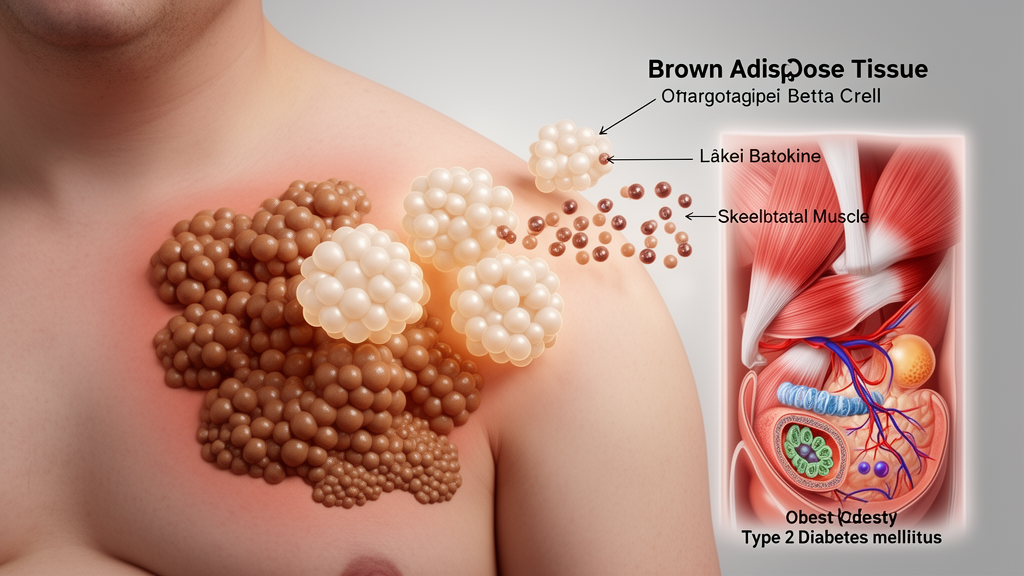
Brown adipose tissue and the signaling molecules it releases may offer routes to treating obesity and type 2 diabetes beyond calorie restriction and glucose-lowering drugs, according to a review of the tissue’s thermogenic and endocrine functions. The review argues that brown fat is not only an organ that generates heat: when activated, it releases molecules known as batokines that can influence glucose, lipid, immune and organ-specific pathways. Much of the strongest evidence, however, comes from rodent models, while human activation studies have generally produced modest effects on energy expenditure and weight loss.
The review is a synthesis of experimental and clinical research rather than a new clinical trial. Brown adipose tissue differs from white adipose tissue, which primarily stores excess energy, by oxidizing glucose and fatty acids to generate heat through non-shivering thermogenesis. At the center of this process is uncoupling protein 1, or UCP1, a mitochondrial transporter that allows protons to move across the inner mitochondrial membrane without driving adenosine triphosphate production.
The resulting proton leak converts chemical energy into heat while accelerating substrate oxidation. UCP1-dependent thermogenesis is central to the process, but other heat-producing mechanisms, including futile cycles involving creatine or lipids and calcium cycling within cells, can also contribute when UCP1 levels are low or absent. The distinction matters because the review describes these parallel pathways as possible adjuncts for increasing total thermogenic output.
Brown fat is activated principally through the sympathetic nervous system. Cold exposure increases noradrenaline release at brown adipocytes, where the neurotransmitter binds beta-adrenergic receptors and activates cyclic adenosine monophosphate and protein kinase A. These signals promote lipolysis, UCP1 activity and transcriptional programs involving PGC-1alpha and PRDM16, which support mitochondrial biogenesis and thermogenic gene expression. Cold exposure also promotes the formation of beige adipocytes within white fat, extending the body’s heat-producing capacity.
Nutrients including capsaicin, polyphenols and omega-3 fatty acids may influence similar adrenergic, mitochondrial and nutrient-sensing pathways. Intermittent fasting and ketogenic diets are also discussed as possible strategies for increasing sympathetic tone and fatty-acid oxidation, although obesity can weaken the neural and thermogenic machinery on which these approaches depend. Activated brown fat also functions as an endocrine organ.
Candidate batokines include fibroblast growth factor 21, or FGF21; interleukin-6; neuregulin-4; ependymid related protein 1, or EPDR1; phospholipid transfer protein, or PLTP; BAT-secreted peptide 1, or BATSP1; growth differentiation factor 15, or GDF15; 12,13-dihydroxy-9Z-octadenoic acid, or 12,13-diHOME; and C-X-C motif chemokine ligand 14, or CXCL14. Rodent studies associate these factors with improved glucose tolerance, insulin sensitivity, lipid handling and energy expenditure. FGF21 can enhance glucose uptake in adipose tissue and skeletal muscle and support mitochondrial biogenesis, while BATSP1 reduces suppression of UCP1 transcription and promotes the browning of white fat.
PLTP may improve glucose tolerance through hepatic lipid metabolism and bile-acid signaling. These findings describe effects in experimental systems and should not be interpreted as established benefits in patients. The metabolic consequences of batokines can extend beyond brown fat itself.
Interleukin-6 illustrates the context-dependent nature of these signals: when released by inflamed white fat, it is associated with obesity-related inflammation, hepatic insulin resistance and increased hepatic glucose production, whereas its release from activated brown fat has been linked with greater glucose uptake and improved insulin sensitivity. Neuregulin-4 inhibits hepatic lipogenesis and promotes fatty-acid oxidation, while several batokines may influence pancreatic beta-cell function and insulin secretion. CXCL14 contributes to immune modulation and tissue recruitment, and GDF15 is upregulated during metabolic stress.
Together with UCP1-dependent thermogenesis, these molecules form a reciprocal network in which heat production and endocrine communication reinforce one another, although many mechanistic details remain unresolved. Obesity and type 2 diabetes are associated with reduced brown-fat mass and activity. Chronic low-grade inflammation, macrophage infiltration, fibrosis, extracellular-matrix remodeling and reduced vascularization can weaken adrenergic responsiveness.
Mitochondrial stress, diminished UCP1 function and abnormal lipid handling can push brown adipocytes toward a dysfunctional, white-fat-like state. Hyperinsulinemia, high triglycerides and hyperglycemia compound these effects by impairing sympathetic signaling and oxidative capacity. Insulin resistance also limits glucose delivery to brown adipocytes, while diabetic neuropathy may reduce sympathetic innervation.
The result is a self-reinforcing cycle: diminished thermogenesis and batokine secretion can worsen insulin resistance, lipid accumulation and metabolic inflexibility, which further suppress brown-fat function. The review presents this as a biological mechanism that may contribute to metabolic disease, while noting that the relevant processes are not fully mapped. Human imaging studies broadly support the association between obesity, type 2 diabetes and reduced brown-fat activity.
Clinical imaging has shown lower brown-fat volume, glucose uptake and thermogenic responsiveness in people with obesity or type 2 diabetes than in metabolically healthier comparison groups. Cold exposure, beta-adrenergic stimulation and some dietary compounds can increase glucose uptake and thermogenic responses, and some studies report improved insulin sensitivity, lipid clearance, vascular inflammation or cardiac energetics. Nevertheless, the magnitude of these responses has generally been smaller than that observed in rodents.
Adult brown fat is often limited in volume, and its responsiveness varies among individuals. Clinical trials of brown-fat activation have also produced minimal or no benefit in some settings, revealing that pronounced responses to beta-adrenergic agonists in mice do not necessarily translate into effective human treatments. Repeated mild cold exposure and physical exercise remain possible lifestyle strategies, but obesity may blunt the underlying neural and thermogenic machinery on which they depend.
Pharmacological approaches broaden the possibilities. GLP-1 receptor agonists and dual incretin drugs such as semaglutide and tirzepatide have been reported to influence thermogenic gene expression, inflammation and batokine secretion in brown adipocytes, suggesting that this tissue may contribute to some of their metabolic effects. Other strategies aim to inhibit brown-fat repressors, including acyl-CoA-binding protein, or ACBP, and cardiotrophin-like cytokine factor 1, or CLCF1, or to mimic cold-induced signaling through mitochondrial uncouplers, nutrient-sensing pathways and batokine targets.
The mitochondrial uncoupler BAM15 has shown therapeutic potential in preclinical models of obesity and insulin resistance, while FGF21 analogues and PPAR-gamma modulators have also been investigated. Mirabegron, a beta-3 adrenergic agonist, can increase brown-fat glucose uptake and energy expenditure in humans, but cardiovascular off-target effects constrain its wider use. These findings identify potential mechanisms rather than establishing new clinical treatments.
Directly increasing heat production also presents safety and efficacy challenges. Appetite and food intake may compensate for added expenditure, limiting sustained weight loss. Synthetic uncouplers must preferentially affect brown fat because mitochondrial stress in other tissues could be harmful, and chronic stimulation could produce excessive energy expenditure, cardiovascular strain or oxidative stress.
Targeting batokine pathways may avoid some of the adverse effects associated with systemic sympathetic activation, but it would require careful control because chronic secretion could disturb endocrine balance. The organ-specific evidence is strongest in experimental models: brown-fat-derived FGF21 has supported cardiomyocyte survival after ischemia and reperfusion injury, while 12,13-diHOME has improved calcium cycling and mitochondrial function in cardiac studies. Batokines have also shown anti-inflammatory, antifibrotic and antioxidative effects in experimental lung, kidney and liver disease, including models of diabetic kidney disease and sepsis.
These findings do not demonstrate clinical benefits in people with those conditions. The review concludes that the brown-fat–batokine axis is a promising but incompletely validated therapeutic target. Human studies are needed to determine whether targeted activation can meaningfully improve insulin sensitivity, metabolic flexibility, body composition or organ health without triggering compensatory eating or off-target toxicity.
Progress will also depend on better imaging, multi-omics profiling and more representative experimental models that account for differences between rodent and human brown fat. The central message is therefore cautious: brown fat can coordinate heat production with signals that affect several organs, yet converting that biological capacity into safe, effective treatments for obesity and type 2 diabetes remains an experimental frontier.
Subject of Research: Brown adipose tissue dysfunction, batokine signaling and therapeutic strategies for obesity and type 2 diabetes
Article Title: Dysfunction and therapeutic potential of brown adipose tissue and batokines in obesity and type 2 diabetes mellitus
Article References: Mirmiranpour, H., & Barber, T. M. (2026). Dysfunction and therapeutic potential of brown adipose tissue and batokines in obesity and type 2 diabetes mellitus. Frontiers in Endocrinology, 17, Article 1949288. https://doi.org/10.3389/fendo.2026.1949288
Image Credits: AI Generated
DOI: 10.3389/fendo.2026.1949288
Keywords: brown adipose tissue, batokines, obesity, type 2 diabetes, thermogenesis, UCP1, insulin resistance, mitochondrial uncoupling, GLP-1 therapies, endocrine signaling, Dysfunction, therapeutic
Cite Scienmag News
Daisy Hatcher. (October 24, 2026). Dysfunction and therapeutic potential of brown adipose tissue and batokines in obesity and type 2 diabetes mellitus. Scienmag. https://scienmag.com/dysfunction-and-therapeutic-potential-of-brown-adipose-tissue-and-batokines-in-obesity-and-type-2-diabetes-mellitus/
Daisy Hatcher. "Dysfunction and therapeutic potential of brown adipose tissue and batokines in obesity and type 2 diabetes mellitus." Scienmag, 24 October 2026, https://scienmag.com/dysfunction-and-therapeutic-potential-of-brown-adipose-tissue-and-batokines-in-obesity-and-type-2-diabetes-mellitus/. Accessed 24 October 2026.
Daisy Hatcher. "Dysfunction and therapeutic potential of brown adipose tissue and batokines in obesity and type 2 diabetes mellitus." Scienmag. October 24, 2026. https://scienmag.com/dysfunction-and-therapeutic-potential-of-brown-adipose-tissue-and-batokines-in-obesity-and-type-2-diabetes-mellitus/


