

Tuesday, July 14, 2026
Science
No Result
View All Result
  • Login
  • HOME
  • SCIENCE NEWS
  • CONTACT US
  • HOME
  • SCIENCE NEWS
  • CONTACT US
No Result
View All Result
Scienmag
No Result
View All Result
Home Science News Psychology & Psychiatry

DRD1-MSNs Hyperactivity in Striatum Causes Repetitive Behaviors in Cry1Δ11 Mutation

July 14, 2026
in Psychology & Psychiatry
Reading Time: 2 mins read
0
DRD1-MSNs Hyperactivity in Striatum Causes Repetitive Behaviors in Cry1Δ11 Mutation

DRD1-MSNs Hyperactivity in Striatum Causes Repetitive Behaviors in Cry1Δ11 Mutation

65
SHARES
587
VIEWS
Share on FacebookShare on Twitter
ADVERTISEMENT

In a groundbreaking study published in Translational Psychiatry, researchers have uncovered the neural mechanisms behind repetitive behaviors linked to a specific genetic mutation. The team led by Liu et al. focused on the Cry1Δ11 mutation, a genetic alteration associated with neurological and psychiatric disorders characterized by compulsive and repetitive actions.

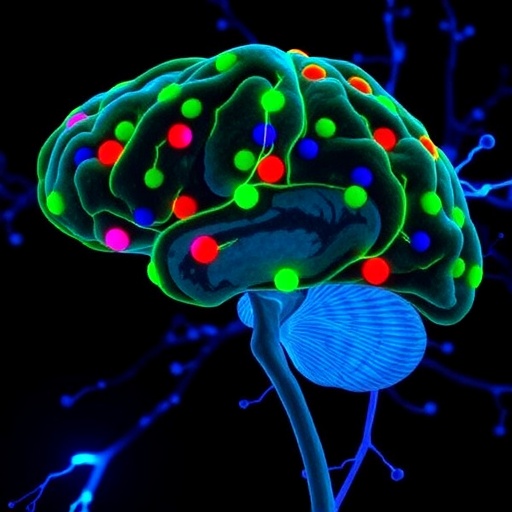
The study zeroes in on the dorsolateral striatum, a brain region critical for motor control and habit formation. Within this region, the researchers identified a significant increase in the activity of dopamine receptor D1-expressing medium spiny neurons (DRD1-MSNs). These neurons play a pivotal role in regulating movement and behavioral flexibility, and their dysregulation is increasingly implicated in neuropsychiatric conditions.

Using advanced electrophysiological techniques, the research team demonstrated that the Cry1Δ11 mutation hyperactivates DRD1-MSNs. This hyperactivation appears to disrupt normal signaling pathways, leading to the emergence of repetitive motor behaviors commonly observed in disorders such as obsessive-compulsive disorder (OCD) and Tourette syndrome. The findings suggest a direct link between genetic mutations affecting circadian rhythm genes—Cry1 is a core component of the circadian clock—and alterations in neural circuits governing behavior.

Intriguingly, the researchers employed in vivo recordings combined with optogenetics to establish the causal role of DRD1-MSN activity in driving these repetitive behaviors. By selectively modulating these neurons’ activity, they were able to reverse the phenotype in animal models, providing a promising therapeutic avenue. This study bridges a crucial gap between genetic mutations and their behavioral manifestations by pinpointing specific neuronal populations responsible for the symptoms.

Moreover, the team’s work sheds light on the interplay between circadian regulation and dopaminergic signaling in the striatum, emphasizing how disruptions in biological rhythms might exacerbate neurological symptoms. Such insights contribute to a more nuanced understanding of the pathophysiology underlying repetitive behaviors and potentially expand treatment strategies beyond dopamine antagonists.

This research underscores the importance of targeting neural circuit dynamics in developing interventions for neuropsychiatric disorders. By dissecting the role of DRD1-MSNs in the context of genetic mutations like Cry1Δ11, the study opens avenues for precision medicine approaches that tailor treatments to individual genetic and neurophysiological profiles.

Moving forward, Liu and colleagues propose further exploration into how other circadian gene mutations influence neural circuitry and behavior. They also advocate for clinical studies to assess whether modulation of striatal pathways could translate into effective therapies for patients with OCD and related conditions.

Ultimately, the study heralds a new era of integrative neuroscience that combines genetics, neurophysiology, and behavior analysis to unravel complex brain disorders, offering hope for improved diagnostics and targeted treatments for compulsive repetitive behaviors.


Article Title: Increased activity of DRD1-MSNs in dorsolateral striatum underlies Cry1Δ11 mutation-induced repetitive behaviors

Article References: Liu, X., Liu, D., Long, B. et al. Increased activity of DRD1-MSNs in dorsolateral striatum underlies Cry1Δ11 mutation-induced repetitive behaviors. Transl Psychiatry (2026). https://doi.org/10.1038/s41398-026-04219-8

Image Credits: AI Generated

DOI: https://doi.org/10.1038/s41398-026-04219-8

Tags: circadian rhythm gene mutations and behaviorCry1Δ11 mutationdopamine receptor D1-expressing neuronsdorsolateral striatum functionDRD1-MSN hyperactivityelectrophysiological studies in neural circuitsgenetic basis of compulsive behaviorsneural circuit modulation for behavioral controlneurobiological pathways in OCD and Tourette syndromeoptogenetics in behavioral researchrepetitive behaviors in neuropsychiatric disordersstriatal neural mechanisms
Share26Tweet16
Previous Post

Nasal Smell Stimulation Reduces Apnea in Premature Infants: Study

Next Post

Night Owls Face Higher Risk of Metabolic Health Issues

Related Posts

Widespread White Matter Abnormalities Found in First-Episode Schizophrenia Patients
Psychology & Psychiatry

Widespread White Matter Abnormalities Found in First-Episode Schizophrenia Patients

July 13, 2026
New Computational Method Aligns Human and Primate Cognitive Strategies
Psychology & Psychiatry

New Computational Method Aligns Human and Primate Cognitive Strategies

July 13, 2026
GLP-1 Receptor Activation Linked to Mental Health via Genetic Study
Psychology & Psychiatry

GLP-1 Receptor Activation Linked to Mental Health via Genetic Study

July 13, 2026
Childhood Neglect and Abuse Impact Emotion Regulation and Mental Health Differently
Psychology & Psychiatry

Childhood Neglect and Abuse Impact Emotion Regulation and Mental Health Differently

July 13, 2026
Mapping lncRNAs in mRNA Networks Reveals Insights into Autism
Psychology & Psychiatry

Mapping lncRNAs in mRNA Networks Reveals Insights into Autism

July 13, 2026
Calcium Signaling Links Genetic Risk of Psychiatric and Cardiovascular Disorders
Psychology & Psychiatry

Calcium Signaling Links Genetic Risk of Psychiatric and Cardiovascular Disorders

July 11, 2026
Next Post
Night Owls Face Higher Risk of Metabolic Health Issues

Night Owls Face Higher Risk of Metabolic Health Issues

  • Mothers who receive childcare support from maternal grandparents show more

    Mothers who receive childcare support from maternal grandparents show more parental warmth, finds NTU Singapore study

    27656 shares
    Share 11059 Tweet 6912
  • University of Seville Breaks 120-Year-Old Mystery, Revises a Key Einstein Concept

    1061 shares
    Share 424 Tweet 265
  • Bee body mass, pathogens and local climate influence heat tolerance

    682 shares
    Share 273 Tweet 171
  • Researchers record first-ever images and data of a shark experiencing a boat strike

    546 shares
    Share 218 Tweet 137
  • Groundbreaking Clinical Trial Reveals Lubiprostone Enhances Kidney Function

    531 shares
    Share 212 Tweet 133
Science

Embark on a thrilling journey of discovery with Scienmag.com—your ultimate source for cutting-edge breakthroughs. Immerse yourself in a world where curiosity knows no limits and tomorrow’s possibilities become today’s reality!

RECENT NEWS

  • Food Intake Levels Influence Swallowing Sound Acoustics in Older Adults
  • Acidic Cross-Linking Boosts One-Bath Dyeing of Polyester-Cotton Blends
  • New Catalytic Method Converts Polystyrene Waste into Pure Toluene
  • New Catalytic Method Converts Polystyrene Waste into Pure Toluene Efficiently

Categories

  • Agriculture
  • Anthropology
  • Archaeology
  • Athmospheric
  • Biology
  • Biotechnology
  • Blog
  • Bussines
  • Cancer
  • Chemistry
  • Climate
  • Earth Science
  • Editorial Policy
  • Marine
  • Mathematics
  • Medicine
  • Pediatry
  • Policy
  • Psychology & Psychiatry
  • Science Education
  • Social Science
  • Space
  • Technology and Engineering

Subscribe to Blog via Email

Enter your email address to subscribe to this blog and receive notifications of new posts by email.

Join 5,146 other subscribers

© 2025 Scienmag - Science Magazine

Welcome Back!

Login to your account below

Forgotten Password?

Retrieve your password

Please enter your username or email address to reset your password.

Log In
No Result
View All Result
  • HOME
  • SCIENCE NEWS
  • CONTACT US

© 2025 Scienmag - Science Magazine

Discover more from Science

Subscribe now to keep reading and get access to the full archive.

Continue reading
