

Tuesday, October 20, 2026
Science
No Result
View All Result
  • Login
  • HOME
  • SCIENCE NEWS
  • CONTACT US
  • HOME
  • SCIENCE NEWS
  • CONTACT US
No Result
View All Result
Scienmag
No Result
View All Result
Home Science News Cancer

Doxorubicin-loaded iron oxide nanoparticles reduce viability in leukaemia cells in laboratory proof of concept

October 20, 2026
in Cancer
Nathaniel Bowman
By Nathaniel Bowman Scienmag Editorial Profile - Precision Oncology
Reading Time: 2 mins read
0
Silica-Coated Iron Oxide Nanoparticles Loaded With Doxorubicin Show Potent Leukaemia Cell Killing in Proof-of-Concept Study

Silica-Coated Iron Oxide Nanoparticles Loaded With Doxorubicin Show Potent Leukaemia Cell Killing in Proof-of-Concept Study

65
SHARES
587
VIEWS
Share on FacebookShare on Twitter
ADVERTISEMENT

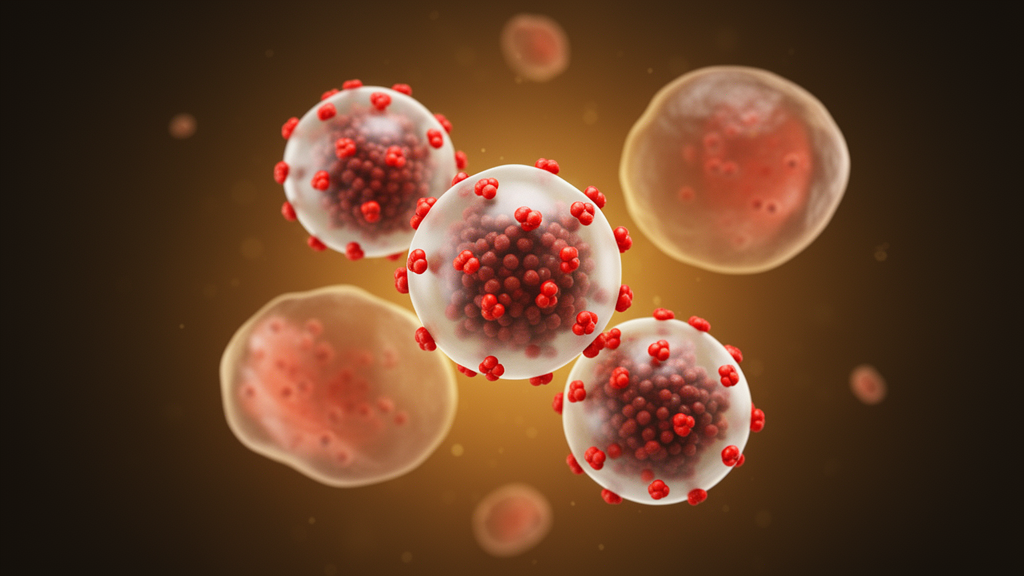
Doxorubicin-loaded, silica-coated iron oxide nanoparticles produced substantially greater cytotoxicity against HL60 human promyelocytic leukaemia cells than the same concentration of free doxorubicin in a laboratory proof-of-concept study. At 0.3 µM doxorubicin, cell viability measured with a CCK-8 assay was approximately 5% after nanoparticle-mediated treatment, compared with 39% after treatment with free doxorubicin. The findings concern cultured cells and do not establish clinical efficacy or safety in people with leukaemia.

The study, summarized in the abstract of an open-access article in BMC Cancer, investigated a drug-delivery platform intended for potential use in low- and middle-income countries, where the authors describe poor survival outcomes and a disproportionate leukaemia burden in sub-Saharan Africa. The platform combined iron oxide nanoparticles with a silica coating and doxorubicin. The researchers chemically synthesised the particles and assessed their size, structure, morphology, magnetic responsiveness, drug-loading capacity and release behaviour. Dynamic light scattering and transmission electron microscopy were used to characterise particle dimensions, while UV-Visible spectroscopy and high-resolution transmission electron microscopy were used to assess doxorubicin loading and release.

The synthesised iron oxide nanoparticles had a mean hydrodynamic diameter of 157.8 nm and an average core diameter of approximately 15 nm, according to transmission electron microscopy. Coating the particles with silica increased their hydrodynamic diameter to 197.3 nm, and loading doxorubicin increased the particle size further to approximately 317 nm. The researchers reported uniform morphology, successful functionalisation, effective doxorubicin loading and magnetic responsiveness. Unloaded nanoparticles showed relatively low cytotoxicity in the HL60 cell assay. The reported difference in viability at 0.3 µM was measured in vitro; the abstract does not describe an experiment establishing how the particles reached the cells, whether an external magnetic field was used, or whether the platform concentrated doxorubicin at a particular tissue site.

These results provide proof-of-concept evidence that silica-coated, doxorubicin-loaded iron oxide nanoparticles can be produced and can be more cytotoxic to HL60 cells in culture than free doxorubicin at the tested concentration. They do not demonstrate that the approach is superior in patients, that it has an acceptable safety profile, or that it improves leukaemia survival. The abstract identifies several requirements before clinical translation: further physicochemical characterisation, investigation of the mechanisms behind the observed cytotoxicity, safety evaluation and validation in vivo. It also presents the relatively simple synthesis strategy and encouraging cell-assay results as reasons for further investigation of the platform as a potentially scalable nanomedicine approach for resource-constrained settings, but that broader application remains unproven.

Subject of Research: In vitro evaluation of doxorubicin-loaded iron oxide nanoparticles in HL60 human promyelocytic leukaemia cells

Article Title: Application of iron oxide nanoparticles in leukaemia treatment in low and middle income countries: proof of concept

Article References: Kiwumulo, H. F., Kirabira, J. B., Evans, S., & Ssekitoleko, R. T. (2026). Application of iron oxide nanoparticles in leukaemia treatment in low and middle income countries: proof of concept. BMC Cancer. https://doi.org/10.1186/s12885-026-16976-2

Image Credits: AI Generated

DOI: 10.1186/s12885-026-16976-2

Keywords: iron oxide nanoparticles, doxorubicin, HL60 cells, leukaemia, drug delivery, in vitro study, nanomedicine, silica coating, cell viability, proof of concept, Application, iron

Cite Scienmag News

Nathaniel Bowman. (October 20, 2026). Doxorubicin-loaded iron oxide nanoparticles reduce viability in leukaemia cells in laboratory proof of concept. Scienmag. https://scienmag.com/doxorubicin-loaded-iron-oxide-nanoparticles-reduce-viability-in-leukaemia-cells-in-laboratory-proof-of-concept/


Nathaniel Bowman. "Doxorubicin-loaded iron oxide nanoparticles reduce viability in leukaemia cells in laboratory proof of concept." Scienmag, 20 October 2026, https://scienmag.com/doxorubicin-loaded-iron-oxide-nanoparticles-reduce-viability-in-leukaemia-cells-in-laboratory-proof-of-concept/. Accessed 20 October 2026.

Nathaniel Bowman. "Doxorubicin-loaded iron oxide nanoparticles reduce viability in leukaemia cells in laboratory proof of concept." Scienmag. October 20, 2026. https://scienmag.com/doxorubicin-loaded-iron-oxide-nanoparticles-reduce-viability-in-leukaemia-cells-in-laboratory-proof-of-concept/

Tags: applicationcell viabilitydoxorubicinDoxorubicin-loaded iron oxide nanoparticlesDrug deliveryenhanced chemotherapy efficacy with nanocarriersHL60 cellsin vitro studyironiron oxide nanoparticleslaboratory proof-of-concept cancer researchleukaemialeukaemia treatment innovationmagnetic nanoparticles for chemotherapyNanomedicinenanoparticle drug delivery in leukemia treatmentnanoparticle synthesis and characterizationnanoparticle-based cancer therapeuticsnanotechnology in low-resource settingsproof of conceptsilica coatingsilica-coated magnetic nanoparticlestargeted drug delivery for hematologic malignanciestargeted leukemia cell cytotoxicity
Share26Tweet16
Previous Post

Experimental sucrose treatment linked to mucilage-like root exudates in bentgrass

Next Post

Barriers to Implementing Medical-Legal Partnerships for Survivors of Intimate Partner Violence: Qualitative Perspectives from the Veterans Health Administration

Related Posts

Immune Landscapes of Ethiopian Breast Cancer Mirror Findings From Wealthier Nations
Cancer

Ethiopian breast cancer tissue study links immune-cell infiltration to subtype and grade

October 20, 2026
Comment Questions Robustness of Deprivation Links in Breast Cancer Genomics
Cancer

Comment Questions Robustness of Deprivation Links in Breast Cancer Genomics

October 20, 2026
Neighborhood deprivation and insurance gaps shape late-stage cancer diagnosis
Cancer

Disparities in late-stage cancer diagnosis across a multi-site academic health system

October 20, 2026
Research report: Revisiting Ehrlich carcinoma in the era of precision oncology: bridging classical models with modern systems biology
Cancer

Research report: Revisiting Ehrlich carcinoma in the era of precision oncology: bridging classical models with modern systems biology

October 20, 2026
New Nomogram Predicts Recurrence Risk After Chemoimmunotherapy and Surgery for Esophageal Cancer
Cancer

Multicenter retrospective study externally validates postoperative disease-free survival nomogram in esophageal squamous cell carcinoma

October 20, 2026
Air Pollution May Dramatically Raise Bladder Cancer Risk, Especially in the Genetically Vulnerable
Cancer

Long-term air pollution exposure linked with bladder cancer risk in prospective UK Biobank analysis

October 20, 2026
Next Post
Why Legal Aid Struggles to Reach Veterans Facing Abuse Inside America’s Largest Health System

Barriers to Implementing Medical-Legal Partnerships for Survivors of Intimate Partner Violence: Qualitative Perspectives from the Veterans Health Administration

  • Mothers who receive childcare support from maternal grandparents show more optimized

    Mothers who receive childcare support from maternal grandparents show more parental warmth, finds NTU Singapore study

    27656 shares
    Share 11059 Tweet 6912
  • University of Seville Breaks 120-Year-Old Mystery, Revises a Key Einstein Concept

    1061 shares
    Share 424 Tweet 265
  • Bee body mass, pathogens and local climate influence heat tolerance

    682 shares
    Share 273 Tweet 171
  • Researchers record first-ever images and data of a shark experiencing a boat strike

    546 shares
    Share 218 Tweet 137
  • Groundbreaking Clinical Trial Reveals Lubiprostone Enhances Kidney Function

    531 shares
    Share 212 Tweet 133
Science

Embark on a thrilling journey of discovery with Scienmag.com—your ultimate source for cutting-edge breakthroughs. Immerse yourself in a world where curiosity knows no limits and tomorrow’s possibilities become today’s reality!

RECENT NEWS

  • Machine learning-assisted hydrothermal process optimization yields carbon quantum dots from tea waste
  • Abstract of Ghana soil study reports risk-element exceedances and three seasonal differences
  • AI challenges, academic integrity awareness and innovative behaviour linked in postgraduate nursing survey
  • Düzce soil study of 30 samples finds predominantly geogenic composition with localized elemental enrichments

Categories

  • Agriculture
  • Anthropology
  • Archaeology
  • Athmospheric
  • Biology
  • Biotechnology
  • Blog
  • Bussines
  • Cancer
  • Chemistry
  • Climate
  • Earth Science
  • Editorial Policy
  • Marine
  • Mathematics
  • Medicine
  • Pediatry
  • Policy
  • Psychology & Psychiatry
  • Science Education
  • Science News
  • Social Science
  • Space
  • Technology and Engineering

Subscribe to Blog via Email

Enter your email address to subscribe to this blog and receive notifications of new posts by email.

Join 5,150 other subscribers

© 2025 Scienmag - Science Magazine

Welcome Back!

Login to your account below

Forgotten Password?

Retrieve your password

Please enter your username or email address to reset your password.

Log In
No Result
View All Result
  • HOME
  • SCIENCE NEWS
  • CONTACT US

© 2025 Scienmag - Science Magazine

Discover more from Science

Subscribe now to keep reading and get access to the full archive.

Continue reading