


A field study of agricultural and non-agricultural soils in Düzce, Türkiye, found that elemental concentrations were governed mainly by lithogenic, or naturally inherited, factors, while localized enrichments of molybdenum, cadmium, antimony, tin and copper indicated that natural geochemical variability may coexist with anthropogenic inputs. The report, summarized in an abstract of a 2026 research article in Environmental Monitoring and Assessment, assessed soil chemistry across two land-use categories and concluded that overall pollution indices indicated a low current contamination status.
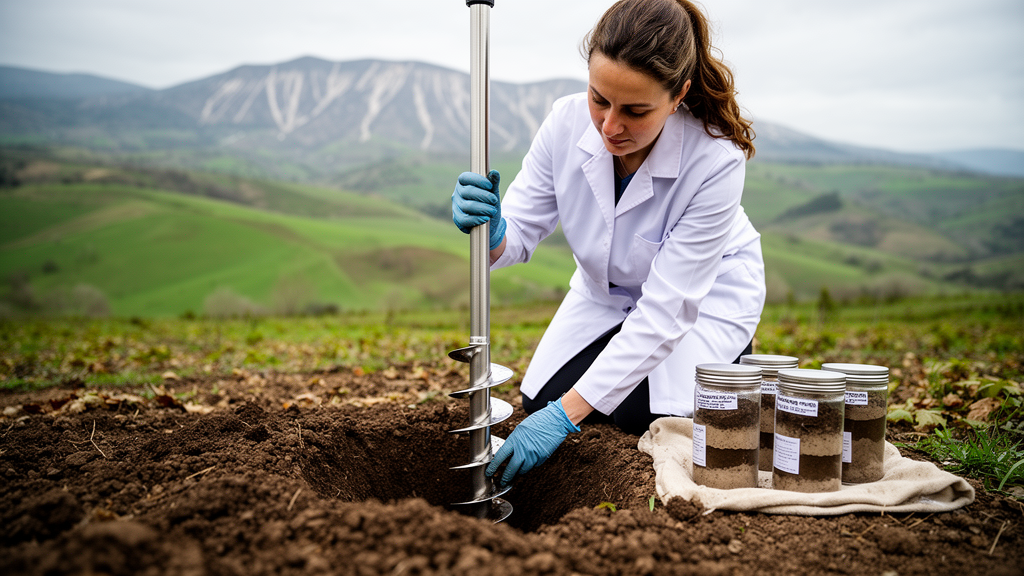
Researchers collected 30 composite soil samples, including 15 from agricultural areas and 15 from non-agricultural areas. Elemental concentrations were measured by inductively coupled plasma optical emission spectrometry, or ICP-OES. The investigators evaluated contamination using the enrichment factor, geoaccumulation index, contamination factor, pollution load index and potential ecological risk index. Principal component analysis, correlation analysis and spatial distribution mapping were also used to examine elemental associations, potential sources and patterns across the sampled area.
Major elements including silicon, aluminium, iron, calcium and potassium dominated the soil composition, which the abstract reports was primarily controlled by lithogenic influences. Most measured element concentrations were within global background ranges. However, the study identified distinct localized enrichments, particularly for molybdenum, cadmium, antimony, tin and copper. These patterns were described as reflecting the combined influence of natural geochemical variability and localized anthropogenic contributions rather than providing definitive evidence of a single source.
Multivariate results suggested that elemental associations may involve both geogenic controls and human activities such as regional geology, agricultural practices, traffic emissions, fossil-fuel combustion and industrial activity. The study therefore did not establish that any one activity caused the observed enrichments. Its overall assessment was that pollution indices suggested low contamination at the time of sampling, even as the localized patterns showed why distinguishing natural variability from emerging anthropogenic influence remains relevant to environmental monitoring and land management. Because the available source provides only the article abstract rather than the full study, the report cannot establish the detailed sampling design, spatial resolution, statistical significance, uncertainty estimates or site-specific source attribution.
Subject of Research: Evaluation of geogenic and anthropogenic influences on soil elemental composition across agricultural and non-agricultural land uses in Düzce, Türkiye
Article Title: Elemental composition of soils in Düzce, Türkiye: a land use–based evaluation of geogenic and anthropogenic influences
Article References: Bozkurt, Z., & Sert, C. (2026). Elemental composition of soils in Düzce, Türkiye: a land use–based evaluation of geogenic and anthropogenic influences. Environmental Monitoring and Assessment, 198(9), Article 1006. https://doi.org/10.1007/s10661-026-15827-8
Image Credits: AI Generated
DOI: 10.1007/s10661-026-15827-8
Keywords: soil geochemistry, Düzce, Türkiye, elemental composition, geogenic influences, anthropogenic inputs, land use, contamination indices, ICP-OES, environmental monitoring, Elemental, composition
Cite Scienmag News
Violet Maxwell. (October 20, 2026). Düzce soil study of 30 samples finds predominantly geogenic composition with localized elemental enrichments. Scienmag. https://scienmag.com/duzce-soil-study-of-30-samples-finds-predominantly-geogenic-composition-with-localized-elemental-enrichments/
Violet Maxwell. "Düzce soil study of 30 samples finds predominantly geogenic composition with localized elemental enrichments." Scienmag, 20 October 2026, https://scienmag.com/duzce-soil-study-of-30-samples-finds-predominantly-geogenic-composition-with-localized-elemental-enrichments/. Accessed 20 October 2026.
Violet Maxwell. "Düzce soil study of 30 samples finds predominantly geogenic composition with localized elemental enrichments." Scienmag. October 20, 2026. https://scienmag.com/duzce-soil-study-of-30-samples-finds-predominantly-geogenic-composition-with-localized-elemental-enrichments/


