

Tuesday, October 20, 2026
Science
No Result
View All Result
  • Login
  • HOME
  • SCIENCE NEWS
  • CONTACT US
  • HOME
  • SCIENCE NEWS
  • CONTACT US
No Result
View All Result
Scienmag
No Result
View All Result
Home Science News Technology and Engineering

Machine learning-assisted hydrothermal process optimization yields carbon quantum dots from tea waste

October 20, 2026
in Technology and Engineering
Teresa Odom
By Teresa Odom Scienmag Editorial Profile - Machine Learning
Reading Time: 2 mins read
0
Machine Learning Turns Tea Waste Into Glowing Carbon Quantum Dots With Near-Perfect Yield Prediction

Machine Learning Turns Tea Waste Into Glowing Carbon Quantum Dots With Near-Perfect Yield Prediction

65
SHARES
587
VIEWS
Share on FacebookShare on Twitter
ADVERTISEMENT

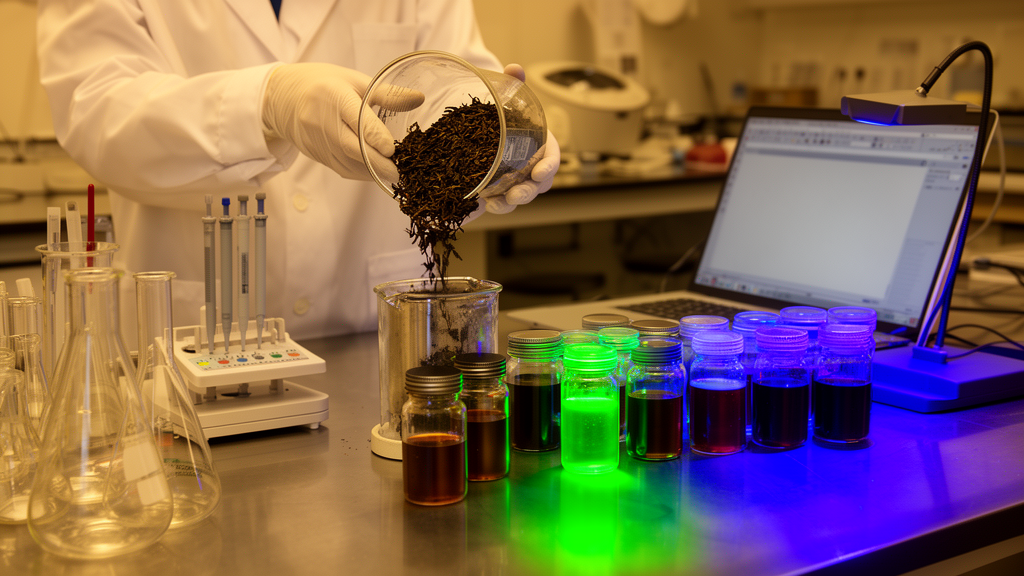
A laboratory optimization study reported a 12.67% yield of carbon quantum dots produced by one-pot hydrothermal carbonization of tea processing waste under conditions selected with a machine-learning model. The researchers developed a process using waste biomass as the carbon precursor and evaluated 14 algorithms against data from 55 experimental runs. Extra Trees performed best, with a training coefficient of determination, R², of 0.7992 on augmented training data and a validation R² of 0.7696 using 11 independent variables. The available evidence comes from the article abstract, rather than the full subscription article.

The model predicted optimized conditions of 179 °C, 5.06 hours, 30 bar and a biomass-to-water ratio of 1:30. Researchers then experimentally tested these conditions and reported a 12.67% carbon quantum dot yield, with a model prediction error of 0.16%. SHAP feature-importance analysis assigned temperature the largest normalized contribution, at 47.7%, followed by pressure at 25.6%, reaction time at 14.5% and biomass-to-water ratio at 12.2%. The abstract does not provide a comparison yield, confidence intervals or other measures of uncertainty for the experimental result, so the reported yield should not be interpreted as a demonstrated increase over an unoptimized baseline.

Characterization described the resulting material as quasi-spherical carbon quantum dots measuring 2–8 nm. The particles contained graphitic domains with an approximate interplanar spacing of 0.34 nm and a mesoporous structure spanning 2.8–3.6 nm. Photoluminescence analysis found excitation-dependent blue fluorescence, which the researchers interpreted as evidence for the formation of fluorescent carbon quantum dots. These findings characterize the material produced under the tested laboratory conditions but do not establish its performance in a particular device or application.

The abstract identifies energy storage, LEDs, catalysis, sensors and biomedicine as possible areas of interest for carbon quantum dots and describes biomass-derived dots as highly biocompatible. However, it reports no application-specific testing and no direct biocompatibility assay results. The study therefore supports a laboratory synthesis and optimization result for waste-derived carbon quantum dots, rather than demonstrated biomedical or energy-storage performance. Its scope is also bounded by the 55-run dataset, the selected process variables and the single set of experimentally validated conditions described in the abstract.

Subject of Research: Machine learning optimization of tea-waste carbon quantum dot production

Article Title: Machine learning-based optimization of hydrothermal carbonization for CQDs production

Article References: Thaha, A. N., Subburamu, K., Paravaikkarasu Pillai, S., Maduraimuthu, D., Devasahayam, J. S. S., & Desikan, R. (2026). Machine learning-based optimization of hydrothermal carbonization for CQDs production. Journal of Materials Science, 61(42), 32939-32961. https://doi.org/10.1007/s10853-026-13733-5

Image Credits: AI Generated

DOI: 10.1007/s10853-026-13733-5

Keywords: carbon quantum dots, hydrothermal carbonization, machine learning, tea processing waste, Extra Trees, process optimization, SHAP analysis, nanomaterials, biomass valorization, Machine, learning-based, optimization

Cite Scienmag News

Teresa Odom. (October 20, 2026). Machine learning-assisted hydrothermal process optimization yields carbon quantum dots from tea waste. Scienmag. https://scienmag.com/machine-learning-assisted-hydrothermal-process-optimization-yields-carbon-quantum-dots-from-tea-waste/


Teresa Odom. "Machine learning-assisted hydrothermal process optimization yields carbon quantum dots from tea waste." Scienmag, 20 October 2026, https://scienmag.com/machine-learning-assisted-hydrothermal-process-optimization-yields-carbon-quantum-dots-from-tea-waste/. Accessed 20 October 2026.

Teresa Odom. "Machine learning-assisted hydrothermal process optimization yields carbon quantum dots from tea waste." Scienmag. October 20, 2026. https://scienmag.com/machine-learning-assisted-hydrothermal-process-optimization-yields-carbon-quantum-dots-from-tea-waste/

Tags: application of machine learning in green chemistrybiomass valorizationbiomass-to-water ratio in nanomaterial synthesiscarbon quantum dotsexperimental validation of optimized conditionsExtra Treesfeature importance analysis with SHAPhydrothermal carbonizationhydrothermal carbonization of biomasslearning-basedmachineMachine learningMachine learning-driven process optimization for carbon quantum dots from tea wastenanomaterialsoptimizationpredictive modeling with Extra Trees algorithmprocess optimizationprocess parameters influencing nanomaterial propertiesproduction yield of carbon quantum dotsquantum dot size characterizationSHAP analysissustainable waste valorization in nanotechnologytea processing wastetemperature and pressure effects on quantum dot formation
Share26Tweet16
Previous Post

Abstract of Ghana soil study reports risk-element exceedances and three seasonal differences

Next Post

US FGM/C model suggests earlier estimates undercounted affected women and overcounted girls at risk

Related Posts

AI in construction cost management lags behind policy support in China’s Yangtze River Delta, study finds
Technology and Engineering

Expert-based AHP-cloud assessment finds average AI development in Yangtze River Delta construction cost management

October 20, 2026
AI Model Reads Children’s Drawings and Scores Creativity by Fusing DETR Detection With CLIP Semantics
Technology and Engineering

DETR-CLIP study evaluates detection, semantics and creativity scoring in 5,000 children’s drawings

October 20, 2026
Triggered Methylselenol Donors Enable Light- and Enzyme-Controlled Delivery
Technology and Engineering

Triggered Methylselenol Donors Enable Light- and Enzyme-Controlled Delivery

October 20, 2026
How the Brain Turns B-Cell Lymphoma Into a Fortress Against Immune Attack
Technology and Engineering

Syngeneic mouse study links CNS lymphoma location to broader immune dysfunction

October 20, 2026
Attention Maps May Not Explain What AI Vision Models Really See, Landmark Review Finds
Technology and Engineering

Systematic review finds attention explanations are rarely tested for faithfulness

October 20, 2026
Research report: INSIGHT: a scalable cluster-based framework with theoretical guarantees for interpretable fraud detection in mixed-feature data
Technology and Engineering

Research report: INSIGHT: a scalable cluster-based framework with theoretical guarantees for interpretable fraud detection in mixed-feature data

October 20, 2026
Next Post
Migration Reshapes FGM/C Estimates: Fewer Girls at Risk, More Women Affected

US FGM/C model suggests earlier estimates undercounted affected women and overcounted girls at risk

  • Mothers who receive childcare support from maternal grandparents show more optimized

    Mothers who receive childcare support from maternal grandparents show more parental warmth, finds NTU Singapore study

    27656 shares
    Share 11059 Tweet 6912
  • University of Seville Breaks 120-Year-Old Mystery, Revises a Key Einstein Concept

    1061 shares
    Share 424 Tweet 265
  • Bee body mass, pathogens and local climate influence heat tolerance

    682 shares
    Share 273 Tweet 171
  • Researchers record first-ever images and data of a shark experiencing a boat strike

    546 shares
    Share 218 Tweet 137
  • Groundbreaking Clinical Trial Reveals Lubiprostone Enhances Kidney Function

    531 shares
    Share 212 Tweet 133
Science

Embark on a thrilling journey of discovery with Scienmag.com—your ultimate source for cutting-edge breakthroughs. Immerse yourself in a world where curiosity knows no limits and tomorrow’s possibilities become today’s reality!

RECENT NEWS

  • US FGM/C model suggests earlier estimates undercounted affected women and overcounted girls at risk
  • Machine learning-assisted hydrothermal process optimization yields carbon quantum dots from tea waste
  • Abstract of Ghana soil study reports risk-element exceedances and three seasonal differences
  • AI challenges, academic integrity awareness and innovative behaviour linked in postgraduate nursing survey

Categories

  • Agriculture
  • Anthropology
  • Archaeology
  • Athmospheric
  • Biology
  • Biotechnology
  • Blog
  • Bussines
  • Cancer
  • Chemistry
  • Climate
  • Earth Science
  • Editorial Policy
  • Marine
  • Mathematics
  • Medicine
  • Pediatry
  • Policy
  • Psychology & Psychiatry
  • Science Education
  • Science News
  • Social Science
  • Space
  • Technology and Engineering

Subscribe to Blog via Email

Enter your email address to subscribe to this blog and receive notifications of new posts by email.

Join 5,150 other subscribers

© 2025 Scienmag - Science Magazine

Welcome Back!

Login to your account below

Forgotten Password?

Retrieve your password

Please enter your username or email address to reset your password.

Log In
No Result
View All Result
  • HOME
  • SCIENCE NEWS
  • CONTACT US

© 2025 Scienmag - Science Magazine

Discover more from Science

Subscribe now to keep reading and get access to the full archive.

Continue reading