


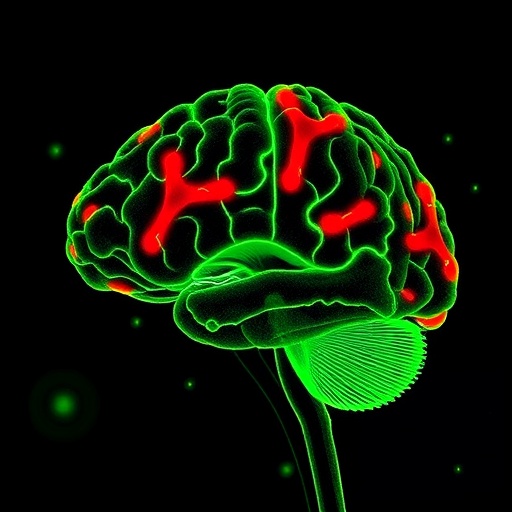
In the intricate domain of motor skill acquisition, well-timed synaptic remodeling within neural circuits is crucial. For decades, this dynamic process has been considered a predominantly neuronal event, with neurons strengthening or weakening their synaptic connections to refine motor outputs. However, groundbreaking research from a collaborative team at KAIST and UNIST, under the guidance of Associate Director Chung Won-Suk and Professor Kim Jae-Ick, challenges this neuron-centered paradigm by illuminating a pivotal role for astrocytes — star-shaped glial cells — in reshaping motor circuits during learning.
Astrocytes, long thought to provide mere metabolic and structural support in the brain, are now unveiled as active participants in synapse elimination within the striatum, a central hub for voluntary motor control. Using sophisticated in vivo imaging techniques, including two-photon microscopy, the researchers tracked synaptic elements in real-time in mice engaged in repeated motor learning challenges, such as the rotarod task. Contrary to previously held assumptions that synapse elimination was mainly managed by microglia, this study reveals astrocytes execute a targeted pruning of synapses specifically during motor skill acquisition.
At the molecular heart of this astrocyte-mediated synaptic remodeling lies MEGF10, a receptor known to regulate phagocytosis in glial cells. Intriguingly, selective deletion of MEGF10 in astrocytes led to profound deficits in motor learning performance, emphasizing its indispensable role. Mice deficient in astrocytic MEGF10 exhibited disrupted long-range communication between the motor cortex and the striatum, as well as impaired electrophysiological markers of synaptic plasticity—long-term potentiation and long-term depression—both critical for encoding motor memory.
This work extends our understanding of neural plasticity by revealing that astrocytes do more than housekeeping; they actively sculpt neural circuits by selectively eliminating weaker synaptic connections while preserving more potent ones. The study demonstrates a finely orchestrated dialogue between astrocytes and dopaminergic signals. Dopamine, a neuromodulator deeply involved in reward and movement, was shown to modulate astrocyte activity, thereby influencing which synapses were pruned or maintained during motor learning.
Further dissecting this intricate interplay, the research uncovered differential impacts of dopamine on distinct striatal projection neuron subtypes—D1 and D2 medium spiny neurons. Dopamine-induced structural changes in these neurons were contingent upon the presence of MEGF10 in astrocytes, linking dopaminergic neuromodulation to astrocyte-mediated synaptic refinement. This mechanism allows astrocytes to translate dopamine cues into enduring structural reorganization, optimizing circuit function for enhanced motor performance.
The findings challenge previous assumptions that synaptic remodeling during motor learning is exclusively neuronal by demonstrating astrocytes’ crucial role in modifying the synaptic landscape. They also reveal that astrocytic phagocytosis, underpinned by MEGF10, integrates dopaminergic activity patterns with synaptic plasticity mechanisms, thus orchestrating precise circuit rewiring required for acquiring new motor skills. This nuanced perspective shifts the paradigm towards a glia-centered view in understanding brain plasticity.
Experimentally, the team employed mouse models subjected to motor training, observing that synapse elimination peaked during active learning phases and abated thereafter. This astrocyte-specific increase was absent in MEGF10 knockout mice, underscoring the molecular specificity of the process. Notably, other glial partners like microglia and oligodendrocyte precursor cells did not exhibit comparable synaptic pruning activity, highlighting a unique functional niche for astrocytes.
From a clinical standpoint, these insights into astrocytic roles in dopamine-dependent synaptic plasticity have significant implications. Dopaminergic dysfunction underlies numerous neurological disorders, including Parkinson’s disease and addiction. Understanding how astrocyte-mediated synapse elimination contributes to the refinement of motor circuits offers new avenues for therapeutic intervention targeting glial cells and their phagocytic machinery in such diseases marked by impaired motor learning and circuit reorganization.
Associate Director Chung emphasizes that learning is not merely the formation of new connections but also the elimination of redundant synapses. The discovery of MEGF10 as a critical astrocytic phagocytic receptor responsible for targeted synapse removal enriches our comprehension of cellular interactions governing motor learning and circuit plasticity. This study presents compelling evidence that astrocytes are active architects of brain circuitry rather than passive support cells.
Methodologically, the study leveraged advanced fluorescence imaging and genetic mouse models with cell-type specific MEGF10 deletions to delineate astrocyte functions in vivo. Electrophysiological recordings provided corroborative evidence linking MEGF10 activity to functional synaptic adjustments manifested as changes in LTP and LTD. Together, these multidisciplinary approaches enabled a comprehensive view of the molecular, cellular, and circuit-level processes driving motor skill acquisition.
Ultimately, the research uncovers a mechanistic framework where astrocytes, guided by dopamine signals, execute precise synaptic pruning that enhances the efficiency and specificity of motor circuits. This active role of astrocytes adds an essential dimension to the understanding of synaptic plasticity, highlighting glial cells as key contributors to learning and neuroadaptation. It paves the way for novel explorations into glia-targeted therapies aimed at ameliorating motor deficits in dopamine-related neuropathologies.
The study was published on February 23, 2026, in Nature Communications, marking a significant leap forward in the neuroscience of motor control and synaptic plasticity. The elegant integration of cellular, molecular, and systems neuroscience approaches in this research prompts a re-evaluation of astrocytes as dynamic and critical participants in neural circuit remodeling during learning processes.
Cite Scienmag News
Drew Townsend. (February 24, 2026). Dopamine Drives Selection, Astrocytes Fine-Tune: Unveiling a Novel Mechanism for Motor-Learning Circuit Remodeling. Scienmag. https://scienmag.com/dopamine-drives-selection-astrocytes-fine-tune-unveiling-a-novel-mechanism-for-motor-learning-circuit-remodeling/
Drew Townsend. "Dopamine Drives Selection, Astrocytes Fine-Tune: Unveiling a Novel Mechanism for Motor-Learning Circuit Remodeling." Scienmag, 24 February 2026, https://scienmag.com/dopamine-drives-selection-astrocytes-fine-tune-unveiling-a-novel-mechanism-for-motor-learning-circuit-remodeling/. Accessed 3 September 2026.
Drew Townsend. "Dopamine Drives Selection, Astrocytes Fine-Tune: Unveiling a Novel Mechanism for Motor-Learning Circuit Remodeling." Scienmag. February 24, 2026. https://scienmag.com/dopamine-drives-selection-astrocytes-fine-tune-unveiling-a-novel-mechanism-for-motor-learning-circuit-remodeling/


