


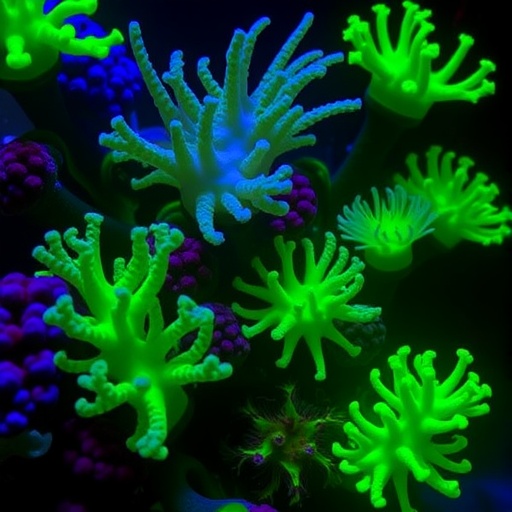
Scientists have long recognized the beauty and ecological significance of corals, but new research has unveiled a fascinating aspect of their biology that shines brightly beneath the waves. Recent studies focusing on the green fluorescent proteins (GFPs) found in species of the coral genus Porites have revealed that these proteins exhibit a remarkable diversity not only across different species but also among various strains within species. This discovery adds a new layer of complexity to our understanding of coral biology, particularly in the context of environmental adaptation and resilience.
The research, carried out in the biodiverse ecosystems of the Great Barrier Reef, specifically tuned into the role of GFPs, which are proteins that emit green light when exposed to ultraviolet or blue light. These proteins serve a variety of functions, including photoprotection, aiding in photosynthesis by channeling light energy, and potentially influencing the symbiotic relationships between corals and the photosynthetic algae living within them. Understanding the distribution and function of GFPs among Porites species has major implications for studying coral health and resilience in the face of climate change.
One of the significant outcomes of this research is the observed variability in GFP patterns across different Porites species. This rich diversity showcases that not all corals are physiologically identical, even if they are closely related. The implication is clear: as environmental conditions change, such as rising temperatures and ocean acidification, corals with varying GFP characteristics may respond differently. This complexity in response mechanisms could provide clues to which species are more susceptible to stressors and which might flourish under new conditions.
The research team’s methodology was rigorous and multifaceted, employing advanced molecular techniques to analyze the genetic material associated with GFP production. By sequencing the genomes of various Porites species and strains, they were able to identify unique genetic markers that correspond to different GFP traits. This molecular analysis not only illuminated the biological pathways responsible for GFP production but also opened avenues for further comparative studies across different coral genera.
In addition to revealing the extraordinary genetic diversity associated with GFPs, the study also highlights the potential applicability of these proteins beyond ecological research. The unique properties of GFPs have already led to their extensive use in biotechnology and medical research, particularly as markers in cellular and developmental biology. By understanding the distinct characteristics of GFPs in coral species, researchers may innovate new applications for these proteins in human health and engineering.
As corals continue to face existential threats from human-induced climate change, the need for conservation strategies becomes ever more critical. The findings regarding GFP variability are not merely academic; they hold practical implications for coral reef management. Understanding which species or genetic strains of Porites may have enhanced resilience can inform restoration efforts and help prioritize conservation resources in a time of global environmental crisis.
While the study provides a foundation for understanding GFP diversity in Porites, it also raises questions about the broader implications for other coral species and ecosystems. Can similar patterns of GFP variability be found across other genera? What does this mean for coral symbiosis and overall reef health? These questions underscore the necessity for continued research into the molecular mechanisms that underpin coral biology and ecology.
Moreover, the aesthetic value of corals, their mesmerizing glow under water, serves as a reminder of the intricate connections between biodiversity and ecosystem health. As ecological stewards, the findings from this research compel us to appreciate not only the beauty but also the complexity of coral reef ecosystems. Conservation efforts must be informed by such scientific discoveries, ensuring that the diverse tapestry of coral life, with all its inherent variations, is preserved for future generations.
To further engage the scientific community and policymakers, creating a dialogue around the implications of GFP diversity could catalyze a larger movement towards sustainable practices in marine conservation. The dissemination of these findings through public outreach, educational programs, and collaborative research initiatives can inspire collective action among stakeholders who hold the power to protect these vital ecosystems.
In conclusion, the study of green fluorescent proteins in Porites corals illuminates a fascinating aspect of marine biology that deeply resonates with broader environmental themes. By exploring the divergence in protein patterns among species and strains, researchers are not only unlocking the mysteries of coral resilience but also paving the way for innovative applications in biotechnology. As we stand at the crossroads of environmental change and biological discovery, the lessons learned from the delicate world of corals will be essential in framing our responses to the challenges facing our oceans and the planet as a whole.
Understanding and preserving the natural beauty and ecological importance of corals is a mission that transcends scientific inquiry; it is an ethical obligation driven by our shared responsibility to protect the planet’s biodiversity.
Goyen, S., Chille, E.E., Stephens, T.G. et al. Green fluorescent proteins show divergent patterns among species and strains of Porites from the Great Barrier Reef.
Coral Reefs (2025). https://doi.org/10.1007/s00338-025-02781-z
Cite Scienmag News
Margaret Porter. (November 9, 2025). Diverse Green Fluorescent Proteins in Great Barrier Reef Porites. Scienmag. https://scienmag.com/diverse-green-fluorescent-proteins-in-great-barrier-reef-porites/
Margaret Porter. "Diverse Green Fluorescent Proteins in Great Barrier Reef Porites." Scienmag, 9 November 2025, https://scienmag.com/diverse-green-fluorescent-proteins-in-great-barrier-reef-porites/. Accessed 4 September 2026.
Margaret Porter. "Diverse Green Fluorescent Proteins in Great Barrier Reef Porites." Scienmag. November 9, 2025. https://scienmag.com/diverse-green-fluorescent-proteins-in-great-barrier-reef-porites/


