


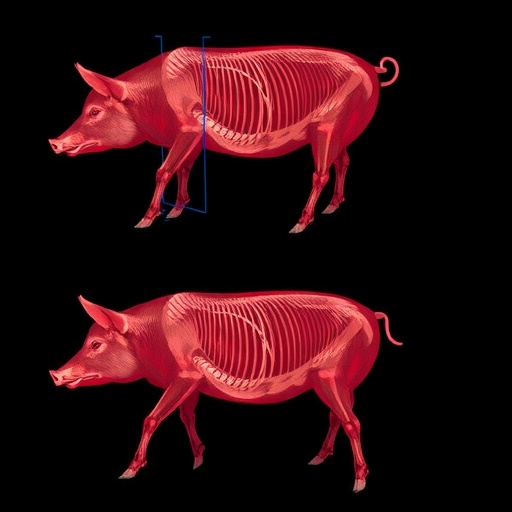
In the realm of livestock genetics, the ability to discern the molecular differences underlying phenotypic variations has profound implications. A recent study led by Fang, S., Zhang, Y., and Yang, R. advances this field significantly by unveiling the single-nucleus transcriptome profiles of skeletal muscle in Diqing Tibetan pigs. This species, known for its variation in body sizes, offers a unique model to explore the genetic frameworks contributing to muscle development and growth regulation.
The research utilizes cutting-edge single-nucleus RNA sequencing (snRNA-seq) technology, which allows for detailed transcriptional analysis at the single-cell level. This method is particularly advantageous in heterogeneous tissues such as skeletal muscle, where distinct cell types contribute to overall function and phenotype. By dissecting the transcriptomic landscape, the researchers aimed to identify key genes and regulatory networks that differ between the muscle tissues of large and small-bodied Tibetan pigs.
In the study, the scientists collected samples from skeletal muscles of these pigs, which were categorized into two distinct size groups. The careful selection of these groups enables a targeted investigation of size-related genetic variations. During the snRNA-seq process, nuclei were isolated from the skeletal muscle cells, followed by the quantification of gene expression on a single-nucleus level. The high resolution of this technique ensures that the data reflects the true biological diversity within the tissue.
Upon analyzing the transcriptomic data, the researchers discovered a multitude of differentially expressed genes (DEGs) associated with muscle growth and development. Among these, genes known to be involved in muscle fiber type specification, hypertrophy, and metabolism surfaced as significant players. This highlights the multifaceted nature of skeletal muscle biology and how variations in gene expression can lead to observable differences in body size.
The team went further to elucidate the pathways through which these DEGs operate. Notably, pathways related to insulin signaling, mitochondrial biogenesis, and protein synthesis were found to be enriched among the upregulated genes in larger pigs. This implies that these larger individuals may possess enhanced metabolic capabilities and growth potential, supported by a distinct transcriptional profile in their muscle tissues.
Furthermore, the integration of bioinformatics approaches allowed for the construction of gene co-expression networks. These networks elucidated the interconnections between the identified genes, painting a more comprehensive picture of the regulatory mechanisms influencing muscle development. Understanding these interactions paves the way for future research aimed at modifying these pathways for improved growth performance in livestock.
In terms of practical applications, the findings from this research carry significant implications for selective breeding programs. By focusing on the identified genes, breeders could potentially select for desirable traits linked to muscle growth and size. Such strategies could enhance productivity in livestock industries while ensuring the sustainability of farming practices.
The sociocultural context of the Diqing Tibetan pigs adds an extra layer of relevance to this research. The local farmers have long recognized the unique characteristics of these pigs, making them an integral part of the region’s agricultural heritage. By integrating modern genomic approaches with traditional knowledge, the researchers not only honor local practices but also aim to improve the livelihoods of farmers through enhanced genetic breeding strategies.
Moreover, this study serves as a compelling example of how genomics can bridge the gap between science and agriculture. The use of advanced technologies like snRNA-seq in the study of economic traits in livestock symbolizes a paradigm shift in animal breeding, aligning with global trends toward precision agriculture. This approach promises to revolutionize how livestock are bred, ultimately leading to more efficient and sustainable food production.
As the study gains visibility, there is a burgeoning interest in the potential applications of these findings across various industries. Other areas of research could benefit, such as understanding muscle diseases in human medicine. By exploring the genetic and molecular parallels between pigs and humans, insights gained could extend beyond agriculture, contributing to advances in health and disease management.
In the broader scope of genetic research, the implications extend to understanding the evolutionary biology of domesticated animals. The Diqing Tibetan pig exemplifies how environmental and selective pressures have shaped genetic diversity in livestock species. This study not only illustrates the current state of knowledge but also sparks curiosity regarding untapped genetic resources in other indigenous breeds worldwide.
As the dialogue around animal welfare, food security, and sustainable farming practices grows, studies like this illuminate the path forward. They remind us of the essential role that genetic understanding plays in addressing pressing challenges faced by the global agricultural community. While the promise of genomic technologies dazzles scientists and farmers alike, it is crucial to remain cognizant of the ethical considerations that accompany such advancements.
In conclusion, the meticulous work of Fang, S., Zhang, Y., and Yang, R. is a testimony to the power of cutting-edge techniques in unveiling the complexities of animal genetics. The insights gained from their single-nucleus transcriptome profiling of skeletal muscle in Diqing Tibetan pigs exemplify the intersection of science and agriculture, providing a blueprint for future explorations. As we navigate the intricate web of genetic influences, the hope remains that such endeavors will lead to healthier livestock, better farming practices, and ultimately, a more sustainable food system.
Fang, S., Zhang, Y. & Yang, R. Single-nucleus transcriptome profiling of skeletal muscle in Diqing Tibetan pigs with distinct body sizes.
BMC Genomics 26, 1045 (2025). https://doi.org/10.1186/s12864-025-12251-z
Cite Scienmag News
Juliet Wilcox. (November 16, 2025). Distinct Body Sizes: Analyzing Pig Skeletal Muscle Transcriptomes. Scienmag. https://scienmag.com/distinct-body-sizes-analyzing-pig-skeletal-muscle-transcriptomes/
Juliet Wilcox. "Distinct Body Sizes: Analyzing Pig Skeletal Muscle Transcriptomes." Scienmag, 16 November 2025, https://scienmag.com/distinct-body-sizes-analyzing-pig-skeletal-muscle-transcriptomes/. Accessed 4 September 2026.
Juliet Wilcox. "Distinct Body Sizes: Analyzing Pig Skeletal Muscle Transcriptomes." Scienmag. November 16, 2025. https://scienmag.com/distinct-body-sizes-analyzing-pig-skeletal-muscle-transcriptomes/


