


A groundbreaking study published recently in the prestigious journal Oncotarget has unveiled a novel therapeutic strategy against castration-resistant prostate cancer (CRPC), a formidable and treatment-refractory form of prostate cancer. This research, led by Shan Lu and Zhongyun Dong at the University of Cincinnati College of Medicine, demonstrates that disrupting the interaction between proliferating cell nuclear antigen (PCNA) and the androgen receptor (AR) can profoundly inhibit cancer cell proliferation and signaling. The findings have marked potential to revolutionize therapeutic approaches for patients no longer responsive to conventional hormone therapies.
Prostate cancer remains one of the most pervasive malignancies affecting men globally. While initial treatment modalities often involve androgen deprivation therapy (ADT) to suppress AR signaling, many patients eventually progress to CRPC. This advanced stage of the disease is characterized by unabated tumor growth despite low circulating androgen levels, a resistance primarily attributed to the persistent activity of both full-length androgen receptors (AR-FL) and splice variants of AR (AR-Vs) that lack dependence on androgens. Understanding how these receptors sustain their activity in the absence of hormones is pivotal for developing next-generation targeted therapies.
The team’s study elucidates that a critical co-factor in sustaining AR activity is PCNA, a well-recognized DNA clamp that facilitates DNA replication and repair. Intriguingly, PCNA also interacts with AR, enabling efficient AR-mediated transcriptional activation. Through detailed biochemical studies, the researchers identified a second PCNA-interacting protein (PIP) box within the AR’s DNA binding domain, designated PIP-box592. This motif significantly enhances the binding affinity of AR-FL to PCNA, particularly when androgen dihydrotestosterone (DHT) is present, albeit such enhancement is absent in constitutively active AR splice variants like AR-V7.
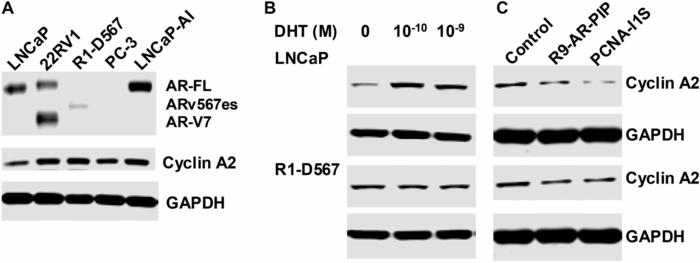
Capitalizing on this discovery, Lu and Dong engineered a cell-permeable peptide, termed R9-AR-PIP, which mimics the identified PIP-box592 domain in AR, effectively acting as a decoy to disrupt the AR-PCNA interaction. Administering R9-AR-PIP to various prostate cancer cell lines, including androgen-dependent LNCaP cells and multiple CRPC cell lines expressing different AR isoforms, significantly reduced AR’s capacity to bind to DNA. This blockade resulted in a marked downregulation of AR target genes critical for cancer cell survival and proliferation.
Complementing the peptide approach, the researchers also evaluated a small molecule inhibitor, PCNA-I1S, known to impede PCNA’s nuclear translocation and its protein-protein interactions. Treatment with PCNA-I1S phenocopied the effects of R9-AR-PIP by attenuating AR activity and suppressing the proliferation of CRPC cells. These findings collectively support a dual modality to target the AR-PCNA axis, offering alternative therapeutic angles for intervention.
Among the most striking results was the observation that both R9-AR-PIP and PCNA-I1S treatments substantially diminished the levels of cyclin A2, a pivotal regulator of the S phase in the cell cycle. Cyclin A2 overexpression is commonly noted in aggressive prostate tumors and correlates with poor clinical outcomes. By curtailing cyclin A2, this therapeutic strategy not only impairs the proliferative capacity of tumor cells but also potentially sensitizes them to other therapeutic modalities.
The mechanistic underpinnings of these interventions reveal a nuanced interplay between androgen stimulation, AR structural domains, and PCNA co-factors. DHT’s ability to augment full-length AR’s interaction with PCNA hints at a complex regulation of AR activity that can be pharmacologically exploited. Meanwhile, the lack of DHT modulation for AR variants emphasizes the heterogeneity of CRPC and the necessity for multifaceted targeting strategies.
Importantly, this research addresses a longstanding challenge in CRPC therapeutics: the effective inhibition of AR splice variants that drive resistance to conventional anti-androgen therapies. By focusing on the conserved AR-PCNA interaction, the R9-AR-PIP peptide and PCNA-I1S small molecule provide promising avenues to overcome the limitations imposed by AR variant-driven resistance mechanisms.
The translational potential of these findings is significant. While current standards leverage androgen suppression and AR antagonists, the eventual emergence of resistant clones diminishes long-term efficacy. The inhibition of AR-PCNA interaction introduces a novel vulnerability, one that directly intersects with the molecular machinery protecting genomic integrity in tumor cells. This dual impact on transcriptional regulation and DNA replication stress may culminate in synthetic lethality, selectively eliminating cancer cells.
Looking forward, the authors emphasize the importance of validating these findings in in vivo models and clinical settings. The pharmacodynamics, bioavailability, and potential off-target effects of these agents warrant rigorous examination. Nonetheless, the study opens vistas for developing combinatorial regimens wherein AR-PCNA interaction inhibitors are combined with existing therapies to delay or prevent the onset of resistance.
Furthermore, this work enriches the broader understanding of how non-traditional functions of DNA repair proteins can be co-opted by oncogenic signaling pathways. PCNA, classically confined to replication and repair, is emerging as a multifunctional scaffold modulating transcription factor activity. Such insights may pave the way for analogous strategies in other malignancies where similar protein interactions drive disease progression.
The implications for personalized medicine are profound. Identifying patients with tumors heavily reliant on AR-PCNA interactions could inform stratified therapeutic approaches, leveraging peptide or small molecule inhibitors tailored to individual molecular profiles. This precision oncology paradigm underscores the necessity of integrating molecular diagnostics with therapeutic innovation.
In summary, the study by Lu and Dong constitutes a seminal step toward the development of innovative therapeutics in castration-resistant prostate cancer. By targeting the AR-PCNA interface—a hitherto underexplored axis—they offer hope for improved outcomes in a patient population with notoriously limited options. As this research progresses from bench to bedside, it represents a promising beacon in the fight against lethal prostate cancer.
News Publication Date: 20-May-2025
Web References:
- Journal: Oncotarget
- DOI: 10.18632/oncotarget.28722
Cite Scienmag News
Nathaniel Bowman. (June 4, 2025). Disrupting PCNA-Androgen Receptor Interaction Inhibits Prostate Cancer Cell Growth. Scienmag. https://scienmag.com/disrupting-pcna-androgen-receptor-interaction-inhibits-prostate-cancer-cell-growth/
Nathaniel Bowman. "Disrupting PCNA-Androgen Receptor Interaction Inhibits Prostate Cancer Cell Growth." Scienmag, 4 June 2025, https://scienmag.com/disrupting-pcna-androgen-receptor-interaction-inhibits-prostate-cancer-cell-growth/. Accessed 3 September 2026.
Nathaniel Bowman. "Disrupting PCNA-Androgen Receptor Interaction Inhibits Prostate Cancer Cell Growth." Scienmag. June 4, 2025. https://scienmag.com/disrupting-pcna-androgen-receptor-interaction-inhibits-prostate-cancer-cell-growth/


