


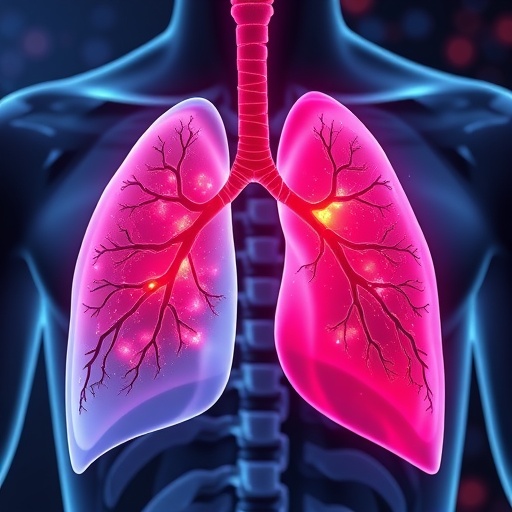
Pulmonary hypertension remains a formidable cardiovascular disorder, often driven by the constriction of blood vessels within the lungs. This constriction restricts the lumen available for blood passage, inevitably increasing vascular resistance and pressure. The dynamic modulation of vessel diameter is a finely tuned biological process, central to maintaining pulmonary vascular tone and normal blood flow. At the heart of this regulation lies the interplay between endothelial cells and smooth muscle cells: endothelial cells synthesize nitric oxide (NO), a crucial signaling molecule that diffuses into adjacent smooth muscle cells. Once inside, NO activates soluble guanylate cyclase (sGC), catalyzing the conversion of GTP to cyclic guanosine monophosphate (cGMP). This cascade culminates in the reduction of intracellular calcium concentrations, thereby prompting smooth muscle relaxation and vessel dilation.
Where conventional wisdom highlights the NO-sGC-cGMP pathway as a linear cascade, groundbreaking new research from Ruhr University Bochum reveals an unexpected player influencing this critical mechanism. Professor Daniela Wenzel and her team have unveiled the pivotal role of beta arrestin 1, a protein historically recognized for its G protein inhibition capabilities but whose broader cellular functions have remained enigmatic. Contrary to the initial assumption that beta arrestins merely terminate G protein-coupled receptor signaling, the Bochum researchers demonstrate that beta arrestin 1 serves as a critical scaffold protein. It orchestrates the positioning and stabilization of essential signaling entities, directly impacting vascular tone in the pulmonary circuit.
To decipher the intricacies of beta arrestin’s involvement, the research team employed genetically engineered mouse models, meticulously knocking out individual beta arrestin isoforms. Their investigative lens focused on how these altered mice responded to NO-mediated vasodilation compared to wild-type controls. Strikingly, the ablation of beta arrestin 2 exhibited negligible effects on pulmonary vessel relaxation. In stark contrast, mice deficient in beta arrestin 1 developed pronounced pulmonary hypertension, underscoring this subtype’s unique and indispensable role. Upon administration of nitric oxide donors, these beta arrestin 1-null mice exhibited significantly impaired vasodilation, corroborating the hypothesis that beta arrestin 1 is crucial for NO-dependent smooth muscle relaxation.
The mechanistic revelations did not halt at phenotypic observations. To unravel the biochemical pathways underpinning beta arrestin 1’s influence, the researchers delved deeper into the molecular interactions of sGC. This enzyme’s activity hinges on its heme prosthetic group, centered on an iron ion that must persist in the ferrous (divalent) state to react with NO and produce cGMP efficiently. It was demonstrated that beta arrestin 1 physically associates with sGC, facilitating the recruitment of an enzyme responsible for reducing oxidized heme iron back to its active ferrous state. This reduction is vital for the continuous sensitivity and responsiveness of sGC to NO. The strategic positioning of this reductase via beta arrestin 1 effectively maintains the functionality of sGC, preventing its desensitization during oxidative stress or pathological conditions.
These insights into beta arrestin 1’s scaffolding role and its impact on the redox state of sGC heme iron open new horizons in pulmonary vascular biology. Dr. Alexander Seidinger, a leading author of the study, emphasized the potential clinical ramifications of this discovery, hinting at novel therapeutic avenues. Modulating beta arrestin 1’s activity or developing pharmacological agents that enhance its facilitation of sGC function could pave the way for groundbreaking treatments targeting pulmonary hypertension, a condition notoriously difficult to manage with existing pharmacotherapies.
The collaborative research effort between Ruhr University Bochum and Bonn University also sparks intriguing genetic questions. Professor Bernd Fleischmann highlighted the prospect that mutations affecting beta arrestin 1 expression or function might underlie susceptibility to pulmonary hypertension in human patients. Such genetic anomalies could impair the delicate vascular relaxation mechanism, predisposing individuals to sustained vascular constriction and elevated pulmonary arterial pressure. Identifying such mutations would not only provide diagnostic biomarkers but also foster personalized medicine approaches tailored to restore or compensate for impaired beta arrestin 1 function.
Pulmonary hypertension’s pathophysiology is complex and multifactorial, involving vasoconstriction, vascular remodeling, and thrombosis. The discovery of beta arrestin 1’s integral role in vascular tone regulation adds a previously unappreciated layer to this intricate puzzle. It underscores how scaffold proteins, once considered secondary signaling components, can exert formidable control over critical enzymatic pathways and cellular responses. Such paradigm shifts in understanding molecular regulators compel a reevaluation of therapeutic targets beyond traditional receptors and enzymes.
Moreover, this research exemplifies the significance of protein-protein interactions in cellular signaling fidelity. Beta arrestin 1 does more than tether signals; it orchestrates spatial and temporal dynamics essential for vascular homeostasis. The stabilization and protection of sGC’s functional heme iron within the oxidant-rich pulmonary environment could become a focal point for drug discovery, setting a precedent for targeting scaffolding molecules to bolster endogenous protective mechanisms against cardiovascular diseases.
The experimental design and technology deployed to reveal beta arrestin 1’s role involved a sophisticated combination of genetic engineering, biochemical assays, and hemodynamic measurements. By integrating mouse genetics with functional imaging and molecular biology, the study convincingly links molecular mechanisms to physiological outcomes. This holistic approach serves as a blueprint for future investigations into the molecular underpinnings of vascular diseases and system-wide signaling processes.
In light of the ever-growing global burden of pulmonary hypertension, with its high morbidity and mortality rates, advancing understanding of molecular regulators like beta arrestin 1 carries profound translational potential. Traditional therapies aimed at vasodilation often fail to achieve lasting efficacy, partly due to incomplete knowledge of signaling modulation within vascular cells. The identification of beta arrestin 1’s dual functionality—both as an inhibitor of classical G protein signaling and as an indispensable facilitator of sGC activity—could revolutionize pharmacotherapeutic strategies.
Looking forward, the scientific community anticipates further exploration into how beta arrestin 1’s interactions vary under pathological conditions and whether its modulation can reverse or mitigate vascular remodeling. Investigations into small molecules or biologics that specifically enhance beta arrestin 1’s beneficial scaffolding functions without impeding its regulatory roles offer tantalizing therapeutic prospects. This receptor-independent control of vascular tone might constitute a novel drug class that synergizes with current treatments for pulmonary hypertension.
Ultimately, the dynamic vascular system demands precise control at multiple regulatory nodes, and the discovery of beta arrestin 1 as a key regulator reinforces the sophistication of cellular signaling networks. This breakthrough not only broadens our comprehension of pulmonary vascular regulation but also exemplifies the power of fundamental research in unveiling targets with immense clinical significance. As the scientific community digests these findings, one thing is clear: beta arrestin 1 has arrived on the stage of cardiovascular research, poised to inspire innovative interventions for pulmonary hypertension and beyond.
News Publication Date: 9-Feb-2026
Web References:
http://dx.doi.org/10.1073/pnas.2512602123
Cite Scienmag News
Drew Townsend. (February 10, 2026). Discovering a New Contributor to Pulmonary Hypertension: Breakthrough Insights. Scienmag. https://scienmag.com/discovering-a-new-contributor-to-pulmonary-hypertension-breakthrough-insights/
Drew Townsend. "Discovering a New Contributor to Pulmonary Hypertension: Breakthrough Insights." Scienmag, 10 February 2026, https://scienmag.com/discovering-a-new-contributor-to-pulmonary-hypertension-breakthrough-insights/. Accessed 3 September 2026.
Drew Townsend. "Discovering a New Contributor to Pulmonary Hypertension: Breakthrough Insights." Scienmag. February 10, 2026. https://scienmag.com/discovering-a-new-contributor-to-pulmonary-hypertension-breakthrough-insights/


