


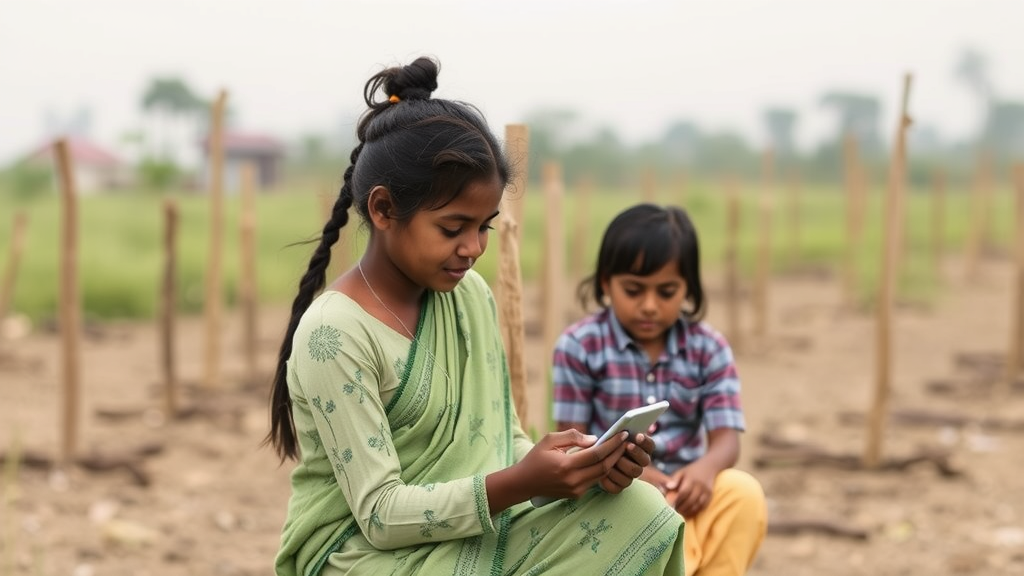
A new study from Bangladesh has found that although electronic health services are widely promoted as a solution to the country’s rural healthcare shortages, most people living near the facilities meant to deliver them have never actually used one. The research, conducted at the Upazila Health Complex level and published in the journal Discover Social Science and Health, reveals a striking gap between the enthusiasm surrounding digital health and the reality on the ground in one of the world’s most densely populated developing nations. Even as internet access spreads rapidly through rural Bangladesh, e-health remains an untapped resource for the vast majority of patients who could benefit from it most.
The study was carried out by a team of researchers from Shahjalal University of Science and Technology in Sylhet, led by Amit Bhowmick, with contributions from Md Mohi Uddin Rajib, Md. Habibur Rahman and Shimul Roy. Using a mixed-methods research design, the team combined a quantitative survey of 384 respondents, selected through simple random sampling, with qualitative face-to-face interviews involving 16 service recipients and 10 service providers. This dual approach allowed the researchers to measure not only the statistical patterns of awareness and usage but also the lived experiences and frustrations of people working within and relying upon the Upazila Health Complexes, the secondary-level facilities that form the backbone of rural healthcare delivery in Bangladesh.
The headline numbers tell a story of paradox. On the one hand, connectivity is no longer the obstacle it once was: 81 percent of respondents reported having internet access at home, a figure that reflects the extraordinary expansion of mobile broadband across South Asia over the past decade. On the other hand, 68 percent of respondents had never used an e-health service of any kind. Awareness of what e-health services even exist scored lowest of all measured dimensions, with a mean score of just 2.53, while readiness to use such services, at 4.10, and perceived benefits, at 4.25, were both rated highly. Perceived barriers also scored high, at 4.21, suggesting that people recognize both the promise of digital health and the substantial obstacles standing in its way.
This combination of low awareness and high readiness is perhaps the most consequential finding of the entire study. It indicates that the problem is not a lack of demand or an unwillingness among rural Bangladeshis to embrace digital medicine. People are, in principle, ready and willing to consult doctors remotely, access electronic records, and call health hotlines. What they lack is basic knowledge that these services exist and practical pathways to use them. The gap, in other words, is not attitudinal but infrastructural and informational, a distinction with major implications for how policymakers should respond.
The qualitative interviews painted a bleaker picture of conditions inside the health complexes themselves. Participants consistently reported that Upazila Health Complexes are inadequately equipped to meet the healthcare needs of the rural populations they serve. Although initiatives such as online record-keeping and e-health hotlines do exist on paper, their actual utilization remains limited. Respondents described shortages of information and communication technology equipment, an absence of skilled personnel to operate and maintain digital systems, insufficient training for existing staff, and poor physical infrastructure, including unreliable electricity and connectivity at the facility level. These are not exotic technical problems; they are the mundane, grinding deficits that determine whether a national digital health strategy functions or fails.
Weak integration with the existing health system emerged as another critical barrier. E-health services in Bangladesh have often been introduced as standalone projects, bolted onto health facilities without being woven into referral pathways, patient records, or routine clinical workflows. The study found that this fragmentation undermines both effectiveness and sustainability, because a telemedicine consultation that cannot feed its results into a patient’s medical record, or a hotline that cannot escalate a case to a physical clinic, delivers only a fraction of its potential value. The researchers emphasize that digital tools amplify the performance of a health system rather than substituting for it, so gaps in the underlying system are magnified rather than erased by digitization.
From a technical and methodological standpoint, the study is careful about the limits of its own conclusions. The authors frame their results as preliminary, context-specific observations intended to inform hypothesis generation for future intervention research, rather than as definitive evidence of causal effects. They explicitly recommend that policy recommendations emerging from the findings should be tested through experimental designs before implementation. This caution is warranted in a research area where enthusiasm frequently outpaces evidence, and where well-intentioned digital health programs in low- and middle-income countries have repeatedly failed to survive beyond their pilot phases. The study’s mixed-methods design, however, gives it particular strength: the survey quantifies the scale of the awareness and usage gap, while the interviews explain the mechanisms behind it, from broken equipment to undertrained staff to patients who simply do not know the services exist.
The implications for Bangladesh’s health policy are significant. The country has invested in digital health ambitions for years, and the government has positioned information technology as a pillar of national development. Yet this study suggests that investments concentrated on smartphones and connectivity in people’s hands have not been matched by investments in the facilities where formal e-health services are supposed to be delivered. Addressing the mismatch will require, at minimum, procurement of reliable ICT equipment at Upazila Health Complexes, sustained training programs that build digital skills among health workers, infrastructure upgrades to guarantee power and connectivity, and public awareness campaigns that translate high readiness into actual utilization. Above all, the researchers argue, Bangladesh needs a clear and coherent policy framework that defines how e-health integrates with the broader health system, rather than a patchwork of disconnected initiatives.
For the international global-health community, the findings offer a sobering case study with relevance far beyond Bangladesh. Rural health systems across South Asia, Sub-Saharan Africa and beyond face strikingly similar configurations: rising consumer connectivity, under-resourced public facilities, enthusiastic national digital strategies, and weak last-mile implementation. The Bangladesh study suggests that the binding constraint on e-health effectiveness in such settings is rarely the technology itself. It is the institutional capacity, human resources and system integration that determine whether digital tools reach the patients who need them. Until those foundations are strengthened, the researchers conclude, e-health initiatives will continue to demonstrate significant potential on paper while delivering limited impact in the communities they are designed to serve. The next step, they argue, is rigorous experimental research to identify which interventions, deployed under which conditions, can finally close the gap between digital health’s promise and its performance in rural Bangladesh.
Subject of Research: Effectiveness of e-health services at the Upazila Health Complex level in rural Bangladesh
Article Title: Effectiveness of E health services at Upazila health complex level in Bangladesh
Article References: Bhowmick, A., Rajib, M. M. U., Rahman, M. H., & Roy, S. (2026). Effectiveness of E health services at Upazila health complex level in Bangladesh. Discover Social Science and Health. https://doi.org/10.1007/s44155-026-00461-z
Image Credits: AI Generated
DOI: 10.1007/s44155-026-00461-z
Keywords: e-health, Bangladesh, Upazila health complex, digital health, rural healthcare, health information technology, awareness, readiness, perceived benefits, barriers, telemedicine, health policy
Cite Scienmag News
Courtney Benton. (September 12, 2026). Digital Health Promises Much but Delivers Little in Rural Bangladesh, Study Finds. Scienmag. https://scienmag.com/digital-health-promises-much-but-delivers-little-in-rural-bangladesh-study-finds/
Courtney Benton. "Digital Health Promises Much but Delivers Little in Rural Bangladesh, Study Finds." Scienmag, 12 September 2026, https://scienmag.com/digital-health-promises-much-but-delivers-little-in-rural-bangladesh-study-finds/. Accessed 6 October 2026.
Courtney Benton. "Digital Health Promises Much but Delivers Little in Rural Bangladesh, Study Finds." Scienmag. September 12, 2026. https://scienmag.com/digital-health-promises-much-but-delivers-little-in-rural-bangladesh-study-finds/


