


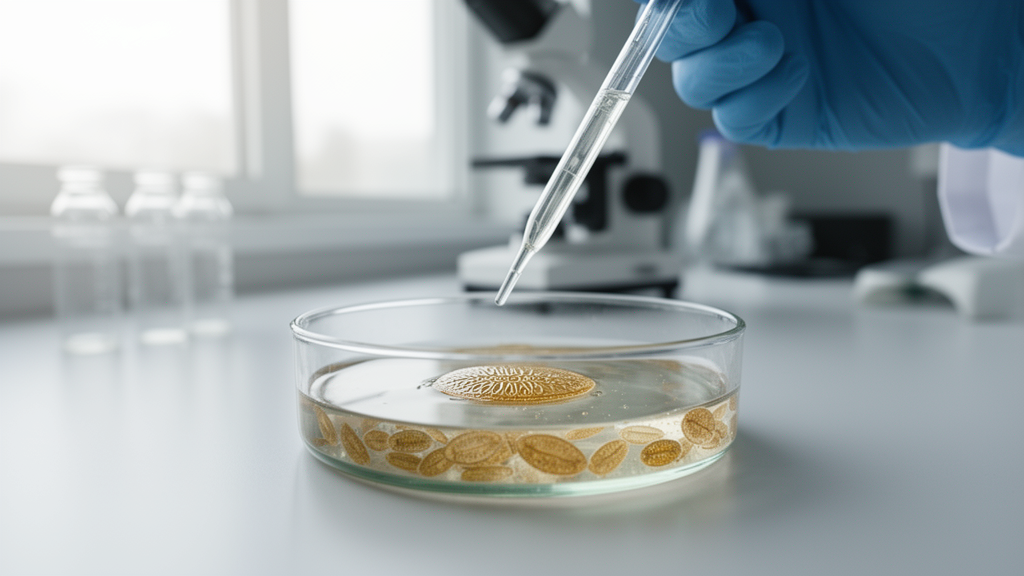
Deep beneath the surface of every river, lake and ocean, an invisible army of microscopic algae is quietly recording the health of the water. Diatoms, single-celled organisms encased in ornate glass-like shells, have long served as nature’s water quality auditors. Now, a sweeping new review published in the journal Metabarcoding and Metagenomics reveals that scientists are reading their message in an entirely new way: not through the eyepiece of a microscope, but through their DNA. The review, led by an international team of aquatic ecologists, systematically analyzed 128 peer-reviewed studies on diatom DNA metabarcoding and concludes that this next-generation technique is fundamentally transforming aquatic biodiversity assessment and global biomonitoring.
Diatoms are among the most diverse groups of algae on Earth, with an estimated species richness ranging from 30,000 to as many as 100,000 species. They dominate both freshwater and marine habitats, anchoring food webs as primary producers and delivering ecosystem services that include oxygen production, nutrient cycling, climate regulation and sediment stabilization. Because each species carries a specific ecological optimum and tolerance to variables such as nutrient concentrations, pH and conductivity, shifts in diatom community composition provide a precise biological readout of environmental conditions, both recent and historical. This sensitivity has made diatoms cornerstone bioindicators in legislative water management, most notably the European Water Framework Directive, where diatom-based indices are routinely used to grade the ecological status of lakes and rivers.
Traditionally, reading that biological signal meant identifying diatoms under a light microscope based on the morphology of their siliceous exoskeletons, a practice with roots stretching back to the early eighteenth century. The approach works, but it is slow, expensive and demands rare taxonomic expertise. Worse, diatom taxonomy is constantly evolving as microscopy and molecular methods improve, meaning that species lists generated by different laboratories often reflect different levels of skill, making comparisons between studies and monitoring campaigns notoriously difficult. DNA metabarcoding offers a radical alternative: by extracting genetic material from environmental samples and sequencing it in bulk with high-throughput platforms, researchers can identify every diatom species present in dozens of samples simultaneously, without ever looking at a single cell.
To chart the rise of this technology, the review team conducted a systematic search of the Web of Science database, screening more than 580 articles and applying strict criteria that excluded studies targeting other microalgae, bacteria or protists in general, as well as reviews and opinion papers. The final dataset comprised 128 primary research publications, from which the authors extracted standardized information on sampling substrates, DNA extraction methods, target gene regions, sequencing technologies and bioinformatic pipelines. The geographic picture is striking: research activity clusters heavily in Europe, North America and East Asia, with France and China as the most frequently sampled countries, followed by the United States, Spain, Hungary, Norway, Italy, Serbia and Switzerland. Contributions from Africa, South America and the Middle East remain sparse, exposing a substantial uptake gap between the global North and South that the authors say must be closed if DNA-based monitoring is to fulfill its worldwide promise.
The technical heart of the review lies in its dissection of the seven-step metabarcoding workflow: sampling and preservation, DNA extraction, PCR amplification, library preparation, sequencing, bioinformatic analysis and data analysis. Each step, the authors demonstrate, directly influences the reliability of the final results. Sampling protocols can largely be borrowed from traditional morphological monitoring, but with added rigor to prevent cross-contamination, including gloves and disinfected equipment. Preservation choices matter enormously: formaldehyde, sometimes used in morphological analyses, degrades DNA, while ethanol at a minimum concentration of 70 percent is required for genetic preservation, compared with the 50 percent sufficient for fixing cells for microscopy. Encouragingly, a study testing three storage methods and storage times from one day to one year found no significant effect on ecological index values or diversity metrics, suggesting the workflow is more forgiving than researchers once feared.
DNA extraction is equally critical, particularly for single-celled organisms where inefficient lysis can underrepresent or entirely lose rare species present in low cell numbers. Most reviewed studies rely on commercial extraction kits, with those designed for soil samples proving most popular because they remove PCR inhibitors such as humic acids. Comparative research testing five different extraction protocols found that all proved suitable for high-throughput sequencing and that extraction method did not significantly influence taxonomic unit richness. A more recent four-kit comparison similarly concluded that community compositions were largely consistent across extraction methods, indicating that this step introduces minimal bias in multi-taxa analyses.
Perhaps the most consequential technical choice is the genetic marker itself. A good barcode must be universal, taxonomically informative and flanked by conserved primer binding sites. Of the three markers investigated across chloroplast, nuclear and mitochondrial genomes, the chloroplast-encoded rbcL gene has emerged as the clear frontrunner. A 263-base-pair region of rbcL, variable enough for species-level discrimination yet amplifiable from degraded environmental DNA, has been used in more than 50 publications, making it the core marker of the field. At the genus level, rbcL identifies 80.4 percent of diatom genera, compared with 66.7 percent for nuclear 18S rDNA, a gap the authors attribute largely to rbcL’s more comprehensive reference database. Sequencing technology has evolved in parallel, from early 454 pyrosequencing and Ion Torrent platforms to the sustained dominance of Illumina MiSeq, while third-generation long-read platforms from Oxford Nanopore Technologies and Pacific Biosciences now promise full-length barcode profiles and even in-field sequencing with portable devices.
Bioinformatics is where raw sequence data becomes ecological insight, and the review shows this step is anything but trivial. Early studies relied on customized workflows and legacy tools such as mothur and OBITools, but from around 2018 onward DADA2 rose to become the most used pipeline between 2020 and 2024. The field is shifting from clustering sequences into operational taxonomic units, which are study-specific, toward amplicon sequence variants that represent exact biological sequences comparable across studies and datasets. Even more intriguing is the rise of taxonomy-free indices, which assign ecological profiles directly to genetic units without requiring species names. In one landmark study, this approach correctly assessed the ecological status of 77 percent of analyzed sites and harnessed nearly 95 percent of available units for index calculation, compared with just 35 percent under conventional taxonomic assignment, because so many sequences remain unclassified due to gaps in reference libraries.
Those reference library gaps are the field’s most persistent bottleneck. The leading diatom database, diat.barcode, has grown from 3,549 barcodes covering 715 species at its 2012 launch to 9,233 barcodes covering 1,705 species today, yet 28 percent of its entries have unknown geographic origins and understudied regions remain poorly represented, directly lowering taxonomic assignment success. Discrepancies with microscopy also persist: while microscopy datasets typically find more species across all samples in a study, metabarcoding detects higher local richness within individual samples, thanks to sequencing depths of tens of thousands of reads versus the standard count of just 400 frustules. Abundance estimation poses another challenge, since gene copy numbers correlate with cell biovolume, causing large species such as Melosira varians to dominate molecular inventories and occasionally even shift a waterbody’s quality grade. Biovolume correction factors are increasingly applied to reconcile the two methods.
Despite these hurdles, the evidence for real-world adoption is mounting. Molecular and microscopy-based values of the Specific Pollution Sensitivity Index, one of Europe’s most widely used diatom indices, correlate significantly, and large-scale studies, including an analysis of 1,788 streams and rivers in the United States, confirm that diatom assemblages track nitrogen, phosphorus, conductivity and pH with remarkable fidelity. The technology has even crossed into forensics, where diatom DNA arrays are being explored as a more sensitive alternative to conventional scanning electron microscopy in drowning diagnosis, since traditional methods lose many frustules during sample preparation. Standardization efforts led by the European Committee for Standardization and the International Organization for Standardization, including new 2025 standards integrating metabarcoding into routine benthic diatom sampling, signal that the molecular era of water quality monitoring is no longer a laboratory curiosity. The authors conclude that coordinated international expansion of reference databases, consensus protocols for every workflow step, advanced bioinformatic solutions incorporating machine learning, and robust methods linking read abundance to true species abundance will determine how quickly this viral technology moves from promise to practice in safeguarding the world’s waters.
Subject of Research: DNA metabarcoding of diatoms: A next-generation tool for aquatic biodiversity and bioassessment
Article Title: DNA metabarcoding of diatoms: A next-generation tool for aquatic biodiversity and bioassessment
Article References: Abubaker, B., Stenger-Kovács, C., Rimet, F., & Tapolczai, K. (2026). DNA metabarcoding of diatoms: A next-generation tool for aquatic biodiversity and bioassessment. Metabarcoding and Metagenomics, 10, Article e168096. https://doi.org/10.3897/mbmg.10.168096
Image Credits: AI Generated
Keywords: metabarcoding, diatoms, next-generation, tool, aquatic, biodiversity, bioassessment, scientific research
Cite Scienmag News
Margaret Porter. (October 16, 2026). Diatom DNA Metabarcoding Transforms Aquatic Biodiversity and Bioassessment. Scienmag. https://scienmag.com/diatom-dna-metabarcoding-transforms-aquatic-biodiversity-and-bioassessment/
Margaret Porter. "Diatom DNA Metabarcoding Transforms Aquatic Biodiversity and Bioassessment." Scienmag, 16 October 2026, https://scienmag.com/diatom-dna-metabarcoding-transforms-aquatic-biodiversity-and-bioassessment/. Accessed 16 October 2026.
Margaret Porter. "Diatom DNA Metabarcoding Transforms Aquatic Biodiversity and Bioassessment." Scienmag. October 16, 2026. https://scienmag.com/diatom-dna-metabarcoding-transforms-aquatic-biodiversity-and-bioassessment/


