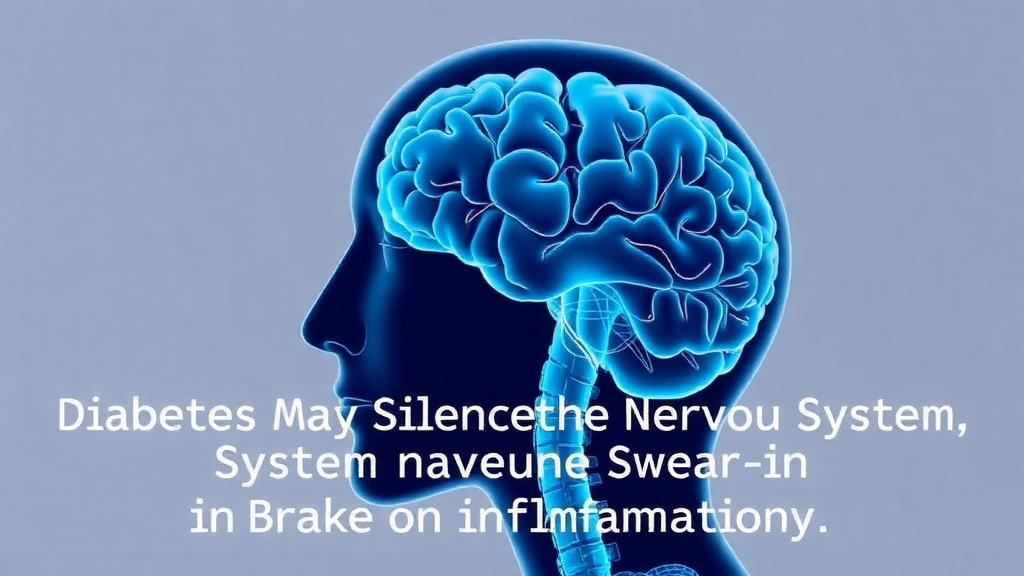
Diabetes has long been described as a disorder of glucose metabolism, but researchers are increasingly framing it as a chronic, multisystem disease in which persistent metabolic stress, oxidative injury, microvascular damage and low-grade inflammation feed on one another. A new review published in Health Science Reports argues that one of the most underappreciated players in this destructive feedback loop is diabetic autonomic neuropathy, or DAN, a complication in which the nerves that unconsciously regulate the heart, gut, blood vessels and sweat glands slowly deteriorate. The authors propose that DAN is not merely a downstream consequence of high blood sugar, but an active driver of chronic inflammation, because it disables a neural circuit known as the inflammatory reflex, the body’s built-in brake on cytokine production.
DAN is a serious and frequently underrecognized complication of both type 1 and type 2 diabetes. It can involve the sympathetic and parasympathetic arms of the autonomic nervous system and may affect cardiovascular, gastrointestinal, genitourinary and sudomotor function. Its most extensively studied form, cardiac autonomic neuropathy, impairs cardiovascular control and manifests as resting tachycardia, exercise intolerance, reduced heart rate variability, baroreflex dysfunction and orthostatic hypotension, while raising the risk of arrhythmias and silent myocardial ischemia. The condition is closely tied to disease duration, metabolic control and the presence of other microvascular complications, and it is strongly associated with cardiovascular mortality, impaired quality of life and progressive end-organ dysfunction.
Crucially, the review highlights that parasympathetic dysfunction often appears earlier than sympathetic impairment. Reductions in heart rate variability, or HRV, the beat-to-beat variation in heart rhythm that serves as a noninvasive index of vagal tone, are considered one of the earliest detectable markers of cardiac autonomic neuropathy, often identified in patients with subclinical disease before overt autonomic symptoms become apparent. Because the vagus nerve plays a central role in autonomic regulation, this early parasympathetic withdrawal may have physiological consequences that extend well beyond cardiovascular control, potentially weakening the nervous system’s ability to restrain immune responses throughout the body.
The pathogenesis of DAN is multifactorial. Chronic hyperglycemia activates a cascade of biochemical pathways that injure neurons, including the polyol pathway, the accumulation of advanced glycation end-products, activation of protein kinase C and increased flux through the hexosamine pathway. These metabolic disturbances promote oxidative and nitrosative stress, mitochondrial dysfunction and abnormal intracellular signalling, ultimately causing structural and functional damage to autonomic nerve fibres. In parallel, diabetes sustains a state of chronic low-grade systemic inflammation, characterised by elevated levels of tumour necrosis factor-alpha, interleukin-6 and C-reactive protein, which can further damage neurons through oxidative stress, endothelial dysfunction and direct neurotoxic effects.
The inflammatory reflex, the circuit at the heart of the new hypothesis, is a neuroimmune regulatory loop through which the nervous system detects inflammatory signals and modulates immune activity. It functions much like other homeostatic reflexes: afferent fibres of the vagus nerve sense peripheral inflammatory signals, including cytokines, pathogen-associated molecular patterns and damage-associated molecular patterns, and transmit them to the brainstem, where they are integrated in nuclei such as the nucleus tractus solitarius. The efferent arm then engages the cholinergic anti-inflammatory pathway, or CAP, in which acetylcholine-mediated signalling inhibits the release of pro-inflammatory cytokines from immune cells, providing what researchers describe as a neural brake on inflammation.
A central component of this pathway is the interaction between acetylcholine and nicotinic acetylcholine receptors expressed on immune cells, particularly the alpha-7 nicotinic acetylcholine receptor found on macrophages. Experimental studies have shown that activation of these receptors inhibits nuclear factor-kappa-B signalling and suppresses the production of TNF-alpha, interleukin-6 and interleukin-1 beta. Although the precise anatomical and cellular intermediaries of the pathway remain an area of active investigation, and the afferent arm has been most robustly demonstrated in preclinical animal models, the functional role of cholinergic signalling in restraining immune responses is well supported by experimental and translational research.
The review argues that DAN compromises this circuit at multiple levels. Structural degeneration of vagal fibres, driven by hyperglycemia, oxidative stress and the accumulation of advanced glycation end-products, reduces the anatomical continuity the reflex depends on. Microvascular disease compounds the problem: remodelling of the vasa nervorum, the small vessels supplying the nerves, thickens basement membranes and limits perfusion and oxygenation, producing ischemic injury that accelerates fibre loss. As the functional density of vagal efferents declines, the capacity of efferent signalling to reach immune organs such as the spleen and liver is impaired, effectively disconnecting the central nervous system from its role in managing immune responses.
The disruption may also occur at the level of the immune cells themselves. In the chronic pro-inflammatory environment of diabetes, macrophages and monocytes become primed toward a pro-inflammatory phenotype, a bias that reduced vagal tone can no longer adequately counterbalance. Moreover, experimental data indicate that hyperglycemia and oxidative stress can modify the expression or functional sensitivity of macrophage nicotinic acetylcholine receptors, including the alpha-7 receptor, potentially reducing cholinergic suppression of cytokine release. In other words, even the anti-inflammatory signals that do get transmitted may be received by unresponsive cells, a phenomenon the authors characterise as a form of cholinergic resistance, though human evidence on receptor sensitivity in diabetes remains scarce. The result is a proposed bidirectional vicious cycle in which inflammation damages autonomic nerves, while autonomic failure removes the neural restraint on inflammation.
Translating this framework into the clinic, the authors suggest that assessment should move beyond isolated organ dysfunction toward evaluation of the neuroimmune axis as a whole. Standard cardiovascular autonomic reflex tests, including heart rate responses to deep breathing, the Valsalva manoeuvre and orthostatic challenge, remain the diagnostic reference for cardiac autonomic neuropathy, while HRV analysis offers a noninvasive index of vagal tone. These measures could be paired with circulating inflammatory markers such as TNF-alpha, interleukin-6 and interleukin-1 beta, so that the combination of reduced HRV and elevated cytokines serves as an initial indicator of neuroimmune dissociation. Direct evaluation of reflex integrity, including cholinergic signalling capacity and receptor function, remains confined to research settings for now.
Therapeutically, the review points toward a shift from symptomatic relief to the restoration of neuroimmune homeostasis. Strict glycemic control remains the cornerstone for preventing further nerve degeneration, but agents with pleiotropic effects are attracting growing interest. Glucagon-like peptide-1 receptor agonists and sodium-glucose cotransporter-2 inhibitors have been shown to attenuate systemic inflammation, reduce oxidative stress and improve HRV, while metformin’s activation of AMPK offers anti-inflammatory and microvascular benefits. Lifestyle interventions such as regular physical activity can enhance HRV and endogenous anti-inflammatory capacity, and investigational approaches including vagus nerve stimulation and alpha-7 receptor agonists may eventually allow direct manipulation of the inflammatory reflex, though their application to diabetic autonomic neuropathy remains largely experimental.
The authors are careful to emphasise that the human evidence linking autonomic dysfunction with systemic inflammation is largely observational and correlational. It remains difficult to determine whether impaired autonomic regulation contributes to sustained inflammation or whether both phenomena arise in parallel as independent manifestations of metabolic injury. Future research priorities include longitudinal studies with dynamic modelling to establish temporal relationships, better biomarkers that capture the specific efferent capacity of the cholinergic pathway, stratified analyses accounting for differences between type 1 and type 2 diabetes and comorbidities such as hypertension and chronic kidney disease, and characterisation of alpha-7 receptor expression and signalling on immune cells from diabetic patients. Ultimately, randomised controlled trials testing whether restoring autonomic function reduces inflammatory burden and mitigates microvascular complications will determine whether the inflammatory reflex is a genuinely modifiable therapeutic target.
If validated, the implications would be considerable. Reframing diabetic autonomic neuropathy as a state of autonomic-mediated immune dysregulation suggests that current strategies prioritising glycemic regulation, while necessary, may be insufficient, and that optimal management must eventually address the restoration of the cholinergic anti-inflammatory pathway. By converging diabetology, neurology and immunology, this framework opens a potential path toward precision-medicine approaches that move beyond managing symptomatic decline toward the proactive preservation of autonomic and inflammatory balance in people living with diabetes.
Subject of Research: Diabetic autonomic neuropathy and impairment of the cholinergic anti-inflammatory reflex
Article Title: Diabetic Autonomic Neuropathy and Impaired Inflammatory Reflex
Article References: Dastmalchi, N., Doustvandi, M. A., Rahbarghazi, R., & Hajiasgharzadeh, K. (2026). Diabetic Autonomic Neuropathy and Impaired Inflammatory Reflex. Endocrinology, Diabetes & Metabolism, 9(6), Article e70349. https://doi.org/10.1002/edm2.70349
Image Credits: AI Generated
DOI: 10.1002/edm2.70349
Keywords: diabetic autonomic neuropathy, inflammatory reflex, cholinergic anti-inflammatory pathway, vagus nerve, heart rate variability, alpha-7 nicotinic acetylcholine receptor, chronic inflammation, hyperglycemia, oxidative stress, microvascular injury, cytokines, neuroimmune dysregulation
Cite Scienmag News
Ophelia Keating. (October 10, 2026). Diabetes May Silence the Nervous System’s Built-In Brake on Inflammation. Scienmag. https://scienmag.com/diabetes-may-silence-the-nervous-systems-built-in-brake-on-inflammation/
Ophelia Keating. "Diabetes May Silence the Nervous System’s Built-In Brake on Inflammation." Scienmag, 10 October 2026, https://scienmag.com/diabetes-may-silence-the-nervous-systems-built-in-brake-on-inflammation/. Accessed 10 October 2026.
Ophelia Keating. "Diabetes May Silence the Nervous System’s Built-In Brake on Inflammation." Scienmag. October 10, 2026. https://scienmag.com/diabetes-may-silence-the-nervous-systems-built-in-brake-on-inflammation/