


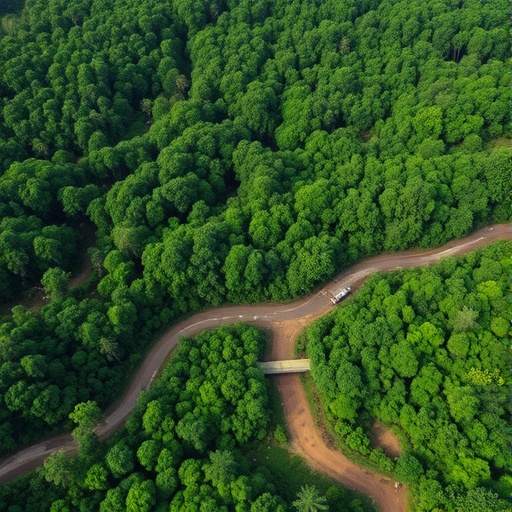
Antonio has devoted the last seven years of his life to combating a crisis engulfing one of Earth’s most extraordinary ecosystems—the Brazilian Amazon. Since 2019, as a firefighter stationed within the Chico Mendes Extractive Reserve, a globally revered biodiversity hotspot, Antonio has been a frontline defender against wildfires. Yet, the year 2024 marked an unprecedented escalation in the intensity and scale of these fires. Antonio recounts, “The forest burned as if it were a dry pasture; the ferocity was unlike anything I had ever witnessed. It was terrifying for those of us risking our lives to protect these vital landscapes.”
This alarming increase in fire severity is not an isolated observation but is substantiated by recent comprehensive research led by an interdisciplinary international team headquartered at the University of Cambridge. Published in the prestigious Proceedings of the National Academy of Sciences, their study reveals that the existing policies aimed at curbing deforestation in the Brazilian Amazon have fallen short in addressing a more insidious problem: forest degradation. Unlike deforestation where entire forested areas are cleared, degradation is characterized by damage that leaves trees standing but drastically undermines forest health through mechanisms such as fires, illegal logging, fragmentation, drought stress, and overhunting.
The ecological consequences of degradation are dire. As forest canopies are thinned by degradation, the microclimate alters significantly—resulting in warmer, drier conditions on the forest floor. This transformation turns once lush, moisture-retentive environments into tinderboxes primed for recurrent fires. Federico Cammelli, the lead author from Cambridge’s Department of Geography and Conservation Research Institute, explains, “Degraded tropical forests experience low-intensity fires that often burn unseen beneath the canopy. Although initially subtle, these fires initiate a cascade effect leading to the gradual mortality of standing trees, effectively transforming the forest into a necropolis of dead wood.”
The scale of degradation’s climate implications is substantial. Earlier analyses encompassing 2001 to 2018 found that net carbon emissions released from forest degradation rival, or even exceed, those from outright deforestation. Projections suggest that by 2050, degradation could permeate the entire Brazilian Amazon. Yet, despite its significance, forest degradation remains largely overlooked in environmental governance frameworks.
Over the past two decades, Brazil has enacted several ambitious policies that have notably curtailed deforestation rates. The government’s Plan for Prevention and Control of Deforestation in the Amazon, established in the mid-2000s, successfully slashed tree clearing by an estimated 60 to 80 percent. Additional private-sector initiatives, including a soybean moratorium preventing commodities linked to deforested land from entering the market, and voluntary commitments by major meat packers excluding cattle sourced from newly deforested ranches, have reinforced these gains.
Nevertheless, according to Cammelli and colleagues’ findings, these deforestation-centric regulations have not translated into reductions in forest degradation. The study scrutinized four major policies implemented across three Brazilian states and found no significant impact on degradation rates. While slowing deforestation does indirectly reduce some degradation via diminished edge effects—the stresses created where cleared land adjoins intact forest—key drivers of degradation such as fire outbreaks, illegal timber extraction, and fragmentation persist unchecked.
Intriguingly, the research indicates that some policy successes may inadvertently exacerbate degradation. For instance, the G4 cattle agreement, endorsed by Brazil’s largest meat packing corporations, correlated with increased timber extraction activities. The authors hypothesize that as cattle ranching became more tightly regulated, operators may have diverted attention and resources to the less-regulated logging sector, intensifying forest degradation.
On the ground in Chico Mendes, Antonio experiences the tangible repercussions of these policy limitations. He observes that the dry season extends progressively each year, enhancing fire risk and reducing forest resilience. Rainfall patterns have also shifted, arriving in sudden, intense deluges that obliterate infrastructure such as bridges and roads, aggravating logistical challenges for firefighting efforts.
Antonio expresses grave concerns about Brazil’s evolving legal framework, stating, “Environmental laws should be more stringent, and offenders must face transparent sanctions. The forest is intertwined with our very existence—if it disappears, so too do we.” His perspective underscores the urgent need for strengthened governance mechanisms to protect these vulnerable ecosystems.
Responding to this urgency, recent updates to Brazilian environmental legislation in 2023 explicitly incorporate forest degradation as a criterion for prioritizing law enforcement activities, targeting municipalities with poor environmental compliance records. Cammelli emphasizes the complexity of mitigating fire damage, noting that wildfires frequently transcend individual properties, complicating legal responsibilities and necessitating landscape-scale management approaches.
Moreover, the timber industry in the region remains insufficiently regulated. The researchers emphasize opportunities for intensifying oversight and enforcement to combat rampant illegal logging, a critical driver of degradation. Without interventions addressing these underlying pressures, degradation will continue to erode the Amazon’s ecological integrity.
Globally, regulatory frameworks exhibit notable gaps in capturing the full scope of degradation. For example, the European Union’s Deforestation Regulation, designed to prohibit imports linked to forest destruction, employs a narrow definition of degradation that fails to adequately recognize the multifaceted damage caused by fires and fragmentation linked to soy and beef production. The Cambridge study therefore calls for an expanded, more inclusive conceptualization of degradation within such policies to ensure comprehensive protection.
Alarmingly, despite pledges to combat deforestation, the team found no evidence of companies operating in the Amazon setting deliberate, measurable targets to address forest degradation. This oversight signals a critical blind spot within corporate sustainability commitments and highlights the imperative for integrating degradation metrics into environmental accountability frameworks.
Professor Rachael Garrett, a senior author affiliated with Cambridge’s Department of Geography and Conservation Research Institute, encapsulates the vital message of the study: “Preventing deforestation and degradation is far more critical for safeguarding climate and biodiversity than attempting to restore what has already been lost. Many ecological functions and species cannot be replaced once destroyed.” The urgency resonating through these findings cannot be overstated.
As Antonio concludes, “With every passing year, the forest and its wildlife grow more vulnerable.” His frontline experience, coupled with the rigorous scientific evidence presented, makes a compelling case for a fundamental reevaluation of forest protection strategies in the Amazon. Time is running out to safeguard this irreplaceable global treasure from the creeping threats of degradation.
News Publication Date:
1-May-2026
Web References:
https://dx.doi.org/10.1073/pnas.2507793123
Cite Scienmag News
Margaret Porter. (April 27, 2026). Deforestation Policies Fall Short as Brazilian Amazon Faces an Even Greater Threat. Scienmag. https://scienmag.com/deforestation-policies-fall-short-as-brazilian-amazon-faces-an-even-greater-threat/
Margaret Porter. "Deforestation Policies Fall Short as Brazilian Amazon Faces an Even Greater Threat." Scienmag, 27 April 2026, https://scienmag.com/deforestation-policies-fall-short-as-brazilian-amazon-faces-an-even-greater-threat/. Accessed 3 September 2026.
Margaret Porter. "Deforestation Policies Fall Short as Brazilian Amazon Faces an Even Greater Threat." Scienmag. April 27, 2026. https://scienmag.com/deforestation-policies-fall-short-as-brazilian-amazon-faces-an-even-greater-threat/


