


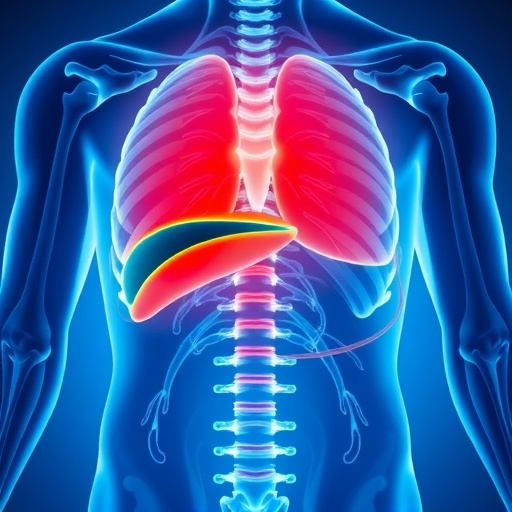
In a groundbreaking study published in Pediatric Radiology, researchers have unveiled critical insights into liver stiffness in patients with Fontan circulation. This study, led by Razavi, Trout, and Morin, delves into the use of magnetic resonance elastography (MRE), a cutting-edge imaging technique, to measure liver stiffness. For many years, Fontan circulation—usually encountered in children with congenital heart disease—has posed various medical challenges, not least of which is the issue surrounding liver health. The team’s endeavor aims to establish normative values for liver stiffness and explore the clinical connections to this important variable.
Fontan circulation is a surgical intervention designed for patients with single ventricle physiology, leading to significant hemodynamic changes. These patients are often at risk of developing complications such as liver fibrosis and cirrhosis earlier than the general population. Considering this somber reality, the researchers focused on characterizing liver stiffness using MRE, which goes beyond traditional imaging modalities. MRE provides an excellent non-invasive alternative to liver biopsies, which can be painful and carry risks.
Using a cohort of both children and adults, the researchers conducted a meticulous analysis of liver stiffness values. Their findings revealed expected ranges for liver stiffness that could act as a crucial reference point for clinicians working with Fontan patients. The implications of these normative data are substantial. Understanding what constitutes “normal” stiffness allows healthcare providers to effectively monitor patients, potentially leading to earlier intervention in cases where stiffness indicates developing liver disease.
One of the standout features of this research lies in its dual focus on both pediatric and adult populations. Age-related differences in liver metabolism and disease progression are critical factors when analyzing conditions like those following Fontan surgery. The researchers found that there may be disparities in liver stiffness measurements across different age groups. This variance emphasizes the importance of age-specific reference ranges in assessing liver health, particularly in a growing population of pediatric patients who undergo such complex surgical management.
MR elastography’s inherent advantages became a focal point in the study. The technology operates on the principle of measuring shear waves as they travel through liver tissue, providing remarkable accuracy in quantifying liver stiffness. This non-invasive procedure circumvents the complications associated with invasive biopsy techniques and offers real-time feedback crucial for the clinical decision-making process. The technique’s sensitivity to subtle changes in liver stiffness offers an excellent opportunity for ongoing monitoring—be it in routine check-ups or in the event of symptomatic concerns.
As the researchers explored the associations between liver stiffness and various clinical outcomes, they made some striking observations. Higher liver stiffness readings were associated with more significant adverse outcomes in patients with Fontan circulation. This informs a vital narrative wherein liver stiffness is not merely a standalone measurement but rather a critical marker of hepatic health in these vulnerable patients. The implications are profound: timely intervention based on liver stiffness could drastically alter patient trajectories, emphasizing the interplay between liver health and overall clinical stability.
Additionally, the study’s outcomes provide essential guidelines for future research in this area. Future investigations may build on these findings by integrating liver stiffness with other biomarkers and clinical assessments to enrich the understanding of liver complications in Fontan patients. Furthermore, the research may pave the way for studies examining the efficacy of interventions aimed at improving liver function and stiffness.
In considering the broader medical landscape, the study contributes to an increasingly personalized approach to healthcare. By tailoring assessments based on individual liver stiffness measurements, clinicians are better positioned to execute preventative strategies. This paradigm shift aligns seamlessly with contemporary movements within healthcare toward patient-centered strategies, ultimately enhancing patient outcomes.
Importantly, while the paper delivers hopeful insights, it also underscores the need for ongoing vigilance. The potential for liver-related complications in patients with Fontan circulation does not diminish with these discoveries, and clinicians must remain attuned to the neurophysiological changes that can occur over time. Regular monitoring of liver stiffness could become integral to routine follow-up care for this patient population.
The researchers’ work serves as a clarion call for heightened awareness and detection of liver complications. As more centers adopt MRE technology, it is anticipated that a wealth of data will accumulate, enriching the scientific community’s understanding of liver pathology in congenital heart disease patients. The ripple effect of this research could lead to enhanced standards of care, improved patient education, and ultimately, better survival rates in individuals impacted by Fontan circulation.
In conclusion, the findings from Razavi, Trout, and Morin herald a new era in the understanding and management of liver health in Fontan circulation patients. They illustrate the remarkable potential of MRE not merely as an imaging tool but as a vital instrument for enhancing clinical decision-making. As this area of research expands, the hope for a paradigm shift in care for these complex cases continues to grow.
Cite Scienmag News
Nathaniel Bowman. (August 29, 2025). Defining Liver Stiffness in Fontan Patients. Scienmag. https://scienmag.com/defining-liver-stiffness-in-fontan-patients/
Nathaniel Bowman. "Defining Liver Stiffness in Fontan Patients." Scienmag, 29 August 2025, https://scienmag.com/defining-liver-stiffness-in-fontan-patients/. Accessed 4 September 2026.
Nathaniel Bowman. "Defining Liver Stiffness in Fontan Patients." Scienmag. August 29, 2025. https://scienmag.com/defining-liver-stiffness-in-fontan-patients/


