


BIRMINGHAM, Ala. – Drosophila — commonly known as fruit flies — are a valuable model for human heart pathophysiology, including cardiac aging and cardiomyopathy. However, a choke point in evaluating fruit fly hearts is the need for human intervention to measure the heart at moments of its largest expansion or its greatest contraction, measurements that allow calculations of cardiac dynamics.

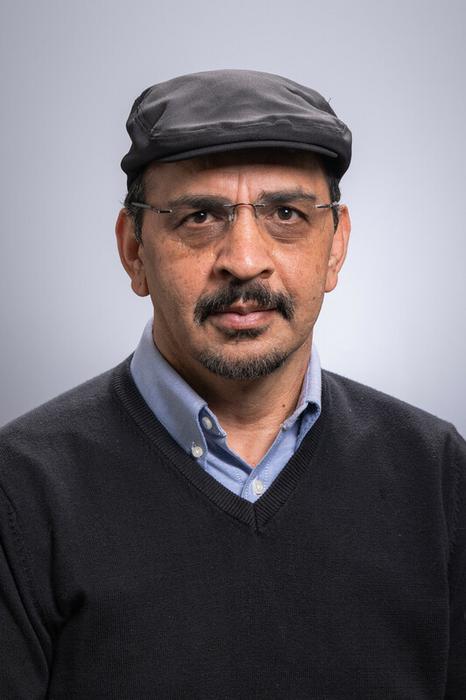
Credit: UAB
BIRMINGHAM, Ala. – Drosophila — commonly known as fruit flies — are a valuable model for human heart pathophysiology, including cardiac aging and cardiomyopathy. However, a choke point in evaluating fruit fly hearts is the need for human intervention to measure the heart at moments of its largest expansion or its greatest contraction, measurements that allow calculations of cardiac dynamics.
Researchers at the University of Alabama at Birmingham now show a way to significantly cut the time needed for that analysis while utilizing more of the heart region, using deep learning and high-speed video microscopy for each heartbeat in the fly.
“Our machine learning method is not just fast; it minimizes human error because you don’t have to manually mark each heart wall under systolic and diastolic conditions,” said Girish Melkani, Ph.D., associate professor in the UAB Department of Pathology, Division of Molecular and Cellular Pathology. “Furthermore, you can run the analyses of several hundred hearts and look at the analyses when done for all the hearts.”
This can expand the ability to test how different environmental or genetic factors affect heart aging or pathology. Melkani envisions using deep learning-assisted studies to explore cardiac mutation models and other small animal models, such as zebrafish and mice. “Additionally, our techniques could be adapted for human heart models, providing valuable insights into cardiac health and disease. Incorporating uncertainty quantification methods could further enhance the reliability of our analyses. Moreover, the machine learning approach can predict cardiac aging with high accuracy.”
The fruit fly model has already been tremendously powerful for understanding the pathophysiological bases for several human cardiovascular diseases, Melkani says. Cardiovascular disease continues to be one of the leading causes of death and disability in the United States.
Melkani and UAB colleagues assessed their trained model on heart performance both in fruit fly cardiac aging and in a fruit fly model of dilated cardiomyopathy caused by the knockdown of a pivotal TCA cycle enzyme, oxoglutarate dehydrogenase. These automated assessments were then validated against existing experimental datasets. For example, for aging of fruit flies at one week versus five weeks of age, which is about halfway through a fruit fly’s life span, the UAB team used 54 hearts for model training and then validated their measurements against an experimental aging model with 177 hearts. Their trained model was able to reconstruct expected trends in cardiac parameters with aging.
Melkani says his team’s model can be applied to readily available consumer hardware, and his team’s code can provide calculated statistics including diastolic and systolic diameters/intervals, fractional shortening, ejection fraction, heart period/rate, and quantified heartbeat arrhythmicity.
“To our knowledge, this innovative platform for deep learning-assisted segmentation is the first of its kind to be applied to standard high-resolution high-speed optical microscopy of Drosophila hearts while also quantifying all relevant parameters,” Melkani said.
“By automating the process and providing detailed cardiac statistics, we pave the way for more accurate, efficient and comprehensive studies of heart function in Drosophila. This method holds tremendous potential — not only for understanding aging and disease in fruit flies — but also for translating these insights into human cardiovascular research.”
First authors of the study, “Automated assessment of cardiac dynamics in aging and dilated cardiomyopathy Drosophila models using machine learning,” published in the journal Communications Biology, are Yash Melkani and Aniket Pant, UAB Department of Pathology. Yiming Guo, UAB Pathology, is also an author, and Girish Melkani is the corresponding author.
Support came from National Institutes of Health grant AG065992, a UAB Marnix E. Heersink School of Medicine AMC21 grant and UAB Pathology startup funds.
In his research, Girish Melkani develops and uses clinically relevant Drosophila models to address the pathophysiological basis of human circadian/metabolic disorders linked to cardiometabolic disease, myofibrillar-myopathies, proteinopathies, neuropathies, and sleep and aging disruptions. He also investigates how lifestyle and genetic factors act to maintain the structural integrity of cells, tissues and organs, which in turn dictates organismal physiology.
Journal
Communications Biology
Method of Research
Experimental study
Subject of Research
Animals
Article Title
Automated assessment of cardiac dynamics in aging and dilated cardiomyopathy Drosophila models using machine learning
Article Publication Date
7-Jun-2024
COI Statement
None
Cite Scienmag News
Beatrice Stafford. (July 3, 2024). Deep machine-learning speeds assessment of fruit fly heart aging and disease, a model for human disease. Scienmag. https://scienmag.com/deep-machine-learning-speeds-assessment-of-fruit-fly-heart-aging-and-disease-a-model-for-human-disease/
Beatrice Stafford. "Deep machine-learning speeds assessment of fruit fly heart aging and disease, a model for human disease." Scienmag, 3 July 2024, https://scienmag.com/deep-machine-learning-speeds-assessment-of-fruit-fly-heart-aging-and-disease-a-model-for-human-disease/. Accessed 3 September 2026.
Beatrice Stafford. "Deep machine-learning speeds assessment of fruit fly heart aging and disease, a model for human disease." Scienmag. July 3, 2024. https://scienmag.com/deep-machine-learning-speeds-assessment-of-fruit-fly-heart-aging-and-disease-a-model-for-human-disease/

