

Saturday, July 11, 2026
Science
No Result
View All Result
  • Login
  • HOME
  • SCIENCE NEWS
  • CONTACT US
  • HOME
  • SCIENCE NEWS
  • CONTACT US
No Result
View All Result
Scienmag
No Result
View All Result
Home Science News Psychology & Psychiatry

Deep Learning Predicts Antidepressant Response from Electronic Health Records

July 11, 2026
in Psychology & Psychiatry
Reading Time: 2 mins read
0
Deep Learning Predicts Antidepressant Response from Electronic Health Records

Deep Learning Predicts Antidepressant Response from Electronic Health Records

65
SHARES
587
VIEWS
Share on FacebookShare on Twitter
ADVERTISEMENT

A groundbreaking study has harnessed the power of deep learning to revolutionize the way clinicians understand antidepressant treatment responses through electronic health records (EHRs). Published in Translational Psychiatry, this cutting-edge research ushers in an era where artificial intelligence can dissect complex medical data to personalize psychiatric care.

Depression remains a pervasive and debilitating mental health condition worldwide. However, the variability in how patients respond to antidepressants poses significant challenges for healthcare providers. Traditional approaches to predicting treatment outcomes often rely on limited clinical data or patient self-reporting, which can be subjective and incomplete. The novel method proposed by Sheu, Magdamo, Miller, and colleagues leverages advanced machine learning techniques to address this critical gap.

The team’s approach involves phenotyping treatment response by applying deep learning algorithms directly to large-scale EHR datasets, enabling the extraction of subtle patterns and biomarkers undetectable by human analysis alone. These algorithms analyze multifaceted clinical variables, treatment histories, and diagnostic codes, integrating them into a cohesive framework that accurately classifies patients based on their likelihood of responding favorably to specific antidepressants.

Key to the success of this technique is the ability of deep neural networks to handle heterogeneous and noisy medical data. Unlike conventional models, which require extensive feature engineering, deep learning autonomously identifies relevant features and interactions, enhancing predictive power while reducing bias. The researchers validated their model on diverse patient populations, demonstrating robust generalizability and the potential to inform clinical decision-making on a personalized level.

Furthermore, this study contributes to the growing field of computational psychiatry by indicating how AI can uncover hidden phenotypes within psychiatric disorders. By phenotyping antidepressant response from EHRs, the research uncovers a nuanced understanding of treatment effects that transcends simple categorical outcomes, incorporating dynamic clinical trajectories and comorbidities.

The implications extend beyond just predicting treatment efficacy. This work may lead to the identification of novel biological pathways and therapeutic targets by correlating phenotypic clusters with genetic and neuroimaging data in future investigations. Ultimately, this could guide the development of precision medicine approaches tailored to individual neurobiological profiles.

While challenges remain, including data privacy concerns and the need for integrating this technology into routine practice, the study provides a promising blueprint. It sets the stage for a new paradigm where machine learning-driven phenotyping transforms psychiatric care from reactive to proactive, optimizing antidepressant use and improving patient outcomes.

As artificial intelligence continues to advance, such interdisciplinary efforts at the intersection of computer science, psychiatry, and data analytics will be pivotal. The integration of deep learning with EHR data heralds a future where mental health treatment is as data-driven and personalized as current advances in oncology and cardiology.


Subject of Research: Phenotyping antidepressant treatment response using electronic health records and deep learning algorithms

Article Title: Phenotyping antidepressant treatment response with deep learning in electronic health records

Article References:
Sheu, Yh., Magdamo, C., Miller, M. et al. Phenotyping antidepressant treatment response with deep learning in electronic health records. Transl Psychiatry (2026). https://doi.org/10.1038/s41398-026-04266-1

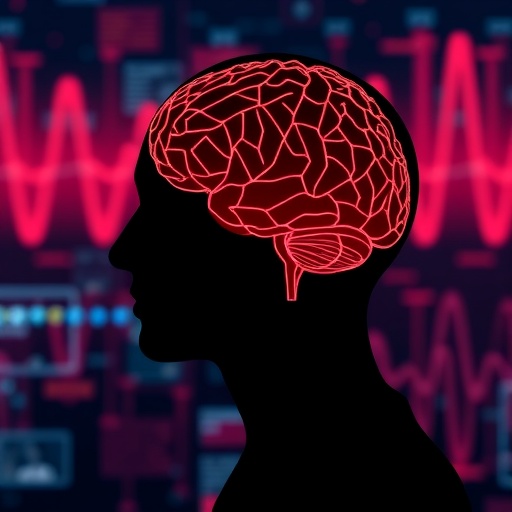
Image Credits: AI Generated

DOI: https://doi.org/10.1038/s41398-026-04266-1

Tags: addressing variability in antidepressant efficacyadvanced machine learning techniques in mental healthAI-driven personalized psychiatric treatmentbiomarkers for antidepressant responsedeep learning for antidepressant response predictiondeep neural networks for clinical data analysiselectronic health records in mental healthhealthcare data mining for mental healthlarge-scale EHR analysis in psychiatrymachine learning in depression managementphenotyping treatment response with AIpredictive modeling for depression treatment outcomes
Share26Tweet16
Previous Post

Study Finds Dopamine System Damage in Long COVID Patients’ Brains

Related Posts

Stress-Coping Traits Influence Fat Tissue Function and Metabolic Resilience
Psychology & Psychiatry

Stress-Coping Traits Influence Fat Tissue Function and Metabolic Resilience

July 10, 2026
Disrupted Brain Signal Balance Tied to Symptoms and Cognition in Schizophrenia
Psychology & Psychiatry

Disrupted Brain Signal Balance Tied to Symptoms and Cognition in Schizophrenia

July 10, 2026
Early-Life Tobacco Exposure Impacts Mental Health and Brain Development Differently by Stage
Psychology & Psychiatry

Early-Life Tobacco Exposure Impacts Mental Health and Brain Development Differently by Stage

July 10, 2026
Distinct Spatiotemporal Patterns in Brain Networks Linked to PTSD
Psychology & Psychiatry

Distinct Spatiotemporal Patterns in Brain Networks Linked to PTSD

July 10, 2026
Genetic Risk Links Suicide Attempts and Alcohol Use Disorder Outcomes
Psychology & Psychiatry

Genetic Risk Links Suicide Attempts and Alcohol Use Disorder Outcomes

July 10, 2026
Genetic Variants Linked to Cognitive Performance in British Birth Cohorts
Psychology & Psychiatry

Genetic Variants Linked to Cognitive Performance in British Birth Cohorts

July 10, 2026
  • Mothers who receive childcare support from maternal grandparents show more

    Mothers who receive childcare support from maternal grandparents show more parental warmth, finds NTU Singapore study

    27656 shares
    Share 11059 Tweet 6912
  • University of Seville Breaks 120-Year-Old Mystery, Revises a Key Einstein Concept

    1061 shares
    Share 424 Tweet 265
  • Bee body mass, pathogens and local climate influence heat tolerance

    682 shares
    Share 273 Tweet 171
  • Researchers record first-ever images and data of a shark experiencing a boat strike

    546 shares
    Share 218 Tweet 137
  • Groundbreaking Clinical Trial Reveals Lubiprostone Enhances Kidney Function

    531 shares
    Share 212 Tweet 133
Science

Embark on a thrilling journey of discovery with Scienmag.com—your ultimate source for cutting-edge breakthroughs. Immerse yourself in a world where curiosity knows no limits and tomorrow’s possibilities become today’s reality!

RECENT NEWS

  • Deep Learning Predicts Antidepressant Response from Electronic Health Records
  • Study Finds Dopamine System Damage in Long COVID Patients’ Brains
  • HMGA Proteins Linked to Brain Tumors and Neurodegenerative Diseases
  • Physical Activity Lowers Frailty Risk in Older Adults: Review and Analysis

Categories

  • Agriculture
  • Anthropology
  • Archaeology
  • Athmospheric
  • Biology
  • Biotechnology
  • Blog
  • Bussines
  • Cancer
  • Chemistry
  • Climate
  • Earth Science
  • Editorial Policy
  • Marine
  • Mathematics
  • Medicine
  • Pediatry
  • Policy
  • Psychology & Psychiatry
  • Science Education
  • Social Science
  • Space
  • Technology and Engineering

Subscribe to Blog via Email

Enter your email address to subscribe to this blog and receive notifications of new posts by email.

Join 5,146 other subscribers

© 2025 Scienmag - Science Magazine

Welcome Back!

Login to your account below

Forgotten Password?

Retrieve your password

Please enter your username or email address to reset your password.

Log In
No Result
View All Result
  • HOME
  • SCIENCE NEWS
  • CONTACT US

© 2025 Scienmag - Science Magazine

Discover more from Science

Subscribe now to keep reading and get access to the full archive.

Continue reading
