


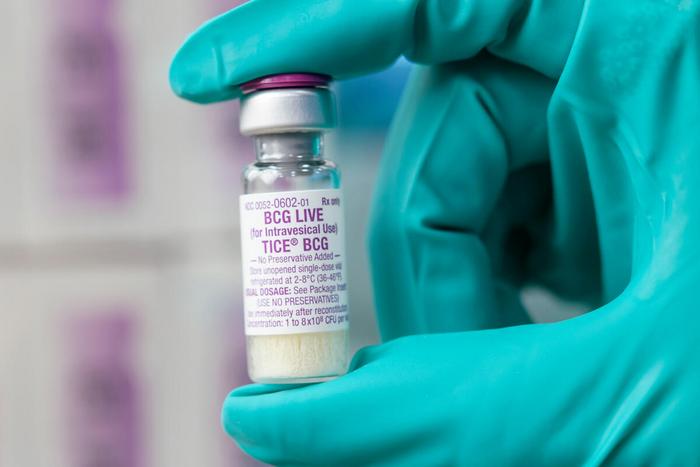
A venerable cornerstone of cancer immunotherapy, the Bacillus Calmette-Guérin (BCG) vaccine, long used to combat tuberculosis and as a first-line treatment for early-stage bladder cancer, has revealed an even more profound mechanism of action that transcends its local effects within the bladder. In groundbreaking research emerging from Memorial Sloan Kettering Cancer Center (MSK) and Weill Cornell Medicine, scientists have uncovered how BCG reprograms the bone marrow’s hematopoietic system, enhancing the innate immune system’s ability to fight cancer more broadly. These revelations unfold new vistas for the future of immunotherapy and could herald transformative approaches across oncological disciplines.
For over three decades, BCG has been recognized as the earliest immunotherapy approved by the U.S. Food and Drug Administration (FDA) against cancer. Its clinical application in bladder cancer has been predominantly thought to be due to direct infection of tumor cells, which consequently activates an immune attack localized strictly to the bladder environment. However, the precise immunological dynamics and contributions of bacterial versus tumor-targeted immune responses have remained a subject of intense scientific inquiry and debate.
The investigators behind this modern study set out to transcend traditional paradigms by probing the systemic effects that BCG exerts, especially beyond the bladder. Their research revealed that BCG, rather than operating solely as a local agent, travels through the body and seeds the bone marrow, the cradle of immune cell genesis. This translocation leads to a profound ‘training’ or reprogramming of progenitor cells, particularly hematopoietic stem and progenitor cells, shifting the developmental trajectory of myeloid cells in a way that enhances their anti-tumor capabilities.
The innate immune system, a first responder endowed with rapid but nonspecific defense mechanisms, coexists with the adaptive immune system, which provides targeted and memory-based responses. The compelling data from this study illuminate how BCG reprogramming predominantly invigorates myeloid cells, critical components of innate immunity, to mount a stronger, more effective anti-cancer response. This systemic immune modulation contrasts with prior assumptions that the therapeutic effects of BCG were restricted to adaptive immunity mechanisms centered on T cell activation within the bladder microenvironment.
Cutting-edge methodologies underpinned these discoveries, notably the employment of Progenitor Input Enrichment single cell sequencing (PIE-seq), an innovative technique developed at Weill Cornell Medicine. This technology enabled an unprecedented analysis of rare hematopoietic stem and progenitor cells from peripheral blood, circumventing the need for invasive bone marrow sampling. By capturing the transcriptional and epigenetic remodeling that occurs after BCG treatment, researchers characterized the molecular signatures of reprogrammed stem cells whose progeny ultimately display enhanced tumor-fighting functions.
In mouse models, the presence of BCG in bone marrow was confirmed through culture assays, firmly establishing that the bacterium directly reaches and colonizes immune cell niches. The systemic re-education of the hematopoietic compartment potentiates the immune system’s ability to combat cancer beyond the local microenvironment. Importantly, human clinical samples from bladder cancer patients treated with intravesical BCG corroborated these findings, highlighting similar hematopoietic reprogramming events in patients.
Beyond elucidating the intrinsic biology of BCG, the study also explored combinatorial treatment strategies. In murine experiments, pairing BCG with checkpoint inhibitors—a class of immunotherapy drugs designed to unleash T cells by disabling immunological "brakes"—produced synergistic effects. Tumors in mice subjected to combined therapy exhibited greater regression and prolonged survival compared to either monotherapy. This synergy underscores the potential to integrate innate immune training with adaptive immune activation, maximizing therapeutic outcomes.
Checkpoint inhibitors have revolutionized cancer therapy by enabling the immune system to recognize and attack tumors more vigorously. However, their efficacy varies widely among patients and cancer types. The discovery that BCG-induced myeloid cell reprogramming can prime the immune microenvironment to be more receptive to checkpoint blockade offers a strategic pathway to enhance patient responses and overcome resistance.
Historically, MSK has been at the forefront of immunotherapy innovation, dating back to seminal work in the 1950s that first demonstrated the immune system’s capacity to fight cancer through BCG vaccination models. These foundational studies paved the way for contemporary immunotherapies such as CAR T cell therapies and cancer vaccines. This latest research extends MSK’s legacy by revealing the nuanced systemic effects of BCG, breathing new life into a therapy over a century in the making.
Looking forward, this paradigm shift invites a reevaluation of how localized immunotherapies like BCG might be harnessed to reprogram hematopoiesis and systemic immunity. Investigations are anticipated to focus on whether similar immune training mechanisms can be activated in other cancer types and what molecular signals mediate hematopoietic reprogramming. Moreover, understanding the duration and sustainability of these trained immune states could inform optimized treatment regimens and schedules.
This research elevates our comprehension of the complex interplay between microbes and the immune system within oncological contexts. It challenges previous dogma by demonstrating that microbial immunotherapies can function beyond sites of administration, invoking systemic hematopoietic shifts that potentiate innate immunity. The clinical implications are profound: combining microbial training agents with advanced immunotherapies may become a cornerstone strategy to amplify anti-cancer immunity.
In sum, the discovery that BCG extends its therapeutic reach by reprogramming bone marrow hematopoiesis to enhance myeloid-driven anti-tumor responses reveals untapped dimensions of cancer immunotherapy. As immuno-oncology continues to expand, this insight offers a promising avenue to develop more effective, durable, and broadly applicable cancer treatments. Continued exploration of microbial influences on the immune system could unlock novel interventions, marking a new chapter in the fight against cancer.
News Publication Date: 29-May-2025
Web References:
References:
- Original research published in Cancer Cell, DOI: 10.1016/j.ccell.2025.05.002
Cite Scienmag News
Nathaniel Bowman. (May 29, 2025). Decades-Old Bladder Cancer Treatment Yields New Insights to Enhance Immunotherapy Advances. Scienmag. https://scienmag.com/decades-old-bladder-cancer-treatment-yields-new-insights-to-enhance-immunotherapy-advances/
Nathaniel Bowman. "Decades-Old Bladder Cancer Treatment Yields New Insights to Enhance Immunotherapy Advances." Scienmag, 29 May 2025, https://scienmag.com/decades-old-bladder-cancer-treatment-yields-new-insights-to-enhance-immunotherapy-advances/. Accessed 5 September 2026.
Nathaniel Bowman. "Decades-Old Bladder Cancer Treatment Yields New Insights to Enhance Immunotherapy Advances." Scienmag. May 29, 2025. https://scienmag.com/decades-old-bladder-cancer-treatment-yields-new-insights-to-enhance-immunotherapy-advances/


