

Saturday, October 24, 2026
Science
No Result
View All Result
  • Login
  • HOME
  • SCIENCE NEWS
  • CONTACT US
  • HOME
  • SCIENCE NEWS
  • CONTACT US
No Result
View All Result
Scienmag
No Result
View All Result
Home Science News Technology and Engineering

CuNi-SDC Catalyst Boosts CO2 Reduction in CO2-Air/H2 Fuel Cell

October 24, 2026
in Technology and Engineering
Bethany Barker
By Bethany Barker Scienmag Editorial Profile - Catalysis
Reading Time: 3 mins read
0
CuNi-SDC Catalyst Boosts CO2 Reduction in CO2-Air/H2 Fuel Cell

CuNi-SDC Catalyst Boosts CO2 Reduction in CO2-Air/H2 Fuel Cell

65
SHARES
587
VIEWS
Share on FacebookShare on Twitter
ADVERTISEMENT

A solid-state fuel cell that converts carbon dioxide into carbon monoxide while generating electricity has been reported by Yijian Lv, Xuanyu Lin and Xin Tang, whose study appears in the Journal of Materials Science. Under optimized conditions, the cell reached a maximum power density of 126.6 watts per square meter and a peak carbon monoxide yield of 859.2 micromoles per gram of catalyst per hour, figures the authors describe as significantly improved and competitive relative to previously reported CO2/H2 fuel cells.

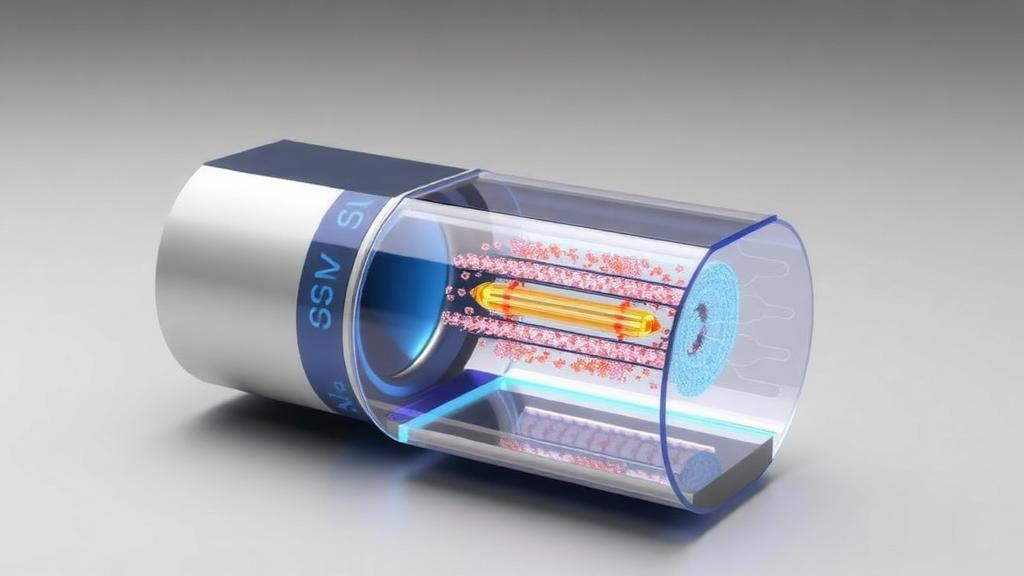
The device is a CO2-air/H2 solid oxide fuel cell. At the cathode, carbon dioxide is co-fed with a controlled amount of air, while hydrogen serves as the fuel at the anode. The cathode catalyst, designated CuNi-SDC, consists of copper oxide and nickel oxide incorporated into Sm0.5Ce1.5O3.75, a samarium-doped ceria composition. In this arrangement, the cathode drives the reduction of CO2 to carbon monoxide, a high-value C1 product, as the cell delivers power.

A central result of the study is that the introduction of air was found to be critical to the cell’s performance. The authors report that, compared with previously reported CO2/H2 fuel cells, their system achieves a significantly improved CO yield and a competitive power density, which they attribute to the CO2-air/H2 configuration and the CuNi-SDC catalyst.

The work sits within the broader field of energy materials, where rising atmospheric CO2 concentrations have created an urgent need for efficient carbon capture and utilization technologies. Solid oxide fuel cells are considered a promising platform for simultaneous power generation and CO2 conversion because of their high energy efficiency, fuel flexibility and all-solid-state structure, according to the authors.

Existing CO2/H2 fuel cells, however, often suffer from low product yield, moderate power output and reliance on high operating temperatures, limitations the authors identify as motivation for their design. The reported cell addresses the yield and power output dimensions of that problem within the conditions tested, achieving its maximum power density and peak CO yield under optimized operating conditions.

The performance envelope of the reported system is defined by two headline measurements. The maximum power density of 126.6 watts per square meter characterizes the electrical output, while the peak CO yield of 859.2 micromoles per gram of catalyst per hour characterizes the conversion performance. Both were obtained under optimized conditions in the reported configuration, and the authors state that these results compare favorably with previously reported CO2/H2 fuel cells in CO yield while remaining competitive on power density.

The authors frame their findings as a demonstration of the potential of the CuNi-SDC catalyst and the CO2-air/H2 fuel cell configuration for efficient CO2 reduction to a high-value C1 product. In their view, the approach offers a viable pathway for integrating carbon utilization with clean power generation in a single solid-state device.

As with any single study, the reported results describe one cell design evaluated under the conditions chosen by the authors, and the full experimental detail sits behind subscription access. The published abstract documents the catalyst composition, the co-feed design and the two performance measurements; further characterization of durability, operating temperature and scale-up potential would require the complete article. Within that scope, the study reports a CO2-air/H2 solid oxide fuel cell built around a CuNi-SDC cathode catalyst that converts CO2 to carbon monoxide with a peak yield of 859.2 micromoles per gram of catalyst per hour and a maximum power density of 126.6 watts per square meter under optimized conditions.

Subject of Research: CuNi-SDC catalyst for CO2 reduction in CO2-air/H2 solid oxide fuel cells

Article Title: CuNi-SDC catalyst for CO2 reduction in CO2-air/H2 solid oxide fuel cells

Article References: Lv, Y., Lin, X., & Tang, X. (2026). CuNi-SDC catalyst for CO2 reduction in CO2-air/H2 solid oxide fuel cells. Journal of Materials Science. https://doi.org/10.1007/s10853-026-13983-3

Image Credits: AI Generated

DOI: 10.1007/s10853-026-13983-3

Keywords: solid oxide fuel cell, CO2 reduction, CuNi-SDC, carbon monoxide, energy materials, catalysis, carbon capture and utilization, Journal of Materials Science, catalyst, reduction, CO2-air, solid

Cite Scienmag News

Bethany Barker. (October 24, 2026). CuNi-SDC Catalyst Boosts CO2 Reduction in CO2-Air/H2 Fuel Cell. Scienmag. https://scienmag.com/cuni-sdc-catalyst-boosts-co2-reduction-in-co2-air-h2-fuel-cell/

Bethany Barker. "CuNi-SDC Catalyst Boosts CO2 Reduction in CO2-Air/H2 Fuel Cell." Scienmag, 24 October 2026, https://scienmag.com/cuni-sdc-catalyst-boosts-co2-reduction-in-co2-air-h2-fuel-cell/. Accessed 24 October 2026.

Bethany Barker. "CuNi-SDC Catalyst Boosts CO2 Reduction in CO2-Air/H2 Fuel Cell." Scienmag. October 24, 2026. https://scienmag.com/cuni-sdc-catalyst-boosts-co2-reduction-in-co2-air-h2-fuel-cell/


Tags: air-assisted CO2 reductioncarbon capture and utilizationcarbon monoxidecarbon monoxide production in solid-state fuel cellscatalysiscatalystcatalysts for CO2 conversion to COCO2 electrochemical reductionCO2 reductionCO2-airCO2-air/H2 fuel cell performanceCuNi-SDCenergy materialsenhancement of CO yield in fuel cellshigh power density in CO2 reductioninnovative cathode materials for CO2 reductionintegrated CO2 reduction and power generationJournal of Materials ScienceReductionsamarium-doped ceria in fuel cell cathodessolidsolid oxide fuel cellsolid oxide fuel cell with CuNi-SDC catalystsustainable fuel cell technologies
Share26Tweet16
Previous Post

One in Five Pregnant Women in Ouagadougou Reports Low Back Pain

Next Post

Research report: Association of generative artificial intelligence use with perceived academic benefit and reported performance among medical students

Related Posts

Battery safety, sodium-ion and recycling research head to ECS meeting
Technology and Engineering

Battery safety, sodium-ion and recycling research head to ECS meeting

October 24, 2026
New Clustering Method Learns Continually from Streams of Kernel Matrices
Technology and Engineering

New Clustering Method Learns Continually from Streams of Kernel Matrices

October 24, 2026
EquiChain framework slashes PBFT communication overhead by up to 98% in permissioned blockchains
Technology and Engineering

EquiChain framework slashes PBFT communication overhead by up to 98% in permissioned blockchains

October 24, 2026
Uncertainty-aware Bayesian neural network brings confidence scores to breast cancer AI
Technology and Engineering

Uncertainty-aware Bayesian neural network brings confidence scores to breast cancer AI

October 24, 2026
Federated Learning Lets IoT Devices Cluster Time Series Without Sharing Raw Data
Technology and Engineering

Federated Learning Lets IoT Devices Cluster Time Series Without Sharing Raw Data

October 24, 2026
Dual-Tagged Nanovesibles Hitch a Ride Across Heart Capillaries to Deliver a One-Two Punch Against Reperfusion Injury
Technology and Engineering

Dual-Tagged Nanovesibles Hitch a Ride Across Heart Capillaries to Deliver a One-Two Punch Against Reperfusion Injury

October 24, 2026
Next Post
Research report: Association of generative artificial intelligence use with perceived academic benefit and reported performance among medical students

Research report: Association of generative artificial intelligence use with perceived academic benefit and reported performance among medical students

  • Mothers who receive childcare support from maternal grandparents show more optimized

    Mothers who receive childcare support from maternal grandparents show more parental warmth, finds NTU Singapore study

    27656 shares
    Share 11059 Tweet 6912
  • University of Seville Breaks 120-Year-Old Mystery, Revises a Key Einstein Concept

    1061 shares
    Share 424 Tweet 265
  • Bee body mass, pathogens and local climate influence heat tolerance

    682 shares
    Share 273 Tweet 171
  • Researchers record first-ever images and data of a shark experiencing a boat strike

    546 shares
    Share 218 Tweet 137
  • Groundbreaking Clinical Trial Reveals Lubiprostone Enhances Kidney Function

    531 shares
    Share 212 Tweet 133
Science

Embark on a thrilling journey of discovery with Scienmag.com—your ultimate source for cutting-edge breakthroughs. Immerse yourself in a world where curiosity knows no limits and tomorrow’s possibilities become today’s reality!

RECENT NEWS

  • Research report: Association of generative artificial intelligence use with perceived academic benefit and reported performance among medical students
  • CuNi-SDC Catalyst Boosts CO2 Reduction in CO2-Air/H2 Fuel Cell
  • One in Five Pregnant Women in Ouagadougou Reports Low Back Pain
  • AI-guided enzyme search yields two new cellulases and an eightfold secretion boost in Bacillus subtilis

Categories

  • Agriculture
  • Anthropology
  • Archaeology
  • Athmospheric
  • Biology
  • Biotechnology
  • Blog
  • Bussines
  • Cancer
  • Chemistry
  • Climate
  • Earth Science
  • Editorial Policy
  • Marine
  • Mathematics
  • Medicine
  • Pediatry
  • Policy
  • Psychology & Psychiatry
  • Science Education
  • Science News
  • Social Science
  • Space
  • Technology and Engineering

Subscribe to Blog via Email

Enter your email address to subscribe to this blog and receive notifications of new posts by email.

Join 5,152 other subscribers

© 2025 Scienmag - Science Magazine

Welcome Back!

Login to your account below

Forgotten Password?

Retrieve your password

Please enter your username or email address to reset your password.

Log In
No Result
View All Result
  • HOME
  • SCIENCE NEWS
  • CONTACT US

© 2025 Scienmag - Science Magazine

Discover more from Science

Subscribe now to keep reading and get access to the full archive.

Continue reading