


Hydroxyl Groups Boost Carbon Monoxide Selectivity in CO2 Reduction
Hydroxyl groups on cerium dioxide enhance carbon monoxide selectivity in integrated CO2 capture and electrocatalytic reduction by facilitating proton transfer ...
Hydroxyl groups on cerium dioxide enhance carbon monoxide selectivity in integrated CO2 capture and electrocatalytic reduction by facilitating proton transfer ...

Density functional theory calculations predict that nickel and cobalt atoms on χ3-borophene convert CO2 to formate with barriers as low ...

A covalently linked cobalt phthalocyanine catalyst on carbon nanotubes sustained reactive CO2 capture and conversion for over 1,000 hours by ...
A new review details how polyoxometalate–metal organic framework hybrids are boosting the performance of batteries, supercapacitors, fuel cells, water electrolyzers ...
A comprehensive review in Discover Nano examines how perovskite materials could serve sustainable technologies while warning that lead content, leaching ...
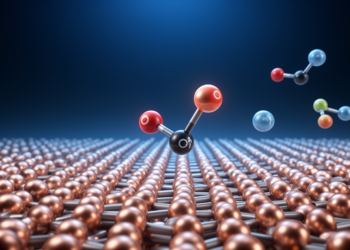
A new review outlines how atomically precise catalyst interfaces, from dopants and vacancies to curved surfaces and local electric fields, ...
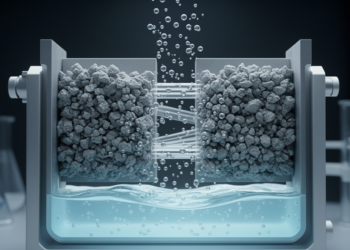
A review outlines how integrated capture-conversion systems, impurity-tolerant catalysts, and electrolyzer engineering can make electrochemical CO2 reduction work with dilute ...
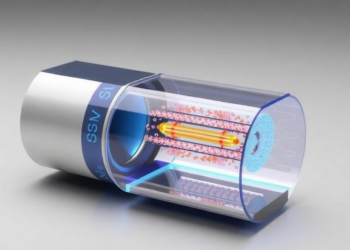
A solid-state CO2-air/H2 fuel cell using a CuNi-SDC cathode catalyst achieved a maximum power density of 126.6 W·m⁻² and a ...
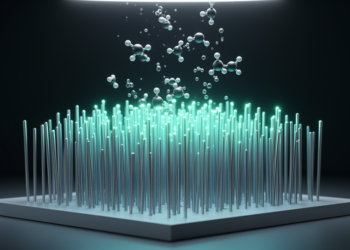
Chinese researchers developed binder-free, three-dimensional interconnected nanowire electrodes that efficiently and stably convert carbon dioxide into carbon monoxide and n-propanol.
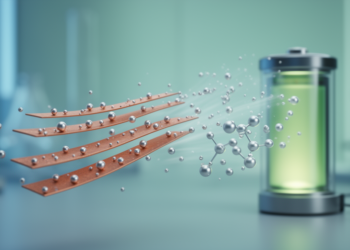
The pursuit of practical carbon-neutral technologies has pushed researchers to explore catalysts that can transform carbon dioxide into liquid products ...


Embark on a thrilling journey of discovery with Scienmag.com—your ultimate source for cutting-edge breakthroughs. Immerse yourself in a world where curiosity knows no limits and tomorrow’s possibilities become today’s reality!