

Tuesday, October 20, 2026
Science
No Result
View All Result
  • Login
  • HOME
  • SCIENCE NEWS
  • CONTACT US
  • HOME
  • SCIENCE NEWS
  • CONTACT US
No Result
View All Result
Scienmag
No Result
View All Result
Home Science News Psychology & Psychiatry

Cross-sectional study links three Asian American parenting profiles with parent-reported child psychopathology

October 20, 2026
in Psychology & Psychiatry
Glenn Wilkins
By Glenn Wilkins Scienmag Editorial Profile - Clinical Psychology
Reading Time: 2 mins read
0
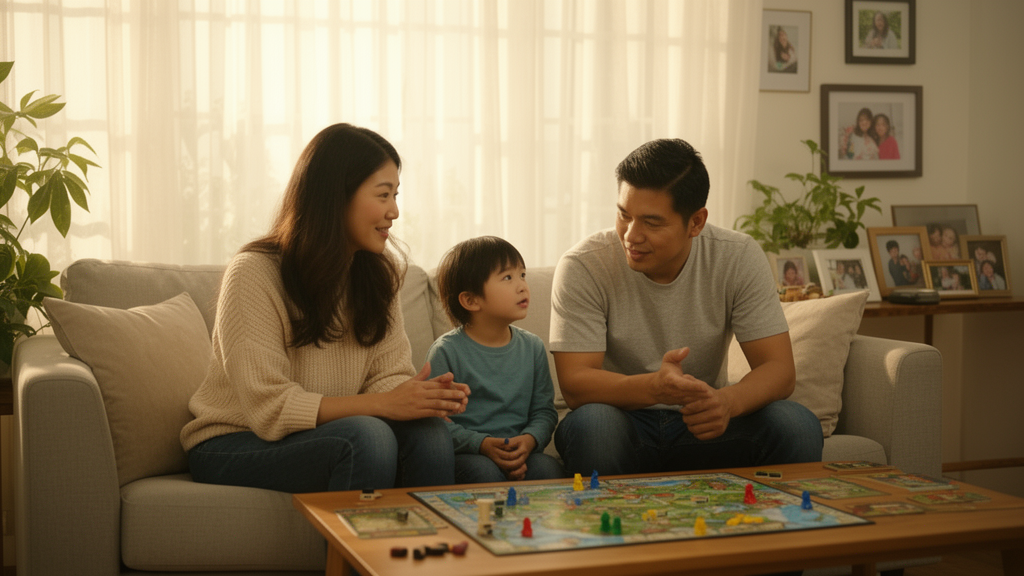
New Study Reveals Three Distinct Parenting Styles in Asian American Families and Their Links to Child Mental Health

New Study Reveals Three Distinct Parenting Styles in Asian American Families and Their Links to Child Mental Health

65
SHARES
587
VIEWS
Share on FacebookShare on Twitter
ADVERTISEMENT

A cross-sectional latent profile analysis of 376 Asian American parents in the United States identified three distinct combinations of positive and negative parenting, with children of parents in the two lower-positive or higher-negative profiles showing higher parent-reported psychopathology scores than children in the most favorable profile. The findings, summarized in the study abstract, point to substantial variation in parenting within the sampled population rather than a single uniform Asian American parenting pattern.

Participants were recruited through Qualtrics panels and included 239 mothers, or 63.6% of the sample, and 137 fathers, or 36.4%. Parents had an average age of 40.16 years and at least one child between 3 and 17 years old, whose average age was 9.88 years. Researchers used latent profile analysis to characterize groups based on the pattern of positive and negative parenting reported by parents. Linear regression analyses then examined associations between those profiles and six parent-reported child psychopathology scores, with adjustments for covariates.

Three profiles emerged. High Positive/Low Negative Parenting accounted for 209 participants, or 55.6% of the sample. Intermediate Parenting included 125 participants, or 33.2%, while Very Low Positive/Elevated Negative Parenting included 42 participants, or 11.2%. The regression models explained a significant share of variance in all six psychopathology scores, with R² values ranging from 16.2% to 28.4% and p values below 0.001. Compared with children whose parents were in the High Positive/Low Negative Parenting profile, children in the Intermediate and Very Low Positive/Elevated Negative profiles had significantly higher scores on every parent-reported psychopathology scale, with p values of 0.01 or lower.

Parent sex and child age did not significantly moderate the relationships between parenting profiles and reported child psychopathology. In other words, the associations observed in this sample did not differ significantly by the sex of the parent or the age of the child. The study supports the conclusion that Asian American parenting practices were heterogeneous within this group and that profiles involving less positive or more negative parenting were associated with greater parent-reported child difficulties.

These results do not establish that parenting profiles caused the reported psychopathology or that the three groups apply to all Asian American families. The evidence summarized in the abstract comes from a cross-sectional, US-based sample recruited from Qualtrics panels, and child outcomes were reported by parents rather than independently assessed. The analysis also examined associations within one sample of 376 families, so the findings describe statistical relationships rather than changes over time, causal effects, or universal patterns across Asian American subgroups.

Subject of Research: Associations among Asian American parenting profiles and parent-reported child psychopathology in a US cross-sectional sample

Article Title: Asian american parenting profiles and child psychopathology: a cross-sectional latent profile analysis

Article References: Benhayoun, A., Hua, A. Y., Chen, J., & Rodriguez, V. J. (2026). Asian american parenting profiles and child psychopathology: a cross-sectional latent profile analysis. BMC Psychology. https://doi.org/10.1186/s40359-026-05755-0

Image Credits: AI Generated

DOI: 10.1186/s40359-026-05755-0

Keywords: Asian American families, parenting profiles, child psychopathology, latent profile analysis, cross-sectional study, parent-reported outcomes, child mental health, family research, Asian, american, parenting, profiles

Cite Scienmag News

Glenn Wilkins. (October 20, 2026). Cross-sectional study links three Asian American parenting profiles with parent-reported child psychopathology. Scienmag. https://scienmag.com/cross-sectional-study-links-three-asian-american-parenting-profiles-with-parent-reported-child-psychopathology/


Glenn Wilkins. "Cross-sectional study links three Asian American parenting profiles with parent-reported child psychopathology." Scienmag, 20 October 2026, https://scienmag.com/cross-sectional-study-links-three-asian-american-parenting-profiles-with-parent-reported-child-psychopathology/. Accessed 20 October 2026.

Glenn Wilkins. "Cross-sectional study links three Asian American parenting profiles with parent-reported child psychopathology." Scienmag. October 20, 2026. https://scienmag.com/cross-sectional-study-links-three-asian-american-parenting-profiles-with-parent-reported-child-psychopathology/

Tags: AmericanAsianAsian American familiesAsian American parenting profilesassociation between parenting styles and child psychopathologyChild Mental Healthchild psychopathologychild psychopathology and mental healthcross-sectional studycross-sectional study on parenting and child outcomescultural influences on Asian American parentingdemographic characteristics of Asian American parentsfactors affecting child mental health in Asian American familiesfamily researchlatent profile analysislatent profile analysis in parenting researchparent-reported child behavioral issuesparent-reported outcomesparentingparenting profilesparenting style variability among Asian Americanspositive and negative parenting patternsProfilesstatistical analysis of parenting patterns
Share26Tweet16
Previous Post

Prospective Swiss cohort finds added diagnostic yield from serotype-specific urine testing in adult pneumonia

Next Post

Cross-sectional survey identifies two knowledge, attitude and practice profiles among Chinese ICU nurses

Related Posts

Therapy Program Builds Psychological Hardiness in Hard-of-Hearing Saudi Teens
Psychology & Psychiatry

Integrative therapy linked to higher psychological hardiness in small nonrandomized study of Saudi adolescents

October 20, 2026
Network Analysis Reveals How Exercise Confidence Interlocks With Fear and Support After Heart Stents
Psychology & Psychiatry

Single-center cross-sectional network analysis links exercise self-efficacy with psychosocial factors after PCI

October 20, 2026
Tethered to a wounded place: how Hatay earthquake survivors live with a city that both harms and holds them
Psychology & Psychiatry

Tethered to a wounded place: A constructivist grounded theory of post-earthquake life in Hatay, Türkiye

October 20, 2026
Generative AI use boosts employee initiative through flow and reduced objectification, study finds
Psychology & Psychiatry

More flow and less objectification: Dual influence mechanisms of generative AI use on employees’ proactive behaviors

October 20, 2026
Teachers in Bangladesh say burnout is built into the system, not their heads
Psychology & Psychiatry

Work-life balance and wellbeing among teachers in Bangladesh: a reflexive thematic analysis of stress, coping, and institutional support

October 20, 2026
Eight Sessions of Motivational Psychotherapy Lift Mood and Academic Confidence in Iranian Teen Girls
Psychology & Psychiatry

Pilot randomized trial links motivational psychotherapy with improved depression and academic self-concept in Iranian teenage girls

October 20, 2026
Next Post
ICU Nurses Split Into Two Camps on Post-Delirium Cognitive Impairment, Survey of 640 Finds

Cross-sectional survey identifies two knowledge, attitude and practice profiles among Chinese ICU nurses

  • Mothers who receive childcare support from maternal grandparents show more optimized

    Mothers who receive childcare support from maternal grandparents show more parental warmth, finds NTU Singapore study

    27656 shares
    Share 11059 Tweet 6912
  • University of Seville Breaks 120-Year-Old Mystery, Revises a Key Einstein Concept

    1061 shares
    Share 424 Tweet 265
  • Bee body mass, pathogens and local climate influence heat tolerance

    682 shares
    Share 273 Tweet 171
  • Researchers record first-ever images and data of a shark experiencing a boat strike

    546 shares
    Share 218 Tweet 137
  • Groundbreaking Clinical Trial Reveals Lubiprostone Enhances Kidney Function

    531 shares
    Share 212 Tweet 133
Science

Embark on a thrilling journey of discovery with Scienmag.com—your ultimate source for cutting-edge breakthroughs. Immerse yourself in a world where curiosity knows no limits and tomorrow’s possibilities become today’s reality!

RECENT NEWS

  • Systematic review finds sparse, heterogeneous evidence on hypertension’s economic burden in Sub-Saharan Africa
  • Cross-sectional survey identifies two knowledge, attitude and practice profiles among Chinese ICU nurses
  • Cross-sectional study links three Asian American parenting profiles with parent-reported child psychopathology
  • Prospective Swiss cohort finds added diagnostic yield from serotype-specific urine testing in adult pneumonia

Categories

  • Agriculture
  • Anthropology
  • Archaeology
  • Athmospheric
  • Biology
  • Biotechnology
  • Blog
  • Bussines
  • Cancer
  • Chemistry
  • Climate
  • Earth Science
  • Editorial Policy
  • Marine
  • Mathematics
  • Medicine
  • Pediatry
  • Policy
  • Psychology & Psychiatry
  • Science Education
  • Science News
  • Social Science
  • Space
  • Technology and Engineering

Subscribe to Blog via Email

Enter your email address to subscribe to this blog and receive notifications of new posts by email.

Join 5,150 other subscribers

© 2025 Scienmag - Science Magazine

Welcome Back!

Login to your account below

Forgotten Password?

Retrieve your password

Please enter your username or email address to reset your password.

Log In
No Result
View All Result
  • HOME
  • SCIENCE NEWS
  • CONTACT US

© 2025 Scienmag - Science Magazine

Discover more from Science

Subscribe now to keep reading and get access to the full archive.

Continue reading