

Wednesday, October 21, 2026
Science
No Result
View All Result
  • Login
  • HOME
  • SCIENCE NEWS
  • CONTACT US
  • HOME
  • SCIENCE NEWS
  • CONTACT US
No Result
View All Result
Scienmag
No Result
View All Result
Home Science News Medicine

Cross-sectional study finds rare anti-HDV reactivity among southern Mozambique blood donors

October 21, 2026
in Medicine
Kristina Jarvis
By Kristina Jarvis Scienmag Editorial Profile - Infectious Disease Medicine
Reading Time: 2 mins read
0
Cross-sectional study finds rare anti-HDV reactivity among southern Mozambique blood donors

Cross-sectional study finds rare anti-HDV reactivity among southern Mozambique blood donors

65
SHARES
587
VIEWS
Share on FacebookShare on Twitter
ADVERTISEMENT

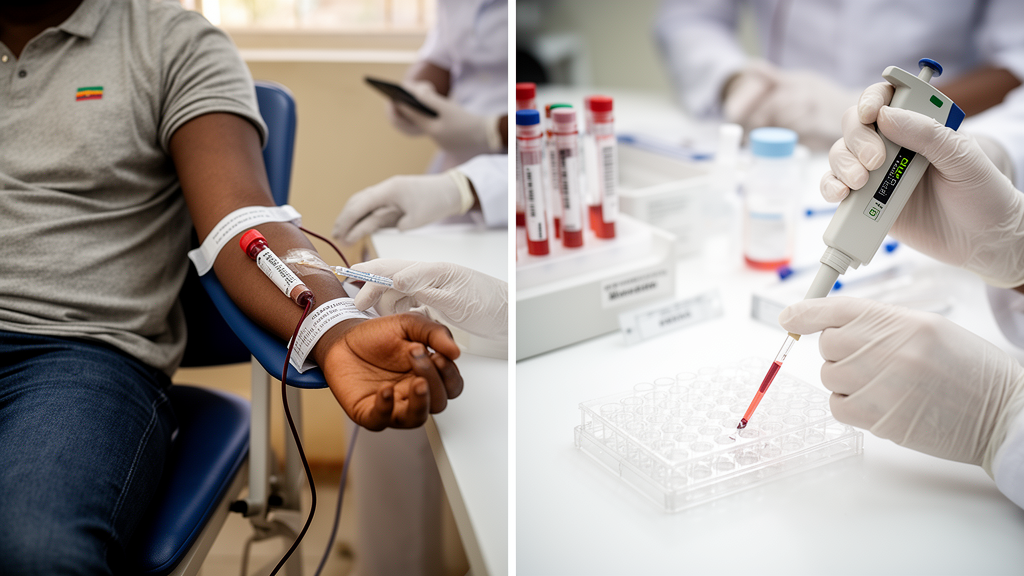
A cross-sectional study of blood donors in southern Mozambique detected anti-hepatitis D virus antibodies in one donor whose sample lacked hepatitis B surface antigen, or HBsAg, but contained detectable hepatitis B virus DNA. The study screened 3,855 donors between December 2022 and January 2024. Investigators found no anti-HDV antibodies in HBsAg-positive samples, while the single reactive result occurred among HBsAg-negative donors with detectable HBV DNA. No HDV RNA was detected in that reactive sample.

Among the 3,855 donors screened, 72, or 1.9%, were HBsAg-positive. Another 65 donors, corresponding to 2.5% of the HBsAg-negative group, had detectable HBV DNA. The authors described this HBsAg-negative, HBV-DNA-positive pattern as suggesting occult HBV infection. HDV serology was performed on samples from donors classified as HBV-positive through HBsAg positivity and/or detectable HBV DNA, allowing the researchers to assess anti-HDV reactivity in both groups.

No anti-HDV was detected in the HBsAg-positive samples, yielding an estimated seroprevalence of 0%, with a 95% confidence interval of 0.0% to 5.0%. Among the 65 HBsAg-negative donors with detectable HBV DNA, one sample was anti-HDV-reactive. This corresponded to anti-HDV seroprevalence of 1.5%, with a wide 95% confidence interval of 0.04% to 8.4%. The reactive sample was also tested for anti-HBc and HDV RNA. No HDV RNA was detected. Based on the study’s stated interpretation, the antibody result provided evidence of detectable HDV exposure, but the absence of HDV RNA in the single reactive sample did not demonstrate active HDV infection or ongoing viral replication at the time of sampling.

The findings are limited by the cross-sectional design, the small number of anti-HDV-reactive samples, and the focus on blood donors from one geographic area. The confidence interval of 0.04% to 8.4% reflects substantial uncertainty around the 1.5% estimate, while the negative HDV RNA result restricts conclusions about viral activity in the one positive donor. The study did not determine how HDV exposure occurred or establish transmission patterns, clinical outcomes, or the prevalence of HDV infection in the wider population. Its authors concluded that detectable HDV exposure was infrequent in the population studied. More broadly, the results show that anti-HDV reactivity was not confined to the HBsAg-positive group: it was identified in one donor with detectable HBV DNA but no HBsAg.

Subject of Research: Prevalence of anti-HDV antibodies among blood donors with HBsAg positivity or detectable HBV DNA in southern Mozambique

Article Title: First report of anti-HDV antibodies in HBsAg-negative blood donors with detectable HBV-DNA in southern Mozambique

Article References: Matola, O., Remane, K., Mussá, T., & Mabunda, N. (2026). First report of anti-HDV antibodies in HBsAg-negative blood donors with detectable HBV-DNA in southern Mozambique. BMC Infectious Diseases. https://doi.org/10.1186/s12879-026-14656-x

Image Credits: AI Generated

DOI: 10.1186/s12879-026-14656-x

Keywords: hepatitis D virus, anti-HDV antibodies, occult hepatitis B, HBV DNA, HBsAg, HDV RNA, blood donors, Mozambique, seroprevalence, cross-sectional study, First, report

Cite Scienmag News

Kristina Jarvis. (October 21, 2026). Cross-sectional study finds rare anti-HDV reactivity among southern Mozambique blood donors. Scienmag. https://scienmag.com/cross-sectional-study-finds-rare-anti-hdv-reactivity-among-southern-mozambique-blood-donors/


Kristina Jarvis. "Cross-sectional study finds rare anti-HDV reactivity among southern Mozambique blood donors." Scienmag, 21 October 2026, https://scienmag.com/cross-sectional-study-finds-rare-anti-hdv-reactivity-among-southern-mozambique-blood-donors/. Accessed 21 October 2026.

Kristina Jarvis. "Cross-sectional study finds rare anti-HDV reactivity among southern Mozambique blood donors." Scienmag. October 21, 2026. https://scienmag.com/cross-sectional-study-finds-rare-anti-hdv-reactivity-among-southern-mozambique-blood-donors/

Tags: anti-HDV antibodiesanti-HDV antibodies in blood donorsblood donor screening for HBV and HDVblood donorsblood safety and viral hepatitiscross-sectional studycross-sectional study of hepatitis virusesepidemiology of hepatitis viruses in Southern AfricaFirstHBsAgHBV DNAHBV DNA detection in HBsAg-negative individualsHDV RNAhepatitis B and D virus co-infectionhepatitis D virushepatitis D virus prevalence in AfricaHepatitis D virus seroprevalence in Mozambiqueimplications of occult HBVMozambiqueoccult HBV infection detectionoccult hepatitis Brare HDV reactivity among blood donorsRepoRTseroprevalence
Share26Tweet16
Previous Post

Case study links AI reading workflow to feasibility, not learning gains

Next Post

Theoretical study links flavor-dependent U(1) symmetry to lepton-flavor violation and muon g−2

Related Posts

DTI-ALPS links more consistently with cognition in asymptomatic moyamoya disease
Medicine

DTI-ALPS links more consistently with cognition in asymptomatic moyamoya disease

October 21, 2026
Internal validation supports six-month response model for infantile hemangioma
Medicine

Internal validation supports six-month response model for infantile hemangioma

October 21, 2026
Mouse glioma study links skull marrow immune hubs to tumor control
Medicine

Mouse glioma study links skull marrow immune hubs to tumor control

October 21, 2026
Research report: Digital Science and Sunmedia partner to bring research impact reporting to Japan’s medical affairs teams
Medicine

Research report: Digital Science and Sunmedia partner to bring research impact reporting to Japan’s medical affairs teams

October 21, 2026
Research report: Community-based identification of poor sleep quality in middle-aged and older adults with abdominal obesity using psychological and physical fitness indicators
Medicine

Research report: Community-based identification of poor sleep quality in middle-aged and older adults with abdominal obesity using psychological and physical fitness indicators

October 21, 2026
Retrospective single-center study of admission markers for severe pediatric pertussis
Medicine

Retrospective single-center study of admission markers for severe pediatric pertussis

October 21, 2026
Next Post
Muon g-2 and Forbidden Flavor Transitions Take Center Stage in a New Gauge Model

Theoretical study links flavor-dependent U(1) symmetry to lepton-flavor violation and muon g−2

  • Mothers who receive childcare support from maternal grandparents show more optimized

    Mothers who receive childcare support from maternal grandparents show more parental warmth, finds NTU Singapore study

    27656 shares
    Share 11059 Tweet 6912
  • University of Seville Breaks 120-Year-Old Mystery, Revises a Key Einstein Concept

    1061 shares
    Share 424 Tweet 265
  • Bee body mass, pathogens and local climate influence heat tolerance

    682 shares
    Share 273 Tweet 171
  • Researchers record first-ever images and data of a shark experiencing a boat strike

    546 shares
    Share 218 Tweet 137
  • Groundbreaking Clinical Trial Reveals Lubiprostone Enhances Kidney Function

    531 shares
    Share 212 Tweet 133
Science

Embark on a thrilling journey of discovery with Scienmag.com—your ultimate source for cutting-edge breakthroughs. Immerse yourself in a world where curiosity knows no limits and tomorrow’s possibilities become today’s reality!

RECENT NEWS

  • JuxtaBAM flags mismatched samples in joint multi-omic datasets
  • Phage screening identifies candidate tuberculosis peptides for HLA-E
  • AI review maps flood solutions and exposes evidence gaps
  • Theoretical study links flavor-dependent U(1) symmetry to lepton-flavor violation and muon g−2

Categories

  • Agriculture
  • Anthropology
  • Archaeology
  • Athmospheric
  • Biology
  • Biotechnology
  • Blog
  • Bussines
  • Cancer
  • Chemistry
  • Climate
  • Earth Science
  • Editorial Policy
  • Marine
  • Mathematics
  • Medicine
  • Pediatry
  • Policy
  • Psychology & Psychiatry
  • Science Education
  • Science News
  • Social Science
  • Space
  • Technology and Engineering

Subscribe to Blog via Email

Enter your email address to subscribe to this blog and receive notifications of new posts by email.

Join 5,150 other subscribers

© 2025 Scienmag - Science Magazine

Welcome Back!

Login to your account below

Forgotten Password?

Retrieve your password

Please enter your username or email address to reset your password.

Log In
No Result
View All Result
  • HOME
  • SCIENCE NEWS
  • CONTACT US

© 2025 Scienmag - Science Magazine

Discover more from Science

Subscribe now to keep reading and get access to the full archive.

Continue reading