


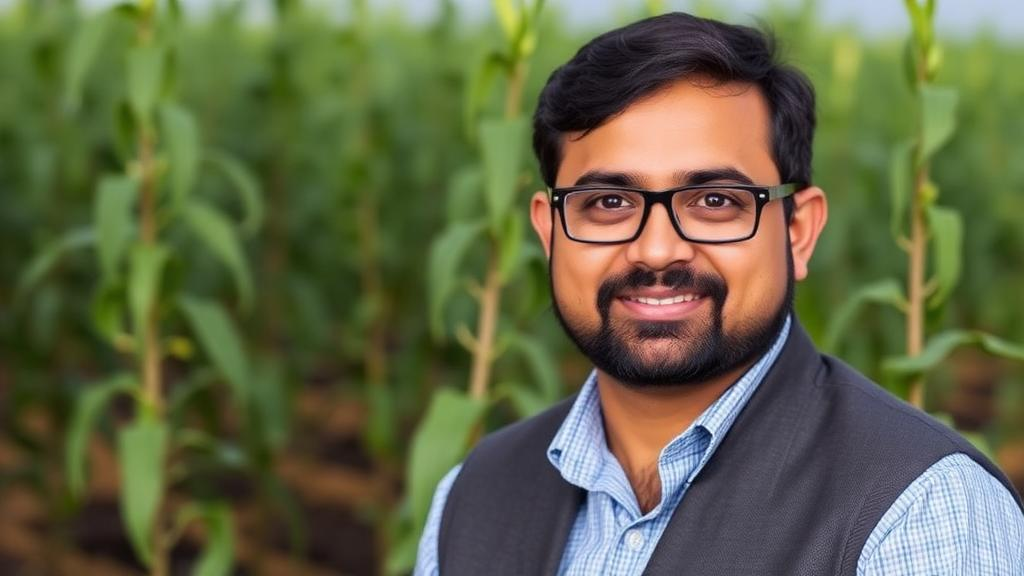
Professor Rajeev Varshney, the Director of Murdoch University’s Centre for Crop and Food Innovation and the WA State Agricultural Biotechnology Centre, has been elected as a Fellow of the Australian Academy of Technological Sciences and Engineering, joining a 2026 cohort of 34 industry pioneers and innovators recognized for outstanding achievements in applied science and engineering. The announcement, made by the Academy, places the crop geneticist among an exceptionally small group of Australian scientists who have now been elected to all three of the nation’s and the United Kingdom’s leading learned academies, following his election to the Australian Academy of Science in 2025 and to the Royal Society, the UK’s national academy of sciences, in 2023. He is the first Murdoch University researcher to hold all three fellowships.
The Australian Academy of Technological Sciences and Engineering, commonly known as ATSE, elects new Fellows each year on the basis of distinguished contributions across industry leadership, policymaking, research and commercialisation. Unlike academies that honor purely fundamental discovery, ATSE explicitly celebrates the translation of science into technologies, products and policies that deliver measurable benefit to the nation. In its citation for Professor Varshney, the Academy noted his contributions in reshaping the global landscape of agricultural biotechnology and his efforts to translate genomic insights into practical tools for major crops, a distinction that underscores the applied character of his research program.
At the heart of the Academy’s recognition is Professor Varshney’s work on genome-enabled crop improvement, an approach that uses dense genetic maps, whole-genome sequencing and molecular markers to identify the DNA variants underlying traits such as yield, drought tolerance and disease resistance. By locating these variants, breeders can select superior plants at the seedling stage rather than waiting years for plants to mature and express their potential in the field. The Academy highlighted his contribution to the development of high-yielding and climate-resilient crop varieties for growers in Australia, Asia and Africa, noting that in Australia his breakthrough approach has created cost-effective and accessible genomic resources and breeding platforms for wheat, pulses and horticultural crops, accelerating precision breeding across the sector.
The practical significance of these platforms lies in their accessibility. Traditional genomic selection pipelines have often been expensive and technically demanding, placing them beyond the reach of smaller breeding programs and orphan crops that feed much of the developing world. By driving down costs and standardizing the tools required to deploy genomic information, Professor Varshney’s work has allowed breeding teams to compress breeding cycles, increase genetic gain per season and respond more rapidly to shifting environmental pressures, including the hotter and drier conditions that increasingly challenge Australian and international agriculture. The Academy also credited his work with strengthening Australia’s biotechnology capability and supporting grower profitability, sustainability and global competitiveness across the nation’s agricultural sector, which is valued at around 100 billion dollars.
Murdoch University Vice Chancellor Professor Andrew Deeks hailed the election as evidence of excellence spanning the entire research pipeline. In a statement, he remarked that Professor Varshney’s election to ATSE is his third to a leading learned academy in four years, a remarkable achievement that reflects excellence across the full research spectrum, from discovery to application. He noted that since arriving in Australia, Professor Varshney has been a driving force for agricultural research and productivity, working closely with the Federal Government and primary industries departments across the nation on broadacre and horticultural crops research, and that his impact reaches well beyond Australian shores, having benefited millions of smallholder farmers across Africa and South Asia while continuing to inform and guide breeding programs across the globe.
Deputy Vice Chancellor Research and Innovation Professor Peter Eastwood emphasized the breadth of that influence, describing Professor Varshney as widely recognised as one of the world’s leading crop geneticists and a pioneer of genomics resources for Australian crops whose research has also shaped agricultural policy and decision-making across the globe. He said this capacity to translate cutting-edge science into meaningful societal impact reflects Murdoch University’s ambition to deliver research that changes the world, framing the fellowship not only as a personal honor but as an institutional endorsement of the university’s translational research model.
For his part, Professor Varshney described the election as an immense honor and privilege, and used the occasion to issue a pointed message about the pace of agricultural innovation. He said he believes the future of Australian agriculture will depend on how quickly the nation can translate technological innovation into on-farm impact, and that ATSE plays an incredibly important role in shaping that process across industries. He observed that Australia’s agriculture sector is a remarkable success story and that its growers, breeders and the wider industry are not short of good ideas, but that what the sector does have is limited time to turn these ideas into tangible outcomes. ATSE, he argued, is well placed to close this gap, and he looks forward to playing a part in supporting the Academy’s efforts to utilise technology to solve complex challenges.
That sense of urgency reflects a broader scientific consensus that agricultural systems face a narrowing window for adaptation. Rising temperatures, volatile rainfall and evolving pest and disease pressures are compressing the timelines over which new varieties must be developed, tested and deployed. Genomic tools are widely regarded as among the most powerful levers available, because they allow breeders to predict performance early, stack multiple resistance genes into single varieties and mine wild relatives of crops for traits that domesticated gene pools have lost. The challenge, as Professor Varshney’s comments suggest, is less about generating genomic data than about building the institutional pipelines, breeding platforms and policy frameworks that move that data from the laboratory into farmers’ fields at scale.
His career embodies that translation focus. Across roles spanning international agricultural research and, most recently, his leadership of Murdoch University’s crop and food innovation portfolio and the WA State Agricultural Biotechnology Centre, he has championed the idea that genomic science should be judged by its uptake, whether in the breeding programs of major Australian grain and pulse crops or in the fields of smallholder farmers in Africa and South Asia. The triple academy fellowship, spanning the Royal Society’s recognition of fundamental science, the Australian Academy of Science’s honor for research excellence and ATSE’s mandate for technological application, is a rare formal acknowledgment of a career that has spanned all three domains simultaneously.
Professor Varshney will formally join the Academy alongside the other newly elected 2026 Fellows at the New Fellows Showcase, to be held at Allianz Stadium in Sydney on 28 October 2026, an event that introduces the incoming cohort and highlights the technological challenges they have been elected to help solve. For Australian agriculture, his presence within ATSE brings one of the field’s most decorated crop geneticists directly into the national conversation about how technology, policy and industry can be aligned to keep the sector competitive and resilient, and to ensure that the genomic revolution in plant breeding continues to deliver varieties that farmers, in Australia and around the world, can actually grow.
Subject of Research: Election of crop genomics researcher Rajeev Varshney as a Fellow of the Australian Academy of Technological Sciences and Engineering
Article Title: Murdoch University celebrates prestigious Academy Fellowship for agriculture innovator
Article References: Murdoch University celebrates prestigious Academy Fellowship for agriculture innovator. (n.d.). Original publication
Image Credits: AI Generated
DOI: Not provided
Keywords: Rajeev Varshney, Murdoch University, ATSE, agricultural biotechnology, crop genomics, precision breeding, climate-resilient crops, wheat, pulses, food security, learned academies, Australia
Cite Scienmag News
Alan Morgan. (October 1, 2026). Crop genomics pioneer Rajeev Varshney elected Fellow of Australia’s technology academy. Scienmag. https://scienmag.com/crop-genomics-pioneer-rajeev-varshney-elected-fellow-of-australias-technology-academy/
Alan Morgan. "Crop genomics pioneer Rajeev Varshney elected Fellow of Australia’s technology academy." Scienmag, 1 October 2026, https://scienmag.com/crop-genomics-pioneer-rajeev-varshney-elected-fellow-of-australias-technology-academy/. Accessed 4 October 2026.
Alan Morgan. "Crop genomics pioneer Rajeev Varshney elected Fellow of Australia’s technology academy." Scienmag. October 1, 2026. https://scienmag.com/crop-genomics-pioneer-rajeev-varshney-elected-fellow-of-australias-technology-academy/


