
Thursday, October 22, 2026
Science
No Result
View All Result
  • Login
  • HOME
  • SCIENCE NEWS
  • CONTACT US
  • HOME
  • SCIENCE NEWS
  • CONTACT US
No Result
View All Result
Scienmag
No Result
View All Result
Home Science News Biology

Cretaceous stick insects had enlarged defensive hind legs

October 22, 2026
in Biology
Gavin Prescott
By Gavin Prescott Scienmag Editorial Profile - Ecology and Ecosystem Dynamics
Reading Time: 2 mins read
0
Cretaceous stick insects had enlarged defensive hind legs

Cretaceous stick insects had enlarged defensive hind legs

65
SHARES
587
VIEWS
Share on FacebookShare on Twitter
ADVERTISEMENT

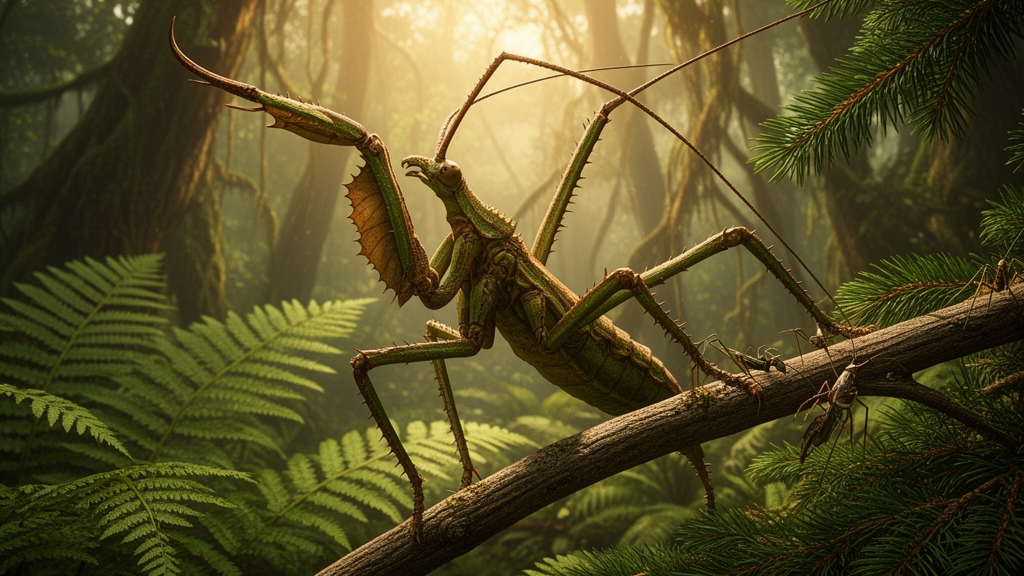
Two species of stick insect from the Early Cretaceous Jehol Biota of China had enlarged hind femora that are significantly larger than those of other known members of their family, indicating that the modified legs served an active defensive function. The approximately 125-million-year-old fossils, Coniphasma inflatum sp. nov. and Coniphasma breve sp. nov., are described in BMC Biology . The two species combined several conspicuous features.

Both possessed irregular color markings on well-developed wings, and their enlarged femora aided in camouflage. Their legs also carried prominent longitudinal carinae, or raised ridges, bearing rows of denticulate notches. According to the researchers, these structures enhanced the active defensive strategy the insects could employ after camouflage had failed.

Relative size distinguishes the hind femora of Coniphasma inflatum and C. breve from those of other known species in Susumaniidae. Their enlargement, together with the notched ridges on the legs, supports the interpretation that the legs functioned as active defensive weapons rather than representing only the visual resemblance associated with stick insects. The finding is based on fossil morphology from two species; it does not reveal how widespread active defensive behavior was across the wider stick insect group.

The authors conclude that the origin of enlarged hind femora probably predates wing regression in Phasmatodea. Both Jehol species retained well-developed wings while also possessing the enlarged femora interpreted as defensive structures. The discovery also indicates that many of the highly diverse morphological traits seen in living stick insects were already established during the Mesozoic.

Moreover, the researchers suggest that these features evolved independently multiple times within Phasmatodea.

Subject of Research: Fossil evidence of active defense in Early Cretaceous stick insects

Article Title: Enlarged hind femora as active defensive weapons in Cretaceous stick insects

Article References: Zhao, X., Ren, D., Yang, H., & Gao, T. (2026). Enlarged hind femora as active defensive weapons in Cretaceous stick insects. BMC Biology. https://doi.org/10.1186/s12915-026-02765-7

Image Credits: AI Generated

DOI: 10.1186/s12915-026-02765-7

Keywords: Cretaceous, stick insects, Phasmatodea, hind femora, active defense, fossil morphology, Jehol Biota, wing regression, insect evolution, Susumaniidae, Enlarged, hind

Cite Scienmag News

Gavin Prescott. (October 22, 2026). Cretaceous stick insects had enlarged defensive hind legs. Scienmag. https://scienmag.com/cretaceous-stick-insects-had-enlarged-defensive-hind-legs/

Gavin Prescott. "Cretaceous stick insects had enlarged defensive hind legs." Scienmag, 22 October 2026, https://scienmag.com/cretaceous-stick-insects-had-enlarged-defensive-hind-legs/. Accessed 22 October 2026.

Gavin Prescott. "Cretaceous stick insects had enlarged defensive hind legs." Scienmag. October 22, 2026. https://scienmag.com/cretaceous-stick-insects-had-enlarged-defensive-hind-legs/

Tags: active defenseactive defense mechanisms in insectsancient insect defense strategiesCretaceousCretaceous stick insectsdefensive adaptations in insectsEnlargedenlarged hind legsevolutionary adaptations in stick insectsfossil insect morphologyfossil morphologyfossil record of insect defensehindhind femorainsect camouflage and mimicryinsect evolutioninsect leg structure and functionJehol BiotaJehol Biota fossilslong-tail keywords on insect fossil discoveriesPhasmatodeastick insectsSusumaniidaewing regression
Share26Tweet16
Previous Post

Cross-sectional study links three correlates to anxiety in moderate-to-profound intellectual disability

Next Post

Predictive attention model improves semantic understanding of edited videos

Related Posts

Greenhouse study links soil legacies to competition between invasive annual grasses
Biology

Greenhouse study links soil legacies to competition between invasive annual grasses

October 22, 2026
Long-term manure shifted Beijing maize plots toward negative warming potential
Biology

Long-term manure shifted Beijing maize plots toward negative warming potential

October 22, 2026
Electrophysiology and molecular modeling pinpoint α7 receptor inhibition site
Biology

Electrophysiology and molecular modeling pinpoint α7 receptor inhibition site

October 22, 2026
SIK1–NR4A2 pathway linked to excitability in rat epilepsy model
Biology

SIK1–NR4A2 pathway linked to excitability in rat epilepsy model

October 22, 2026
AlphaGenome Atlas Predicts Effects of Billions of DNA Changes
Biology

AlphaGenome Atlas Predicts Effects of Billions of DNA Changes

October 22, 2026
AD-MSC-conditioned medium alters NAMPT/sirtuin-related responses in HeLa cells
Biology

AD-MSC-conditioned medium alters NAMPT/sirtuin-related responses in HeLa cells

October 22, 2026
Next Post
Predictive attention model improves semantic understanding of edited videos

Predictive attention model improves semantic understanding of edited videos

  • Mothers who receive childcare support from maternal grandparents show more optimized

    Mothers who receive childcare support from maternal grandparents show more parental warmth, finds NTU Singapore study

    27656 shares
    Share 11059 Tweet 6912
  • University of Seville Breaks 120-Year-Old Mystery, Revises a Key Einstein Concept

    1061 shares
    Share 424 Tweet 265
  • Bee body mass, pathogens and local climate influence heat tolerance

    682 shares
    Share 273 Tweet 171
  • Researchers record first-ever images and data of a shark experiencing a boat strike

    546 shares
    Share 218 Tweet 137
  • Groundbreaking Clinical Trial Reveals Lubiprostone Enhances Kidney Function

    531 shares
    Share 212 Tweet 133
Science

Embark on a thrilling journey of discovery with Scienmag.com—your ultimate source for cutting-edge breakthroughs. Immerse yourself in a world where curiosity knows no limits and tomorrow’s possibilities become today’s reality!

RECENT NEWS

  • Behavioral Model Links Waste Bank Retention to Landfill Pressure
  • Chinese cancer inpatients underreport pain, fatigue and emotional distress
  • Migrasomal miRNA reduces bone loss in mouse osteoporosis model
  • Rare Salivary Tumors Hide Two Cancerous Components, Case Reports Show

Categories

  • Agriculture
  • Anthropology
  • Archaeology
  • Athmospheric
  • Biology
  • Biotechnology
  • Blog
  • Bussines
  • Cancer
  • Chemistry
  • Climate
  • Earth Science
  • Editorial Policy
  • Marine
  • Mathematics
  • Medicine
  • Pediatry
  • Policy
  • Psychology & Psychiatry
  • Science Education
  • Science News
  • Social Science
  • Space
  • Technology and Engineering

Subscribe to Blog via Email

Enter your email address to subscribe to this blog and receive notifications of new posts by email.

Join 5,151 other subscribers

© 2025 Scienmag - Science Magazine

Welcome Back!

Login to your account below

Forgotten Password?

Retrieve your password

Please enter your username or email address to reset your password.

Log In
No Result
View All Result
  • HOME
  • SCIENCE NEWS
  • CONTACT US

© 2025 Scienmag - Science Magazine

Discover more from Science

Subscribe now to keep reading and get access to the full archive.

Continue reading