


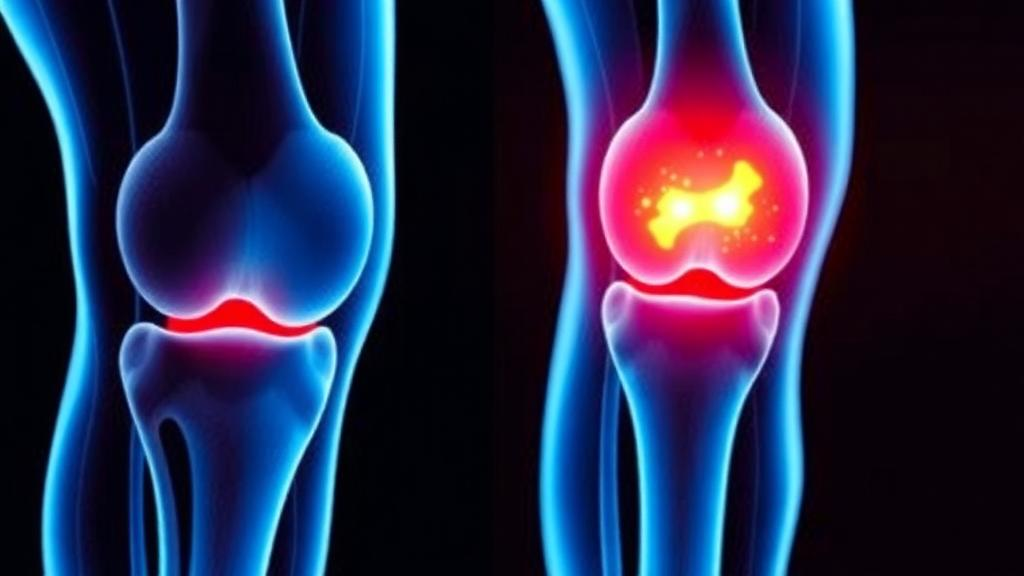
The human knee is a surprisingly talkative joint. Every squat, step, and shift of weight produces faint sounds and tiny wobbles that clinicians have long dismissed as noise. Now a prospective study from the University of Oulu in Finland suggests that this acoustic chatter, captured by ordinary air microphones, may carry measurable information about the internal state of the joint, including some of the same degenerative changes that radiologists currently detect only with magnetic resonance imaging. The research, published in BioMedical Engineering OnLine, explores whether the sounds and movement instabilities of the knee could serve as diagnostic biomarkers for osteoarthritis, one of the most common and burdensome musculoskeletal diseases in the world.
Knee osteoarthritis affects hundreds of millions of people globally, and its prevalence is rising as populations age and obesity rates climb. Despite its ubiquity, diagnosing and tracking the disease remains surprisingly crude. The clinical gold standard for characterizing the soft tissue and bone changes of osteoarthritis is magnetic resonance imaging scored with detailed grading systems such as the MRI Osteoarthritis Knee Score, known as MOAKS. MRI can reveal cartilage loss, bone marrow lesions, meniscal damage, and joint effusions with remarkable detail, but it is expensive, time consuming, and impractical for repeated monitoring. Clinicians have therefore long sought cheaper, faster proxies, and the idea of listening to the joint, a technique called phonoarthrography or joint acoustic emission analysis, has circulated for decades without ever quite reaching the clinic.
The Finnish team, led by Olli Veikkola of the Research Unit of Health Sciences and Technology at the University of Oulu, together with colleagues at EPFL in Switzerland, the Basque Center for Applied Mathematics in Spain, and Oulu University Hospital, set out to test the concept rigorously. They recruited 106 participants for a single-center prospective cohort study: 66 women aged 44 to 67 years and 40 men aged 45 to 64 years. Each participant underwent knee MRI, and trained readers applied the full MOAKS grading protocol to define the osteoarthritic status of every knee. This gave the researchers a detailed, image-based ground truth against which any acoustic or kinematic signal could be validated.
To capture the joint’s sounds and movements, the team built a custom prototype device. Two non-contact air microphones were positioned just below the patella, close enough to record the subtle acoustic emissions generated inside the joint but without touching the skin, which avoids friction noise and pressure artifacts. In addition, inertial measurement unit modules, small sensor packages containing accelerometers and gyroscopes, were strapped to the thigh and shank. These recorded kinetic instability, the tiny deviations and tremors in how the leg moves during loaded tasks. Participants then performed simple physical exercises, including sit-to-stand movements performed laterally, which load the knee in controlled and repeatable ways while the sensors capture everything the joint does.
From the raw recordings, the researchers extracted a large battery of signal features. In total, 35 acoustic variables were derived, encompassing measures such as the energy distribution across frequency bands, the ratio of high-frequency click-like events to lower-frequency emissions, and statistical descriptors like skewness, which captures the asymmetry of the signal distribution. The kinematic data yielded measures of instability during the same tasks. The central analytical question was whether any of these features correlated with specific MOAKS parameters, the individual MRI findings such as bone marrow lesions, meniscal extrusion or morphology, cartilage defects, and effusion, rather than with a vague overall diagnosis of osteoarthritis.
The results, analyzed with logistic regression models, showed statistically significant associations between a subset of the acoustic variables and six relevant MOAKS parameters. The most promising signals were strikingly specific. The ratio of high-frequency emissions to click-type emissions recorded during the lateral sit-to-stand task predicted bone marrow lesions in the lateral femur. Meanwhile, the skewness of the high- and low-frequency acoustic emissions during the same movement predicted both lateral meniscal position and morphology and the presence of joint effusions. The discriminative performance of these features, quantified by the area under the receiver operating characteristic curve, ranged between 0.65 and 0.70. That is well short of the 0.90-plus values expected of a standalone diagnostic test, but it is far above chance, and it demonstrates that the sounds of a moving knee genuinely encode information about structures deep inside the joint that can otherwise only be seen on MRI.
One of the most intriguing findings emerged when the analysis was stratified by sex. Statistically significant associations appeared only among the female participants, specifically for bone marrow lesions in the lateral femur and for effusion. The male subgroup alone did not reach significance for any parameter, although including men in the combined analysis reinforced the overall associations rather than weakening them. The authors note this sex difference explicitly, and it raises questions about anatomical and biomechanical differences between male and female knees, differences in signal transmission through varying soft tissue thickness, or simply the smaller male sample size of 40 participants. Whatever the mechanism, the pattern suggests that future studies of joint acoustics will need to account for sex as a modifying variable rather than pooling all knees together.
The technical logic behind why damaged knees sound different is worth unpacking. Healthy cartilage surfaces glide over one another with minimal friction, producing little acoustic energy. As osteoarthritis progresses, the cartilage roughens, fibrillates, and eventually wears away, exposing bone and altering the lubrication of the joint. Irregular surfaces and debris generate impulsive, high-frequency vibrations during loading, and displaced menisci or inflamed, fluid-filled joint capsules change the way these vibrations propagate and how the joint moves under load. Bone marrow lesions, which represent localized edema and microdamage within the femoral or tibial bone, may alter the stiffness and damping characteristics of the structures through which the sound travels. The Finnish findings hint that different pathological features imprint different acoustic fingerprints, with high-frequency click ratios flagging bone lesions and distributional asymmetries in the emission signal tracking meniscal displacement and swelling.
The researchers are careful about what their results do and do not prove. They describe the associations as exploratory and emphasize that the diagnostic potential remains to be confirmed in larger studies. The cohort of 106 knees is modest, the AUC values indicate moderate rather than strong discrimination, and the study was conducted at a single center with a specific prototype device and a fixed set of tasks. The study was registered at clinicaltrials.gov under identifier NCT02937064, and the work received open access funding from the University of Oulu with support from the Radiological Society of Finland. One declared competing interest is worth noting: co-author Jerome Thevenot is a shareholder and CEO of Inmodi Oy, a company that could have a stake in commercializing such technology, which readers should weigh alongside the exploratory nature of the findings.
Even with those caveats, the study points toward a genuinely appealing future. If the associations hold up at scale, a knee examination could one day involve nothing more than a pair of microphones and two motion sensors, a setup costing a tiny fraction of an MRI scan and deployable in a general practitioner’s office, a physiotherapy clinic, or even a patient’s home. Such a tool would not replace MRI, whose detailed MOAKS grading remains indispensable for surgical planning and definitive characterization. Instead, the authors suggest, acoustic emissions and kinetic instability might serve as a complementary modality for characterizing knee osteoarthritis, screening patients who need imaging, and tracking disease progression over time without repeated exposure to costly scans. For a disease that will touch an ever-growing share of the aging global population, the prospect of hearing osteoarthritis before it can be seen is a quiet revolution worth listening for.
Subject of Research: Acoustic emission and kinetic instability biomarkers for detecting knee osteoarthritis changes graded by MRI
Article Title: Acoustic emissions and kinetic instability as biomarkers to detect osteoarthritic changes of knee joint according to MRI
Article References: Olli, V., Jerome, T., Tomas, T., Simo, S., & Mika, N. (2026). Acoustic emissions and kinetic instability as biomarkers to detect osteoarthritic changes of knee joint according to MRI. BioMedical Engineering OnLine. https://doi.org/10.1186/s12938-026-01632-4
Image Credits: AI Generated
DOI: 10.1186/s12938-026-01632-4
Keywords: knee osteoarthritis, acoustic emissions, kinetic instability, MRI, MOAKS, biomarkers, bone marrow lesions, meniscus, joint effusion, phonoarthrography, biomedical engineering, diagnostic markers
Cite Scienmag News
Ophelia Keating. (October 2, 2026). Crackling Knees: Microphone Recordings Reveal Hidden Osteoarthritis Signs Seen on MRI. Scienmag. https://scienmag.com/crackling-knees-microphone-recordings-reveal-hidden-osteoarthritis-signs-seen-on-mri/
Ophelia Keating. "Crackling Knees: Microphone Recordings Reveal Hidden Osteoarthritis Signs Seen on MRI." Scienmag, 2 October 2026, https://scienmag.com/crackling-knees-microphone-recordings-reveal-hidden-osteoarthritis-signs-seen-on-mri/. Accessed 4 October 2026.
Ophelia Keating. "Crackling Knees: Microphone Recordings Reveal Hidden Osteoarthritis Signs Seen on MRI." Scienmag. October 2, 2026. https://scienmag.com/crackling-knees-microphone-recordings-reveal-hidden-osteoarthritis-signs-seen-on-mri/


