


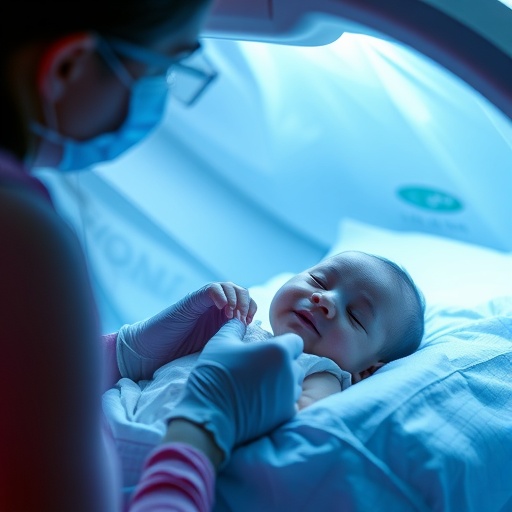
As the world continues to grapple with the long-term effects of the COVID-19 pandemic, new research has uncovered an unexpected ripple effect in neonatal healthcare—specifically in the management of neonatal hyperbilirubinemia. A recent study published in the Journal of Perinatology dives deep into the changing landscape of phototherapy usage in newborns born at or after 38 weeks gestation throughout the pandemic period. The findings illuminate a concerning increase in subthreshold phototherapy, administered to infants whose bilirubin levels were below the recommended American Academy of Pediatrics (AAP) treatment threshold.
Neonatal hyperbilirubinemia, commonly manifested as jaundice, occurs in a significant percentage of newborns due to immature liver function and increased breakdown of fetal red blood cells. Phototherapy remains the cornerstone of treatment, effectively converting unconjugated bilirubin into water-soluble forms excreted by the infant’s body. Standard guidelines, such as those promulgated by the AAP, recommend initiating phototherapy only when bilirubin levels cross specific, clinically determined cutoffs to avoid unnecessary interventions.
The research highlights a striking deviation from these established guidelines during the COVID-19 pandemic era. By retrospectively analyzing phototherapy orders and bilirubin measurements from a robust clinical dataset, Eng, Lim, and Southern uncovered that a meaningful proportion of term infants—those ≥38 weeks gestation—were exposed to phototherapy despite presenting with bilirubin levels under the AAP threshold. This phenomenon, termed “subthreshold phototherapy,” increased significantly when comparing pre-pandemic and pandemic cohorts.
Understanding the clinical implications of this trend begins with an exploration of what might have driven clinicians to adopt a more conservative, albeit somewhat excessive, approach. The authors speculate that heightened caution amid pandemic uncertainties possibly influenced medical decision-making. Healthcare providers might have been preemptively treating hyperbilirubinemia to avoid hospital readmissions or parental concerns during a period of strained resources and social distancing measures.
Moreover, infants born during the pandemic period experienced a different healthcare milieu—outsized parental anxiety about any illness, modified routine clinical interactions, and shifts in hospital protocols for newborn care. These epidemiological and psychosocial factors perhaps pressured neonatologists and pediatricians to err on the side of overtreatment, even when clinical parameters indicated low risk. The pandemic exposed vulnerabilities in clinical practice that manifest in subtler ways than yet widely appreciated.
The methodical approach adopted in the study involved stratifying infants by gestational age, narrowing to those ≥38 weeks, which is critical because hyperbilirubinemia risks and treatment thresholds differ significantly between term and preterm babies. The researchers ensured that confounding by gestational age was minimized, hence strengthening the attribution of observed differences to pandemic-related changes rather than demographic shifts in birth populations.
The study’s key figure starkly portrays a rising frequency of subthreshold phototherapy in the pandemic period. Before the pandemic, phototherapy on infants below thresholds was relatively rare, aligning well with guideline adherence. Yet, during COVID-19 times, this incidence rose, revealing potential overutilization. This highlights an unexpected consequence of pandemic-era clinical practice—a subtle but important shift in adherence to evidence-based protocols.
Such findings call for a nuanced examination of both patient safety and resource allocation. While phototherapy is widely regarded as safe, unnecessary treatment may increase hospital stays, parental stress, and healthcare costs without clear benefits. The data prompts a reassessment of how clinical guidelines are applied under crisis conditions and whether ongoing education and support for healthcare providers can maintain best practices even amid public health emergencies.
Furthermore, this phenomenon of subthreshold phototherapy use raises pertinent questions about the balance of risk versus benefit in neonatal care. Could the increased phototherapy have shielded some infants from borderline hyperbilirubinemia worsening, or did it represent an avoidable burden? The study refrains from directly linking subthreshold phototherapy to adverse outcomes but implies that judicious adherence to established thresholds remains critical.
The context of the pandemic may also have complicated the measurement and monitoring landscape for bilirubin levels. Changes in inpatient stay durations, modifications in outpatient follow-up, and limited laboratory access may have encouraged a more aggressive “treatment-first” mindset. Clinicians, seeking to mitigate risk in ambiguous circumstances, might have preferred simpler management pathways over nuanced risk stratification, leading to increased subthreshold phototherapy.
In addition, the evolving nature of SARS-CoV-2 itself and its impact on neonatal physiology are areas of ongoing research. Though current evidence does not tightly link COVID-19 infection with alterations in bilirubin metabolism, the pandemic environment reshaped numerous aspects of care delivery. This study adds a vital piece to that complex puzzle by revealing how systemic pressures influence day-to-day clinical decisions in neonatal wards.
Looking forward, these insights underscore the importance of flexible yet evidence-based guidelines that can withstand the pressures of extraordinary healthcare disruptions. The authors advocate for reinforcing education on hyperbilirubinemia management and facilitating clear communication channels that empower providers with confidence to adhere to threshold-based interventions, even in crisis settings.
As vaccines and better therapeutics have begun to temper the pandemic’s broader health impact, neonatal care protocols may gradually return to pre-pandemic norms. However, the lasting lessons from this period, such as the overuse of subthreshold phototherapy, must inform resilience planning for future public health emergencies. Healthcare systems need robust feedback cycles to detect such shifts in practice early and counteract unintended consequences.
This study’s revelations also resonate beyond neonatal care, reflecting broader themes of pandemic-driven shifts in clinical decision-making, risk tolerance, and health resource utilization. As scientists and clinicians reflect on the COVID-19 era, appreciating and addressing these subtle but significant patterns will be essential for optimizing care quality and outcomes.
In summary, the research by Eng, Lim, and Southern provides a compelling window into how the COVID-19 pandemic indirectly influenced neonatal care practices, particularly in the management of hyperbilirubinemia with phototherapy. The noticeable uptick in subthreshold phototherapy signals a need for heightened awareness, guideline adherence reinforcement, and continual monitoring of clinical trends, thereby ensuring safe, judicious, and evidence-based care for newborns even amid unforeseen healthcare crises.
Cite Scienmag News
Harold Sullivan. (November 24, 2025). COVID-19’s Effect on Neonatal Phototherapy Usage. Scienmag. https://scienmag.com/covid-19s-effect-on-neonatal-phototherapy-usage/
Harold Sullivan. "COVID-19’s Effect on Neonatal Phototherapy Usage." Scienmag, 24 November 2025, https://scienmag.com/covid-19s-effect-on-neonatal-phototherapy-usage/. Accessed 3 September 2026.
Harold Sullivan. "COVID-19’s Effect on Neonatal Phototherapy Usage." Scienmag. November 24, 2025. https://scienmag.com/covid-19s-effect-on-neonatal-phototherapy-usage/


