


The escalating environmental crisis caused by plastic pollution has galvanized researchers worldwide to find viable alternatives to conventional plastic materials. Among the most promising developments in this field is the work being carried out by Srinivas Janaswamy, an associate professor at South Dakota State University’s Department of Dairy and Food Science. Janaswamy and his team have been innovating in the area of biodegradable packaging by transforming agricultural byproducts into plastic-like films, signaling a crucial step toward sustainable packaging solutions that could revolutionize the industry.
Plastic waste, primarily derived from fossil fuels such as crude oil, constitutes one of the largest environmental threats of the modern age. These plastics are predominantly single-use and have lifespans extending for centuries in the environment. Despite widespread awareness, recycling rates languish at a mere 9%, resulting in massive accumulations of waste such as the infamous Great Pacific Garbage Patch. However, the bigger hazard lies in micro- and nano-plastics, the fragmented remnants that pervade ecosystems and even infiltrate the human body. The implications of this pervasive plastic contamination on health remain largely uncharted, intensifying the urgency for biodegradable alternatives.
At the core of Janaswamy’s research lies cellulose, an abundant biopolymer intrinsic to plant cell walls. Structurally, cellulose is a polysaccharide comprising linear chains of glucose molecules interconnected through robust hydrogen bonds, conferring mechanical strength and rigidity to plants. Alongside cellulose, other biopolymers such as hemicellulose, lignin, mannan, and xylose contribute to plant architecture. Historically, cellulose’s role as a resource is well established—in textiles like cotton and in wood products—making it a logical candidate for material science innovations aimed at replacing synthetic plastics.
Janaswamy’s laboratory has capitalized on cellulose extraction from a diverse spectrum of agricultural waste streams, including avocado peels, soyhulls, alfalfa, switchgrass, spent coffee grounds, corncobs, and banana peels. Each source offers unique properties for the resulting cellulose films, impacting their transparency, strength, and biodegradability. By refining the extraction and film-forming processes, Janaswamy’s team develops materials that mimic the tactile and visual attributes of traditional plastic wraps, yet decompose swiftly in natural environments, offering an ecological reprieve from persistent plastic pollution.
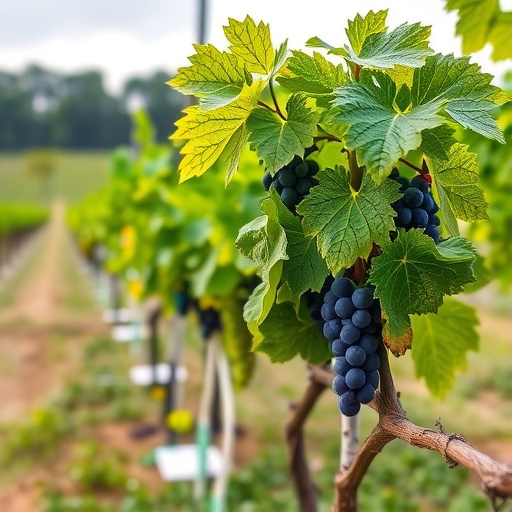
A pivotal breakthrough in Janaswamy’s work was sparked by a collaboration with Anne Fennell, a distinguished professor specializing in agronomy and horticulture. Fennell introduced the concept of utilizing grapevine canes, a normally discarded woody residue from vineyard pruning. These canes are notably cellulose-dense and have low moisture content, characteristics that make them ideal feedstock for biopolymer film production. The usually discarded biomass presented the opportunity for waste valorization, integrating agricultural sustainability with environmental stewardship.
The process devised for creating films from grapevine cane cellulose involves a meticulous extraction workflow. Initially, harvested canes from South Dakota State University’s research vineyards undergo drying and grinding to yield a fibrous cellulosic residue. This residue then undergoes solubilization, enabling it to be cast onto glass substrates where it forms thin films upon drying. These films are not only transparent and aesthetically appealing but demonstrate mechanical properties that surpass conventional plastic bags in tensile strength, highlighting their practicality for packaging applications.
A recent publication in the journal Sustainable Food Technology detailed the physicochemical attributes and biodegradability profile of these grapevine-derived films. Crucially, these films exhibited a biodegradation timeline of only 17 days in soil environments, breaking down without releasing harmful residues or contaminants. This rapid decomposition contrasts starkly with the protracted environmental persistence of synthetic plastics and marks a significant advancement toward truly sustainable packaging materials.
Beyond the functional capabilities of the films, their high light transmittance has important implications for food packaging. Clear films enable consumers and retailers to inspect product quality without unsealing packages, enhancing convenience and reducing food waste. This attribute, combined with the mechanical robustness and biodegradability, positions grapevine cane-derived cellulose films as strong contenders in the packaging industry’s shift toward sustainable materials.
The research team, including doctoral candidates such as Sandeep Paudel and Sumi Regmi, along with Purdue University’s Sajal Bhattarai, has been instrumental in refining production protocols and characterizing film performance. Their experimental approach combines materials science with agricultural waste management, exemplifying interdisciplinary collaboration that propels innovation from concept to application. The methodology adheres to published protocols ensuring reproducibility and scalability, crucial for transitioning laboratory success to commercial viability.
Funding from prominent agencies including the U.S. Department of Agriculture’s National Institute of Food and Agriculture and the National Science Foundation underlines the significance and potential impact of this research. Institutional support has enabled comprehensive exploration of cellulose-based materials derived from agro-waste, promoting environmentally friendly solutions that dovetail with circular bioeconomy principles—where waste streams are converted into value-added products, minimizing resource extraction and environmental footprints.
Janaswamy’s vision to replace traditional plastic bags with biodegradable alternatives fashioned from cellulosic materials represents not only a scientific endeavor but a crucial strategy for global sustainability. By leveraging agricultural byproducts typically relegated to waste or low-value uses, this research offers a pragmatic and scalable pathway to mitigate plastic pollution. The development of strong, transparent, and rapidly degradable films from grapevine cane cellulose epitomizes how material innovation can harmonize environmental health with industry needs.
Looking forward, the implications of this research extend beyond packaging. The successful valorization of grapevine canes suggests broader applications for other lignocellulosic agricultural wastes. As regulatory pressures mount against plastic pollution and consumer demand for sustainable products increases, such biodegradable films could see rapid adoption. Furthermore, understanding the long-term environmental interactions and potential health impacts of cellulose-based films will be essential to fully harness their benefits.
Ultimately, the integration of agricultural science, materials engineering, and environmental sustainability embodied in Janaswamy’s work represents a remarkable step forward. His team not only addresses an urgent global challenge but does so by transforming what was once waste into a resource, advancing a new paradigm of sustainability where economic viability and ecological responsibility converge.
News Publication Date: 20-Jun-2025
Web References:
https://pubs.rsc.org/en/content/articlelanding/2025/fb/d5fb00211g
References:
Janaswamy, S., Fennell, A., Paudel, S., Regmi, S., Bhattarai, S. (2025). Valorization of grapevine agricultural waste into transparent and high-strength biodegradable films for sustainable packaging. Sustainable Food Technology. DOI: 10.1039/D5FB00211G
Cite Scienmag News
Alan Morgan. (August 13, 2025). Could Grapevines Offer a Solution to the Plastic Waste Crisis? Scienmag. https://scienmag.com/could-grapevines-offer-a-solution-to-the-plastic-waste-crisis/
Alan Morgan. "Could Grapevines Offer a Solution to the Plastic Waste Crisis?" Scienmag, 13 August 2025, https://scienmag.com/could-grapevines-offer-a-solution-to-the-plastic-waste-crisis/. Accessed 3 September 2026.
Alan Morgan. "Could Grapevines Offer a Solution to the Plastic Waste Crisis?" Scienmag. August 13, 2025. https://scienmag.com/could-grapevines-offer-a-solution-to-the-plastic-waste-crisis/


