


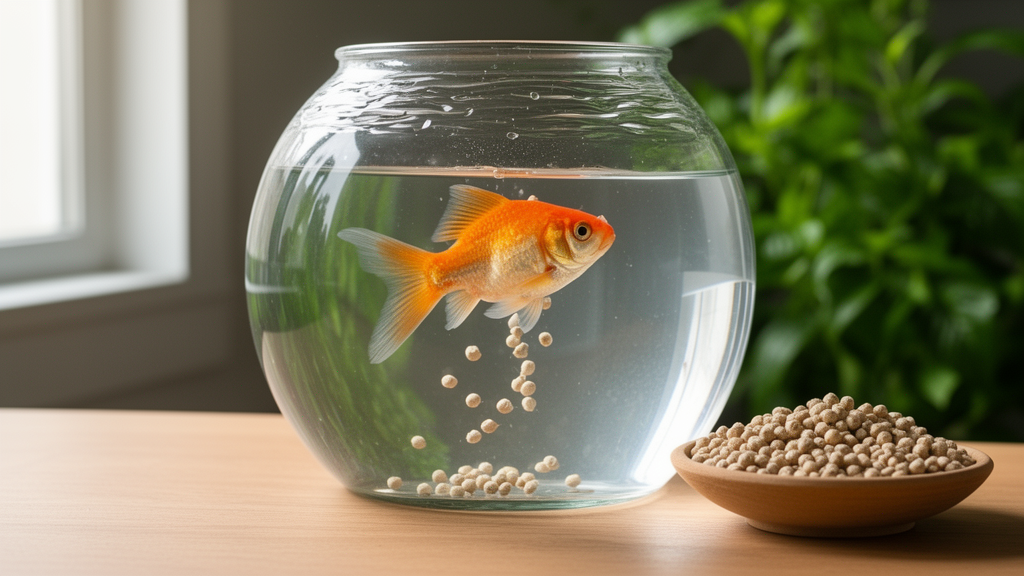
A humble by-product of the cotton industry may be on the verge of solving one of aquaculture’s most persistent problems. In a 90-day feeding trial conducted at Tokat Gaziosmanpaşa University in Türkiye, researchers found that glandless cottonseed kernel powder, a high-protein agricultural by-product bred to carry almost none of the toxic compound gossypol, can partially replace expensive fishmeal in the diets of juvenile goldfish without harming growth, feed efficiency, or survival. The findings, published in Acta Ichthyologica et Piscatoria, suggest that a crop residue not destined for human consumption could become a sustainable pillar of ornamental fish farming.
The trial involved 180 juvenile goldfish, Carassius auratus, each starting at a mean live weight of just 1.25 grams. The fish were randomly distributed across 12 glass aquariums, 15 per tank, arranged in three replicates of four dietary groups. One group received a control diet with no cottonseed inclusion, while the other three received feeds containing 5%, 7.5%, and 10% glandless cottonseed kernel powder. All diets were formulated to be isonitrogenous and isocaloric, meaning they delivered comparable crude protein and gross energy levels, so that any observed differences could be attributed to the cottonseed itself rather than to nutritional imbalance. The fish were fed twice daily, at 09:00 and 16:00, under a controlled regime, and water temperature, dissolved oxygen, salinity, conductivity, and pH were monitored throughout the 90-day period.
The raw material came from a glandless cottonseed variety developed by the Nazilli Cotton Research Institute in Aydın Province, Türkiye, officially registered in 2002 after a decade of selective breeding. Unlike conventional cottonseed, which contains gossypol-secreting pigment glands that limit its use in animal feed, this variety was bred specifically to lack those glands. The kernels were delinted, mechanically cracked, hand-separated, ground in an electric mill, and sieved to produce a powder with an average particle size of one millimetre. Analysis of the powder revealed a crude protein content of 40.05% of dry matter and a crude lipid content of 37.13%, alongside a metabolizable energy of 13.64 MJ per kilogram, making it nutritionally comparable to many marine-derived feed ingredients.
Gossypol remains the central concern whenever cottonseed enters aquafeed. In conventional varieties, this polyphenolic aldehyde can impair growth, reduce fertility, and damage liver function in fish when present at high concentrations. The glandless Nazilli cultivar used in this study contained free gossypol at 521 mg per kilogram and total gossypol at 706 mg per kilogram, low but measurable concentrations that the researchers argue did not produce any detectable negative effects at the inclusion levels tested. The distinction matters because glandless cottonseed products are generally considered more digestible and safer than their conventional counterparts, and precise analytical confirmation of gossypol content is essential before any feed ingredient can be recommended for commercial use.
Amino acid profiling of the powder was performed using liquid chromatography coupled with tandem mass spectrometry, following acidic hydrolysis of the sample and electrospray ionization in multiple reaction monitoring mode. The analysis revealed that glutamic acid dominated the profile at 11.93 g per 100 g, followed by aspartic acid at 8.85 g and arginine at 6.44 g. Lysine, an essential amino acid often limiting in plant proteins, measured 3.00 g per 100 g, while methionine, another frequently limiting amino acid, measured 0.60 g. The calculated amino acid composition of the experimental diets showed that lysine and arginine levels actually increased with rising cottonseed inclusion, a pattern the researchers suggest may have contributed positively to protein synthesis and metabolic processes in the growing fish.
By the end of the trial, the group receiving 5% cottonseed kernel powder had reached the highest mean live weight of 3.722 grams, followed by the 10% group at 3.683 grams, the control at 3.666 grams, and the 7.5% group at 3.422 grams. The highest body weight gain ratio was recorded in the 5% group at 197.46%, and the lowest in the 7.5% group at 173.59%. Specific growth rates ranged from 1.118% to 1.210% per day, and feed conversion ratios varied between 2.539 and 2.793. Critically, a one-way ANOVA followed by Tukey’s multiple comparison test found no statistically significant differences among any of the groups for live weight gain, specific growth rate, survival rate, feed consumption, or feed conversion ratio, with all comparisons yielding P values greater than 0.05. No mortality occurred in any group, producing a 100% survival rate across the entire experiment.
The economic backdrop gives these findings their urgency. Feed accounts for roughly 70% of total production costs in aquaculture, and fishmeal prices have surged dramatically over the past two decades, rising from approximately USD 480 per metric ton in 2004 to USD 1400–1700 per ton in 2024. Climate phenomena such as El Niño have reduced anchovy populations along the South American Pacific coast, a prime fishery region, driving fishmeal and fish oil costs up by more than 300%. Overfishing, global warming, the pandemic, and the energy crisis have compounded these pressures, pushing scientists to explore animal and plant protein alternatives for over 25 years. Oilseed cakes from soy, sunflower, corn, and canola, along with meat-bone meal and hydrolyzed feather meal, have all been tested as substitutes, but each carries its own limitations in amino acid balance, digestibility, or anti-nutritional factors.
The goldfish results align with a growing body of evidence supporting cottonseed-derived proteins across diverse aquaculture species. Cottonseed protein concentrate has been shown to maintain growth performance, digestive enzyme activity, and intestinal health in juvenile largemouth bass, while dietary cottonseed protein concentrate has sustained growth and improved immune responses in juvenile golden pompano. In Nile tilapia, high-quality plant-based proteins supplemented with free amino acids have been used to replace up to 50% of fishmeal without negatively impacting growth parameters. Studies on grass carp and rainbow trout further underscore the versatility of cottonseed products. The researchers note that omnivorous species such as goldfish utilize plant-based ingredients more efficiently than strictly carnivorous fish, which may partly explain the positive outcomes observed in this trial.
What sets glandless cottonseed kernel powder apart from other plant protein alternatives, such as soybean or corn, is its status as an agricultural by-product not directly competing with human food supply. This characteristic enhances its appeal in the context of sustainable aquaculture, where feed ingredients must balance nutritional adequacy against resource competition and environmental footprint. The researchers also point out that the successful use of such plant-derived proteins depends heavily on appropriate inclusion levels and careful diet formulation, since excessive replacement of fishmeal can reduce performance due to amino acid imbalances or residual anti-nutritional factors. The numerically higher growth in the 5% group suggests that moderate inclusion may be optimal, though the lack of statistical significance means the 10% level remains biologically safe.
The study’s authors acknowledge that an economic evaluation of feed formulation was not included in this trial, and they recommend that future research incorporate cost–benefit analyses to better assess the practical applicability of glandless cottonseed kernel powder in commercial aquafeeds. They also note that the research establishes a precedent for testing this locally developed ingredient in other aquaculture species, potentially diversifying feed resources and fostering a more circular economy in the sector. As fishmeal prices continue their upward trajectory and marine ecosystems face mounting pressure, the prospect of converting a cotton-processing residue into a viable aquafeed ingredient offers a compelling example of how agricultural innovation and aquaculture sustainability can converge.
Subject of Research: Effects of dietary glandless cottonseed kernel powder as a partial fishmeal substitute on growth performance and feed efficiency of juvenile goldfish, Carassius auratus ( Actinopterygii , Cypriniformes , Cyprinidae )
Article Title: Effects of dietary glandless cottonseed kernel powder as a partial fishmeal substitute on growth performance and feed efficiency of juvenile goldfish, Carassius auratus ( Actinopterygii , Cypriniformes , Cyprinidae )
Article References: Yeşi̇layer, N., Bektaş, S., Karslı, Z., & Yıldırım, A. (2026). Effects of dietary glandless cottonseed kernel powder as a partial fishmeal substitute on growth performance and feed efficiency of juvenile goldfish, Carassius auratus (Actinopterygii, Cypriniformes, Cyprinidae). Acta Ichthyologica et Piscatoria, 56, 213-222. https://doi.org/10.3897/aiep.56.189167
Image Credits: AI Generated
Keywords: aquaculture, cottonseed, fishmeal, goldfish, sustainable feed, gossypol, plant protein, feed conversion ratio, ornamental fish, nutrition, Effects, dietary
Cite Scienmag News
Daisy Hatcher. (October 17, 2026). Cottonseed Kernels Could Replace Fishmeal in Goldfish Feed, Study Finds. Scienmag. https://scienmag.com/cottonseed-kernels-could-replace-fishmeal-in-goldfish-feed-study-finds/
Daisy Hatcher. "Cottonseed Kernels Could Replace Fishmeal in Goldfish Feed, Study Finds." Scienmag, 17 October 2026, https://scienmag.com/cottonseed-kernels-could-replace-fishmeal-in-goldfish-feed-study-finds/. Accessed 17 October 2026.
Daisy Hatcher. "Cottonseed Kernels Could Replace Fishmeal in Goldfish Feed, Study Finds." Scienmag. October 17, 2026. https://scienmag.com/cottonseed-kernels-could-replace-fishmeal-in-goldfish-feed-study-finds/


