


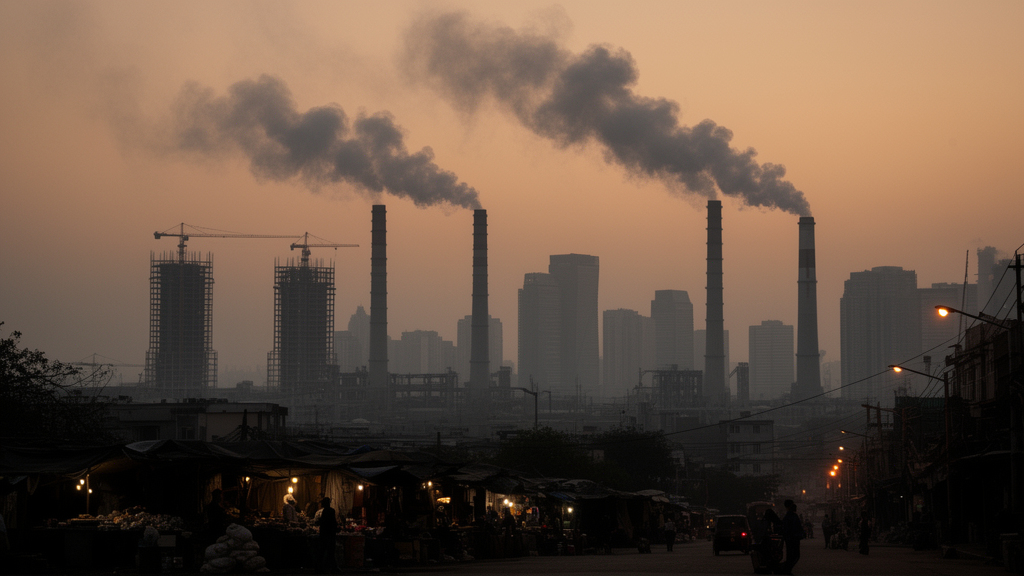
A panel data study of the BRICS nations—Brazil, Russia, India, China and South Africa—reports that corruption is significantly associated with increased carbon dioxide emissions over the long run, while underground economic activity shows the opposite sign, linked to better environmental outcomes in the same period. The research, published in Discover Sustainability, examined dynamic linkages among corruption, economic liberty, the underground economy and CO2 emissions from 1995 to 2020. The authors, Shrabanti Maity and Mithun Kumar Rath, framed the analysis around the United Nations Sustainable Development Goals, noting that environmental justice falls under SDG 16 and that the BRICS economies' rapid expansion and high energy intensity make them central to global emissions trends.
Their stated motivation was to investigate how these institutional and economic variables interact dynamically in countries where growth and energy use remain tightly coupled. Methodologically, the study relied on second-generation panel econometric techniques to support the panel data. The toolkit included panel cointegration tests to establish whether the variables move together over time, long-run elasticity estimates to gauge the size of each relationship, and causality testing to probe the direction of influence among corruption, economic liberty, the shadow economy and carbon release.
The empirical results point to a long-run association among all the variables examined. Within that equilibrium relationship, corruption significantly enhances environmental degradation. The paper concludes with policy implications for the BRICS nations, identifying shortcomings in current governance and environmental frameworks and suggesting directions for further research.
The authors position these findings against the backdrop of the 17 Sustainable Development Goals, which include numerous environmental targets alongside the justice-related objectives of SDG 16.
Subject of Research: Environmental economics and sustainability research
Article Title: Dynamic linkages among corruption, economic liberty, the underground economy and carbon release in BRICS nations
Article References: Maity, S., & Rath, M. K. (2026). Dynamic linkages among corruption, economic liberty, the underground economy and carbon release in BRICS nations. Discover Sustainability. https://doi.org/10.1007/s43621-026-04702-8
Image Credits: AI Generated
DOI: 10.1007/s43621-026-04702-8
Keywords: Dynamic, linkages, corruption, economic, liberty, underground, economy, carbon, release, BRICS, nations, scientific research
Cite Scienmag News
Sloane Callahan. (October 25, 2026). Corruption Deepens CO2 Emissions in BRICS While Shadow Economy Curb Them, Panel Study Finds. Scienmag. https://scienmag.com/corruption-deepens-co2-emissions-in-brics-while-shadow-economy-curb-them-panel-study-finds/
Sloane Callahan. "Corruption Deepens CO2 Emissions in BRICS While Shadow Economy Curb Them, Panel Study Finds." Scienmag, 25 October 2026, https://scienmag.com/corruption-deepens-co2-emissions-in-brics-while-shadow-economy-curb-them-panel-study-finds/. Accessed 25 October 2026.
Sloane Callahan. "Corruption Deepens CO2 Emissions in BRICS While Shadow Economy Curb Them, Panel Study Finds." Scienmag. October 25, 2026. https://scienmag.com/corruption-deepens-co2-emissions-in-brics-while-shadow-economy-curb-them-panel-study-finds/


