Tuesday, October 27, 2026
Science
No Result
View All Result
  • Login
  • HOME
  • SCIENCE NEWS
  • CONTACT US
  • HOME
  • SCIENCE NEWS
  • CONTACT US
No Result
View All Result
Scienmag
No Result
View All Result
Home Science News Earth Science

Coralline Algae Surface Architecture May Explain Why Coral Larvae Settle There

October 27, 2026
in Earth Science, Science News
Violet Maxwell
By Violet Maxwell Scienmag Editorial Profile - Natural Hazards
Reading Time: 3 mins read
0
Coralline Algae Surface Architecture May Explain Why Coral Larvae Settle There

Coralline Algae Surface Architecture May Explain Why Coral Larvae Settle There

65
SHARES
587
VIEWS
Share on FacebookShare on Twitter
ADVERTISEMENT

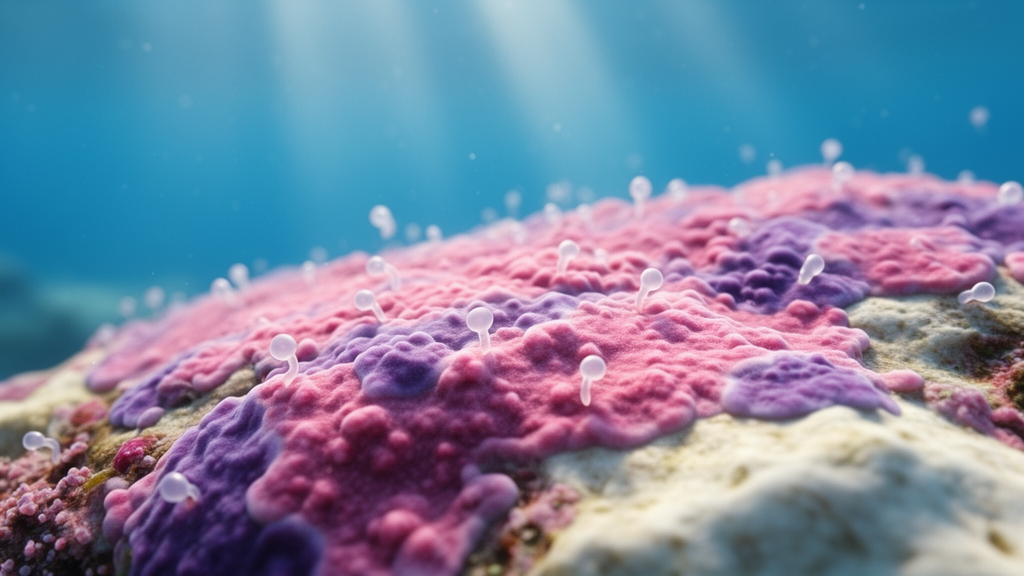
Coral larvae face a formidable challenge: after spending days or weeks drifting in the plankton, they must find a suitable patch of seafloor on which to settle and begin life as a sessile polyp. Among the most reliable signposts on that journey are crustose coralline algae, the pinkish, stony marine algae that encrust reef surfaces. Now, a hypothesis-and-theory paper published in Frontiers in Marine Science proposes that a long-overlooked physical feature of one particular coralline alga may help explain why coral larvae so often choose it: the microscopic architecture of its surface.

The study, led by Rodrigo Tomazetto Carvalho of the Rio de Janeiro Botanical Garden together with colleagues from the Museu Nacional of the Federal University of Rio de Janeiro and the Fluminense Federal University, focuses on the Lithophyllum prototypum complex, a group of non-geniculate coralline algae. Members of this complex have repeatedly been associated with high coral settlement responses on reefs, yet the mechanisms behind that association have remained incompletely understood. Most previous explanations have emphasized chemistry and microbes.

Crustose coralline algae are known to release chemical signals that attract larvae, and the films of bacteria living on their surfaces are thought to contribute additional cues. According to the authors, however, the distinctive physical architecture of the L. prototypum morphotype has received little ecological attention, even though it may shape how larvae experience both the surface and its chemical environment. To characterize that architecture, the team used scanning electron microscopy combined with quantitative morphometry.

Their analyses revealed that the alga's applanate surface results from the repeated superimposition of thalli, the flattened bodies of the alga, one atop another over time. This growth pattern produces overlapping lamellae, plate-like layers with elevated margins, and between these layers run narrow crevices and interstitial spaces distributed across the algal surface. The measurements give a concrete sense of the scale of these features.

The mean spacing between adjacent applanate branches was 533 ± 213 micrometers, while the overhanging lamellar margins formed shallow cavities averaging 29.1 ± 5.6 micrometers in height. From these observations the authors build what they call a physical–chemical–microbial microhabitat hypothesis. The idea is that the surface architecture may enhance coral settlement in several complementary ways.

First, the ridges, crevices and interstitial spaces increase the number of contact opportunities available to a searching larva, effectively enlarging the functional surface area of the alga. Second, the shallow cavities and overhanging margins may promote larval retention, giving larvae places where water motion is reduced and where they can remain in prolonged contact with the substrate long enough to test its chemical suitability. Third, and perhaps most intriguingly, the architecture may modulate the local expression of chemical and microbial cues.

The authors are careful to frame their proposal as a hypothesis rather than a demonstrated mechanism. That is precisely the point of the framework: by describing the geometry in quantitative terms, the study generates testable predictions.

Subject of Research: Microscopic surface architecture of the coralline alga Lithophyllum prototypum as a proposed driver of coral larval settlement

Article Title: Why might corals settle on Lithophyllum prototypum? A hypothesis linking non-geniculate coralline algal architecture to coral recruitment

Article References: Carvalho, R. T., Bahia, R. D. G., Moraes, F. C., Santos, J. A., Salgado, L., & Pereira, R. C. (2026). Why might corals settle on Lithophyllum prototypum? A hypothesis linking non-geniculate coralline algal architecture to coral recruitment. Frontiers in Marine Science, 13, 1996042. https://doi.org/10.3389/fmars.2026.1996042

Image Credits: AI Generated

DOI: 10.3389/fmars.2026.1996042

Keywords: coral recruitment, larval settlement, crustose coralline algae, Lithophyllum prototypum, microhabitat, microtopography, settlement cues, coral reefs, scanning electron microscopy, non-geniculate coralline algae, hypothesis, might

Cite Scienmag News

Violet Maxwell. (October 27, 2026). Coralline Algae Surface Architecture May Explain Why Coral Larvae Settle There. Scienmag. https://scienmag.com/coralline-algae-surface-architecture-may-explain-why-coral-larvae-settle-there/


Violet Maxwell. "Coralline Algae Surface Architecture May Explain Why Coral Larvae Settle There." Scienmag, 27 October 2026, https://scienmag.com/coralline-algae-surface-architecture-may-explain-why-coral-larvae-settle-there/. Accessed 27 October 2026.

Violet Maxwell. "Coralline Algae Surface Architecture May Explain Why Coral Larvae Settle There." Scienmag. October 27, 2026. https://scienmag.com/coralline-algae-surface-architecture-may-explain-why-coral-larvae-settle-there/

Tags: algae-microbe interactions in coral reefscoral larvae settlement cuescoral recruitmentcoral recruitment mechanismscoral reefscoral-algae interactionsCoralline algae surface architectureCrustose coralline algaecrustose coralline algae role in reef ecologyhypothesislarval settlementLithophyllum prototypumLithophyllum prototypum surface morphologymarine biofilm influence on coral larvaemicrohabitatmicroscopic surface features of marine algaemicrotopographymightnon-geniculate coralline algaephysical cues influencing coral larval settlementphysical vs chemical settlement cuesreef habitat signalingscanning electron microscopysettlement cues
Share26Tweet16
Previous Post

Nickel Nanoparticles Boost CO2 Dissolution in Seawater, With an AI Model Pinpointing the Sweet Spot

Next Post

Chromosome fusions shaped frog evolution in Madagascar again and again

Related Posts

Fitness and Body Fat Shape Heat Strain in Female and Male Wildland Firefighters
Science News

Fitness and Body Fat Shape Heat Strain in Female and Male Wildland Firefighters

October 27, 2026
Substance-related emergency visits rising fastest among young mothers, Ontario study finds
Medicine

Substance-related emergency visits rising fastest among young mothers, Ontario study finds

October 27, 2026
Four Amino Acids, Four Different Brain Routes to Appetite Control in Layer Chicks
Science News

Four Amino Acids, Four Different Brain Routes to Appetite Control in Layer Chicks

October 27, 2026
Eye Gaze and Attention Patterns Power a New AI Screen for Autism in Indian Children
Technology and Engineering

Eye Gaze and Attention Patterns Power a New AI Screen for Autism in Indian Children

October 27, 2026
Genome Sequencing of Four Gastric Biopsies Flags Shared Gene Annotations in H. pylori Infection
Biology

Genome Sequencing of Four Gastric Biopsies Flags Shared Gene Annotations in H. pylori Infection

October 27, 2026
Racket Sports Reshape Elbow Tendons: Ultrasound Reveals Adaptive Thickening and Stiffening
Science News

Racket Sports Reshape Elbow Tendons: Ultrasound Reveals Adaptive Thickening and Stiffening

October 27, 2026
Next Post
Chromosome fusions shaped frog evolution in Madagascar again and again

Chromosome fusions shaped frog evolution in Madagascar again and again

  • Mothers who receive childcare support from maternal grandparents show more optimized

    Mothers who receive childcare support from maternal grandparents show more parental warmth, finds NTU Singapore study

    27656 shares
    Share 11059 Tweet 6912
  • University of Seville Breaks 120-Year-Old Mystery, Revises a Key Einstein Concept

    1061 shares
    Share 424 Tweet 265
  • Bee body mass, pathogens and local climate influence heat tolerance

    682 shares
    Share 273 Tweet 171
  • Researchers record first-ever images and data of a shark experiencing a boat strike

    546 shares
    Share 218 Tweet 137
  • Groundbreaking Clinical Trial Reveals Lubiprostone Enhances Kidney Function

    531 shares
    Share 212 Tweet 133
Science

Embark on a thrilling journey of discovery with Scienmag.com—your ultimate source for cutting-edge breakthroughs. Immerse yourself in a world where curiosity knows no limits and tomorrow’s possibilities become today’s reality!

RECENT NEWS

  • Fitness and Body Fat Shape Heat Strain in Female and Male Wildland Firefighters
  • Substance-related emergency visits rising fastest among young mothers, Ontario study finds
  • Four Amino Acids, Four Different Brain Routes to Appetite Control in Layer Chicks
  • Eye Gaze and Attention Patterns Power a New AI Screen for Autism in Indian Children

Categories

  • Agriculture
  • Anthropology
  • Archaeology
  • Athmospheric
  • Biology
  • Biotechnology
  • Blog
  • Bussines
  • Cancer
  • Chemistry
  • Climate
  • Earth Science
  • Editorial Policy
  • Marine
  • Mathematics
  • Medicine
  • Pediatry
  • Policy
  • Psychology & Psychiatry
  • Science Education
  • Science News
  • Social Science
  • Space
  • Technology and Engineering

Subscribe to Blog via Email

Enter your email address to subscribe to this blog and receive notifications of new posts by email.

Join 5,151 other subscribers

© 2025 Scienmag - Science Magazine

Welcome Back!

Login to your account below

Forgotten Password?

Retrieve your password

Please enter your username or email address to reset your password.

Log In
No Result
View All Result
  • HOME
  • SCIENCE NEWS
  • CONTACT US

© 2025 Scienmag - Science Magazine

Discover more from Science

Subscribe now to keep reading and get access to the full archive.

Continue reading