


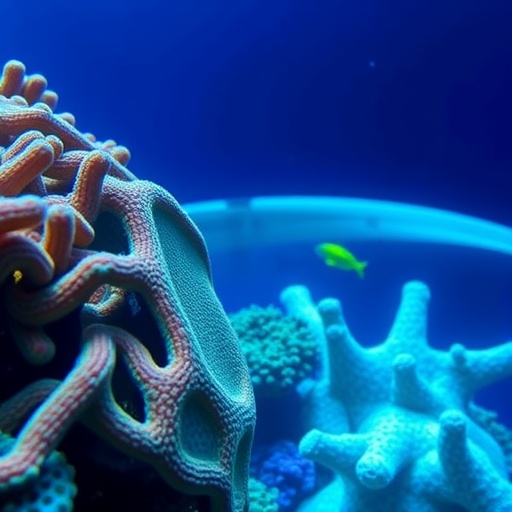
In a groundbreaking study published in the journal Coral Reefs, researchers have shed light on the intricate relationship between key coral traits and their response to climate change. The paper, authored by Figueiredo, Baird, Harii, and colleagues, delves into how specific biological attributes, particularly egg size, dramatically influence larval development time and its sensitivity to rising ocean temperatures. The research comes at a critical moment as the world’s coral reefs face unprecedented challenges due to global warming and other anthropogenic pressures.
Coral reefs, often termed “rainforests of the sea,” are vital marine ecosystems supporting diverse marine life and providing numerous services to humanity. However, they are increasingly threatened by climate change, leading to widespread bleaching events and declining coral populations. In this context, understanding the biological foundations of coral resilience becomes paramount for conservation efforts. The research team sought to uncover whether certain traits could predict how coral species would fare under future warming scenarios.
One of the primary findings of the study is the role of egg size in influencing larval development time. The researchers observed that larger eggs, which generally provide greater energy reserves for larvae, are associated with longer development times. This extended development period results in greater vulnerability during the critical early life stages, particularly as temperatures rise. As corals adapt to their environments, egg size emerges as a crucial determinant of resilience, highlighting the interconnectedness of reproductive traits and environmental conditions.
Furthermore, the researchers conducted experiments that simulated warmer ocean temperatures to assess the sensitivity of different coral species to climate stressors. The larvae from larger eggs showed a marked decline in survival rates when exposed to elevated temperatures compared to their smaller counterparts. This stark contrast underscores the urgent need for a deeper understanding of how various trait combinations affect coral success in changing environments.
The implications of these findings extend beyond academic interest; they hold significant relevance for conservation strategies. By identifying coral species that possess favorable traits—such as optimal egg size and rapid larval development—conservationists can prioritize these species for protection and restoration initiatives. The insights gained from examining the links between egg size and larval viability could inform breeding programs designed to bolster coral populations in the face of climate adversity.
Additionally, the study emphasizes the importance of a trait-based approach in marine ecological research. Traditional methods often focus on species diversity alone, overlooking how specific traits contribute to resilience and adaptability. This new perspective fosters a more holistic understanding of coral ecosystems, allowing scientists and conservationists to make better-informed decisions for managing and preserving these vital habitats.
The researchers also pointed out that while egg size is an essential factor, it is not the sole determinant of coral survival. Environmental factors, such as nutrient availability and water quality, also play crucial roles in shaping the health and viability of coral populations. Thus, a multifaceted approach that considers a variety of ecological variables is necessary for ensuring the future of coral reefs.
With climate change escalating globally, the urgency of this research cannot be overstated. As temperatures continue to rise, the window for effective intervention narrows. The findings underscore the critical need for timely and coordinated actions to protect vulnerable coral species and their habitats. Proactive measures, informed by scientific research, become paramount in mitigating the impacts of climate change on these fragile ecosystems.
Importantly, the researchers’ work contributes to the growing body of literature advocating for adaptive management strategies that account for the unique life-history traits of various coral species. As the scientific community continues to unravel the complexities of coral biology, the goal is to enhance the resilience of reefs worldwide. This will require a collaborative effort among researchers, policymakers, and conservationists to implement strategies that support coral health in an increasingly hostile environment.
In conclusion, the study conducted by Figueiredo and colleagues serves as a clarion call for a paradigm shift in how we approach coral conservation. By prioritizing species traits, particularly egg size, and understanding their implications for larval development, we can develop more effective strategies to combat the existential threats faced by coral reefs. The road ahead is challenging, but with continued research and innovative conservation efforts, there is hope for the future of these essential marine ecosystems.
As the world contends with climate change, the resilience of coral reefs will depend not only on understanding individual species’ traits but also on our collective response to protect and nurture these vital ecosystems. The findings in this research paper add a critical layer to our understanding of coral physiology and ecology, paving the way for informed conservation efforts that could ultimately determine the fate of the world’s reefs.
Cite Scienmag News
Violet Maxwell. (August 6, 2025). Coral Traits Influence Development Time and Warming Sensitivity. Scienmag. https://scienmag.com/coral-traits-influence-development-time-and-warming-sensitivity/
Violet Maxwell. "Coral Traits Influence Development Time and Warming Sensitivity." Scienmag, 6 August 2025, https://scienmag.com/coral-traits-influence-development-time-and-warming-sensitivity/. Accessed 4 September 2026.
Violet Maxwell. "Coral Traits Influence Development Time and Warming Sensitivity." Scienmag. August 6, 2025. https://scienmag.com/coral-traits-influence-development-time-and-warming-sensitivity/


