


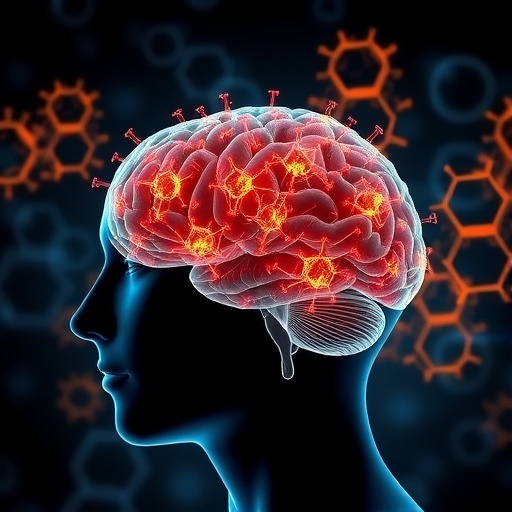
In a groundbreaking discovery, researchers from the University of California, Irvine have revealed a nonpharmaceutical method that demonstrates significant potential for reversing the effects of aging in brain cells, particularly concerning Alzheimer’s disease. Published on August 2, 2025, in the esteemed journal GeroScience, this study integrates findings from various fields, including biochemistry and neurobiology, to propose a novel intervention with promising implications for cognitive health as individuals age.
The primary research focus revolved around the critical energy molecule guanosine triphosphate (GTP). Scientific investigations have established that this molecule plays an essential role in cellular energy metabolism, particularly within the brain. As the human brain ages, a notable decline in GTP levels has been observed, which correlates with various neurodegenerative conditions. This study delves deeply into the relationship between GTP availability, neuronal energy status, and the brain’s ability to remove toxic proteins such as amyloid beta aggregates, which are widely recognized as hallmarks of Alzheimer’s disease.
The investigation is spearheaded by Gregory Brewer, an adjunct professor of biomedical engineering at UC Irvine. Brewer emphasizes the significance of maintaining adequate GTP levels within brain cells, indicating that neurological health is intrinsically linked to energy metabolism. By utilizing a combination of nicotinamide, a derivative of vitamin B3, and epigallocatechin gallate, an antioxidant found in green tea, the researchers sought to evaluate their effects on neuron vitality and functionality. This innovative combination is posited as a dietary intervention, which also implies accessibility as these compounds can be sourced from natural dietary supplements.
Critical experiments were conducted using genetically encoded fluorescent sensors, specifically GEVAL, to meticulously monitor the fluctuations in GTP levels in live neurons harvested from aged mice engineered to model Alzheimer’s disease. These observations unveiled a substantial decrease in free GTP levels associated with aging, particularly noted within the mitochondria—the energy powerhouses of cells. Deciphering this energy deficiency has provided pivotal insights into the impairments of autophagy, a cellular process that is vital for clearing damaged cells and proteins.
In the experimental setting, the aged neurons showcased transformational progress following a 24-hour treatment with the aforementioned compounds. Initial assessments reported a complete revival of GTP concentrations to levels typically observed in younger neurons. This remarkable restoration initiated a plethora of positive outcomes, including enhanced energy metabolism and the reactivation of critical GTPases, namely Rab7 and Arl8b. These proteins are instrumental in regulating cellular trafficking and the removal of toxic cellular components.
Additionally, the study’s findings highlighted a decrease in oxidative stress, another significant contributor to neurodegenerative diseases, thus presenting a multipronged approach to combating age-related cognitive decline. The implications of successfully reversing age-induced cellular deficits suggest a potential paradigm shift in how aging brains are treated, opening avenues for preventative measures and therapeutic strategies focused on lifestyle and dietary adjustments.
While the results are indeed promising, Brewer cautions against over-enthusiasm. He notes that the effectiveness of oral nicotinamide supplementation has been limited, as previous clinical trials indicated that its efficacy was compromised through inactivation within the bloodstream. Therefore, further research is necessary to refine the delivery methods of these compounds to ensure optimal bioavailability within the brain.
The collaborative effort behind this research included talented specialists such as Ricardo Santana, alongside Joshua McWhirt, who has transitioned from a junior specialist role at UC Irvine to a Ph.D. candidate at the Medical University of South Carolina. With financial backing from the National Institutes of Health and the UC Irvine Foundation, this research aligns with broader efforts aimed at untangling the complexities of Alzheimer’s disease and aging.
This study serves as a vital milestone in understanding the biochemical pathways that may contribute to cognitive decline, offering a beacon of hope for those affected by age-related neurological deterioration. The exploration into naturally derived compounds underscores a significant shift towards holistic and integrative approaches in medical treatment. As the scientific community continues to unravel the neurobiological mysteries surrounding Alzheimer’s and aging, findings such as these propel forward the discussion surrounding preventative care and therapeutic innovation.
The future trajectory of this research promises to lay foundational blocks for subsequent studies and clinical trials that could test the efficacy of these compounds in human subjects, paving the way for potential new treatments. With cognitive decline emerging as a leading health issue among the elderly population globally, the urgency to develop safe and effective intervention strategies has never been more critical.
In conclusion, the implications of this research extend beyond a mere scientific curiosity; they herald a transformative potential for public health, addressing one of the most pressing challenges of our time. As methodologies evolve and new insights emerge, the possibility of enhancing the quality of life for aging populations lies within reach, highlighting the necessity of continued investment in biomedical research and the exploration of dietary substances as viable therapeutic agents.
Keywords
Cognitive decline, Alzheimer’s disease, guanosine triphosphate, nicotinamide, epigallocatechin gallate, neurodegeneration, mitochondria, energy metabolism, autophagy, oxidative stress, biomedical engineering, dietary supplements.
Cite Scienmag News
Cassandra Pierce. (August 6, 2025). UC Irvine Researchers Discover Natural Compound Synergy for Enhanced Brain Detoxification. Scienmag. https://scienmag.com/uc-irvine-researchers-discover-natural-compound-synergy-for-enhanced-brain-detoxification/
Cassandra Pierce. "UC Irvine Researchers Discover Natural Compound Synergy for Enhanced Brain Detoxification." Scienmag, 6 August 2025, https://scienmag.com/uc-irvine-researchers-discover-natural-compound-synergy-for-enhanced-brain-detoxification/. Accessed 6 September 2026.
Cassandra Pierce. "UC Irvine Researchers Discover Natural Compound Synergy for Enhanced Brain Detoxification." Scienmag. August 6, 2025. https://scienmag.com/uc-irvine-researchers-discover-natural-compound-synergy-for-enhanced-brain-detoxification/


