


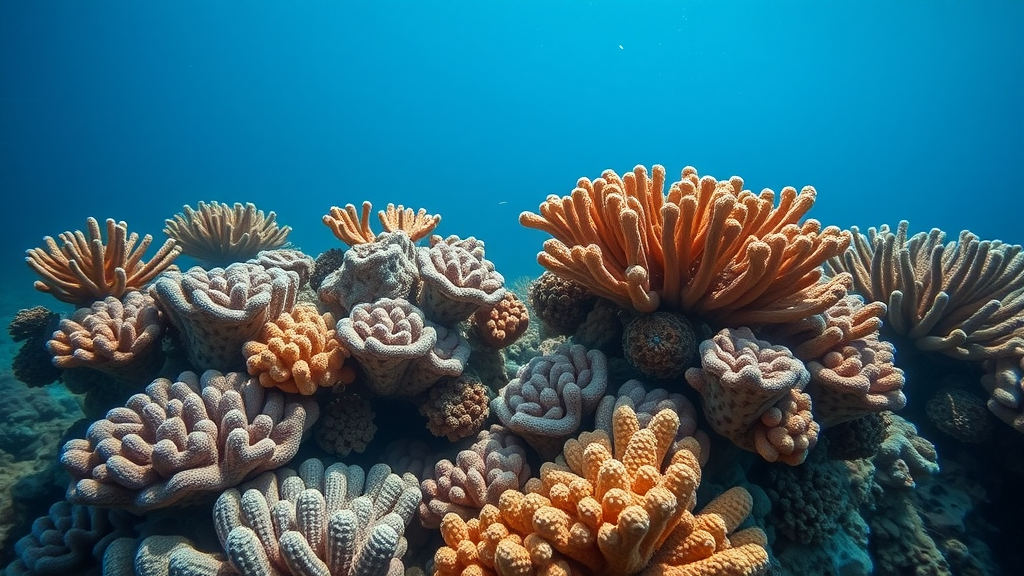
Coral reefs are often described in terms of light, temperature, and nutrients, but a sweeping new review argues that one of the most consequential factors shaping reef health is measured in parts per billion. Trace metals such as iron, zinc, copper, manganese, cobalt, molybdenum, and vanadium sit at the heart of nearly every biochemical process a coral depends on, from photosynthesis in its algal symbionts to the construction of its calcium carbonate skeleton. The same elements, at slightly higher concentrations, become poisons. Writing in the journal Coral Reefs, Joshua James N. Versola and Irene B. Rodriguez of the University of the Philippines Marine Science Institute synthesize decades of laboratory experiments, field surveys, skeletal geochemistry, and omics-based studies to build the most complete picture yet of how the coral holobiont, the coral animal together with its symbiotic algae, bacteria, and fungi, acquires, uses, and defends itself against the metals dissolved in seawater.
The central insight of the review is that corals live on a metabolic knife edge. Essential metals serve as cofactors in metalloproteins that drive electron transport, antioxidant defense, calcification, and nitrogen cycling. Iron sits at the core of the photosynthetic machinery of Symbiodiniaceae, the single-celled dinoflagellates that supply corals with most of their energy. Zinc and copper activate superoxide dismutase enzymes that neutralize reactive oxygen species, the damaging molecules that accumulate during heat stress. Manganese has been shown in experimental work to mitigate coral bleaching, while nickel supports urease activity and has been linked to enhanced calcification through its role in nitrogen recycling. Remove these micronutrients, and the symbiosis falters; studies of symbiont transcriptomes reveal strong metabolic responses when iron and other trace metals become scarce.
But the dose makes the poison, and the review documents how quickly essentiality flips into toxicity. Elevated copper, zinc, cadmium, lead, mercury, and nickel induce oxidative stress, disrupt metabolism, impair the coral-algal partnership, and can contribute to bleaching and mortality. Copper is among the best-studied offenders: laboratory exposures reduce fertilization success in spawning corals, impair larval settlement, and lower the thermal tolerance of even highly resistant Red Sea species such as Stylophora pistillata. Cadmium triggers systemic stress responses in Pocillopora damicornis, and high zinc exposure reduces levels of dimethylsulfoniopropionate, a compound involved in coral stress signaling and symbiosis maintenance. Non-essential metals are particularly insidious because the holobiont has no evolved use for them and limited mechanisms to render them harmless.
What makes the problem scientifically difficult is that metal toxicity is not a fixed property of any element. The review emphasizes that coral responses depend on external concentration, chemical speciation, the physiological regulation capacity of the organism, and environmental context. The free ion concentration of a metal, not its total dissolved amount, largely determines how much crosses biological membranes, and organic ligands in reef waters can bind metals and dramatically alter their bioavailability. Toxicity thresholds measured in one season, at one life stage, or at one temperature may not apply elsewhere. Research on the coral Montipora capitata, for example, found that the timing of spawning relative to copper exposure influenced fertilization success, and studies across life stages show that gametes and larvae are often far more sensitive than adult colonies.
The holobiont concept adds another layer of complexity. Different partners in the symbiosis have different metal demands and different accumulation capacities. Radiotracer experiments with Stylophora pistillata demonstrated that the animal host, the algal symbionts, and even the skeleton sequester metals to different degrees, meaning that bulk measurements of a whole colony can obscure where a metal actually resides and what it is doing. Work on the model anemone Exaiptasia pallida showed that zooxanthellae play a significant role in the uptake and depuration of essential metals, and comparative studies reveal that different Symbiodiniaceae lineages have distinct iron and trace metal requirements. A coral hosting a high-iron-demand symbiont may be more vulnerable to iron limitation, and possibly to bleaching, than one hosting a less demanding strain.
This metal economy connects directly to one of the most pressing questions in reef science: why do corals bleach under heat stress? One influential hypothesis, supported by elemental analysis of coral tissues, links bleaching to the capacity of the animal host to supply essential metals to its symbionts. If heat stress disrupts the transport of iron, zinc, or copper to the algae, their photosystems degrade, carbon transfer to the host collapses, and the symbiosis breaks down. Intriguingly, natural metal inputs can sometimes help. Studies from the Red Sea found that desert dust deposition, a major source of iron and other bioelements, improved the photophysiology of heat-stressed corals, suggesting that atmospheric supply of micronutrients may partially buffer some reefs against thermal stress.
The review also highlights how climate change is rewriting the rules of metal availability. Ocean acidification alters metal speciation and can increase the free ion concentrations of some elements while changing uptake pathways; experiments combining acidification with copper exposure have produced antagonistic, additive, and even protective effects depending on species and conditions. Warming changes stratification and upwelling patterns that govern the delivery of metals to reef waters, while deoxygenation shifts redox conditions that control whether metals are dissolved or locked into sediments. Coastal development, mining, industrial discharge, and agricultural runoff add anthropogenic loads on top of these shifting natural baselines, meaning that many reefs face simultaneous changes in both metal supply and the stressors that determine whether that supply helps or harms.
Corals, remarkably, keep records of all of this. Their skeletons grow in annual bands and incorporate trace elements as they calcify, creating archives that researchers can read with techniques such as laser ablation inductively coupled plasma mass spectrometry. Lead profiles in Porites skeletons have tracked industrialization in Hong Kong over two centuries, cadmium ratios in Galapagos corals record seasonal upwelling, and growth bands from the Philippines and Indonesia have documented mine tailings and gold mining impacts. Coral records even captured the elemental signature of the Fundão dam collapse in Brazil. These geochemical archives, the review notes, are invaluable for reconstructing pollution histories and land-use change, but interpreting them requires understanding the biological regulation that governs metal incorporation, since corals do not record seawater chemistry passively.
New analytical tools are rapidly expanding what is possible. Inductively coupled plasma mass spectrometry and its laser ablation variant allow multi-element mapping at fine spatial resolution, while isotope signatures of copper and zinc in coral skeletons offer new windows into metal cycling in modern and ancient oceans. On the biological side, transcriptomic and elemental profiling approaches, sometimes framed as studies of the coral elementome, reveal species-specific metal handling by hosts and symbionts and show that colonies persisting in different reef environments diverge in their elemental composition. These methods, combined with pollution indices such as enrichment factors and geoaccumulation indices applied to reef sediments, are building a multi-scale picture of metal exposure from the molecule to the ecosystem.
The authors are candid about the gaps that remain. Scientists still lack robust thresholds separating essentiality from toxicity for most metals in most coral species, particularly under the combined stressors that characterize real reefs. Holobiont-level metal cycling, including the roles of bacteria and fungi, remains poorly quantified, and interactions between metals and climate stressors such as warming, acidification, and deoxygenation are only beginning to be explored experimentally. Closing these gaps, the review argues, is essential for interpreting coral metal records accurately, predicting which reefs are most vulnerable, and designing conservation strategies for an ocean whose chemistry is being altered at unprecedented speed. In an era when reefs face mounting thermal and chemical pressure, the trace metal budget may prove to be one of the most important, and most overlooked, determinants of their survival.
Subject of Research: The roles, regulation, and toxicity of trace metals in the coral holobiont under changing ocean conditions
Article Title: Trace metals in the coral holobiont: roles and regulation in a changing ocean
Article References: Versola, J. J. N., & Rodriguez, I. B. (2026). Trace metals in the coral holobiont: roles and regulation in a changing ocean. Coral Reefs. https://doi.org/10.1007/s00338-026-02968-y
Image Credits: AI Generated
DOI: 10.1007/s00338-026-02968-y
Keywords: coral reefs, coral holobiont, trace metals, metal toxicity, Symbiodiniaceae, metal bioaccumulation, biogeochemical cycling, ocean acidification, coral bleaching, skeletal geochemistry, oxidative stress, marine pollution
Cite Scienmag News
Violet Maxwell. (September 25, 2026). Coral Reefs Run on a Delicate Metal Budget, New Review Finds. Scienmag. https://scienmag.com/coral-reefs-run-on-a-delicate-metal-budget-new-review-finds/
Violet Maxwell. "Coral Reefs Run on a Delicate Metal Budget, New Review Finds." Scienmag, 25 September 2026, https://scienmag.com/coral-reefs-run-on-a-delicate-metal-budget-new-review-finds/. Accessed 5 October 2026.
Violet Maxwell. "Coral Reefs Run on a Delicate Metal Budget, New Review Finds." Scienmag. September 25, 2026. https://scienmag.com/coral-reefs-run-on-a-delicate-metal-budget-new-review-finds/


