


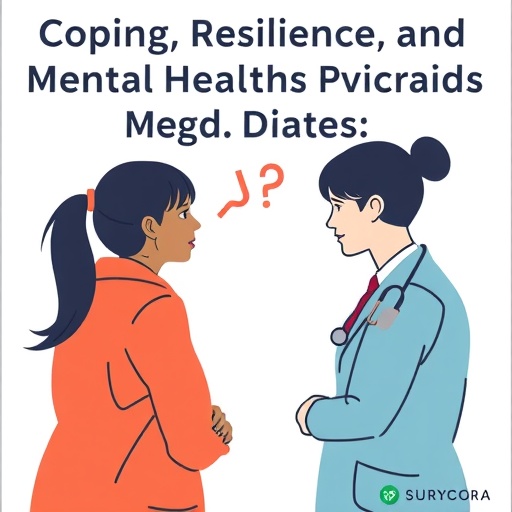
In an era where mental health challenges among young adults are increasingly recognized yet insufficiently addressed, a groundbreaking new study published in BMC Psychology offers critical insights into the psychological wellbeing of first-year medical students. Researchers Xu and Zhang employ sophisticated structural equation modeling to unravel the complex interplay between coping styles, resilience, and mental health symptoms in this vulnerable population. Their findings not only deepen our understanding of the psychological dynamics at play but also propose avenues for targeted interventions that could transform student support systems globally.
Medical students confront uniquely intense pressures as they transition into a profession notorious for high stress and burnout rates. The first year of medical school in particular serves as a rigorous crash course in both academic demands and emotional resilience. Xu and Zhang’s research rigorously quantifies how different coping strategies relate to students’ mental health outcomes, revealing that resilience operates as a pivotal mediator that can significantly buffer the effects of stress.
The methodology employed in this study involves a cross-sectional design paired with structural equation modeling (SEM), a powerful statistical technique that allows for the examination of multiple variables and causal pathways simultaneously. This approach enabled the authors to explore direct and indirect relationships among coping mechanisms, resilience, and symptoms of anxiety, depression, and psychological distress among first-year medical students.
Interestingly, the research identifies two broad categories of coping styles: adaptive (e.g., problem-solving, seeking social support) and maladaptive (e.g., avoidance, substance use). The data reveal that students who predominantly engage in adaptive coping styles tend to exhibit higher resilience scores, which correspond with fewer mental health symptoms. Conversely, those relying heavily on maladaptive coping methods show elevated symptoms, underscoring the detrimental impact of ineffective coping strategies.
Xu and Zhang’s findings emphasize that resilience is not merely an innate trait but a dynamic psychosocial construct that can be cultivated through effective coping. Their results suggest that fostering adaptive coping skills early in medical education could serve as a protective factor, enhancing students’ capacity to navigate stress and reducing the onset or severity of mental health issues.
These insights carry profound implications for medical schools worldwide. By integrating resilience training and psychological skills development into the curriculum, institutions could potentially alleviate the mental health burden that plagues many students. Such interventions may include workshops on stress management, peer support groups, and training in mindfulness and cognitive-behavioral techniques aimed at promoting adaptive coping.
Moreover, the study’s use of SEM provides robust empirical evidence supporting a model where coping styles influence resilience, which in turn affects mental health outcomes. This nuanced understanding challenges simplistic cause-effect assumptions and opens pathways for complex intervention designs that address multiple psychological processes concurrently.
Xu and Zhang’s research shines a light on the psychological landscape first-year medical students inhabit, marked by a delicate balance between vulnerability and potential for growth. The detailed statistical analysis reveals not just correlations but plausible causal pathways, offering a sophisticated framework for future research and clinical practice.
With mental health crises among healthcare professionals gaining global attention, this study underscores the importance of early preventative measures within medical training. The psychological scars of inadequate coping can extend beyond academic years, affecting professional performance, patient care quality, and personal wellbeing.
Critically, the authors call for further longitudinal studies to verify and expand upon their cross-sectional findings. Tracking students over time could reveal how coping styles and resilience evolve, enhancing intervention timing and effectiveness. Additionally, incorporating diverse student populations would help generalize results across different cultures and education systems.
In sum, this seminal work by Xu and Zhang exemplifies how advanced modeling techniques can elucidate the psychological mechanisms underlying mental health in high-stress educational contexts. By highlighting the central role of resilience as a mediator, the study not only adds depth to academic discourse but also pushes for actionable changes in medical education policy and support systems.
As mental health continues to ascend as a global priority, translating such empirical insights into real-world strategies will be essential. Medical schools and policymakers must heed this research’s call to bolster adaptive coping and resilience-building initiatives, ensuring that future physicians are mentally prepared for the challenges of their profession.
This in-depth exploration promises to spark further interest and discussion among psychologists, educators, and healthcare administrators alike. The intersections of coping, resilience, and mental health are complex but decipherable, and efforts to understand them through sophisticated approaches like SEM are paving the way for meaningful improvements in student wellbeing.
In conclusion, Xu and Zhang’s work contributes a vital piece to the puzzle of medical student mental health, providing a robust analytical foundation and clear direction for intervention. Their study stands as a crucial resource for anyone invested in the future of healthcare, student mental health advocacy, and the scientific exploration of psychological resilience.
Cite Scienmag News
Glenn Wilkins. (November 5, 2025). Coping, Resilience, and Mental Health in Med Students. Scienmag. https://scienmag.com/coping-resilience-and-mental-health-in-med-students/
Glenn Wilkins. "Coping, Resilience, and Mental Health in Med Students." Scienmag, 5 November 2025, https://scienmag.com/coping-resilience-and-mental-health-in-med-students/. Accessed 4 September 2026.
Glenn Wilkins. "Coping, Resilience, and Mental Health in Med Students." Scienmag. November 5, 2025. https://scienmag.com/coping-resilience-and-mental-health-in-med-students/


