

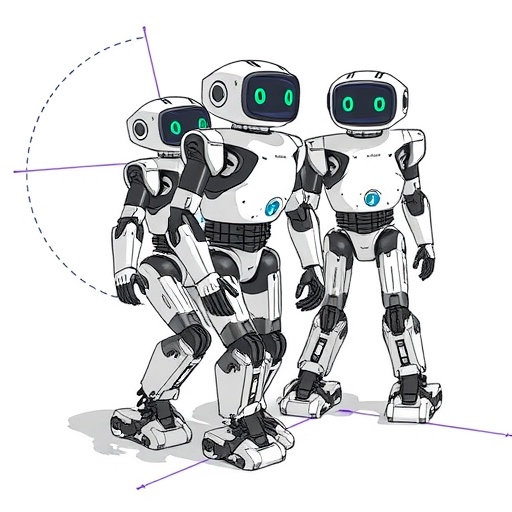
In a groundbreaking study set to redefine the capabilities of automated systems, researchers Zhong, Rossi, and Shell have introduced a novel approach to the synchronization of multi-robot systems that emphasizes active observations. This research, published in the prestigious journal Autonomous Robots, offers compelling insights into how coordinated action among multiple robotic units can enhance efficiency and efficacy in complex environments. As robotics technology advances, the ability to synchronize the activities of autonomous robots is becoming increasingly vital in applications ranging from industrial automation to exploratory missions in unpredictable settings.
The core concept of synchronized multi-robot systems lies in the ability of robots to work collaboratively while retaining a degree of autonomy. This research establishes a framework that enables robots to actively observe their surroundings, gather pertinent data, and communicate with each other to achieve a coordinated state. Such a paradigm shift not only improves task completion times but also allows for adaptive responses to environmental changes, showcasing the potential for real-time decision-making in robotic teams.
Within the study, the authors present a detailed analysis of the synchronization algorithms employed. At the heart of these algorithms is a novel communication strategy that allows robots to share information seamlessly, resulting in an informed collective state. This approach minimizes the chances of miscommunication, a persistent issue in robotic systems operating in tandem. By ensuring that each robot recognizes the status of its peers and the overall mission objectives, a more cohesive operational unit is formed.
Moreover, the framework proposed by the researchers showcases an impressive blend of theoretical modeling and practical application. The researchers conducted extensive simulations that demonstrated the effectiveness of their synchronization method across various scenarios. These tests revealed that the robots could efficiently complete tasks with minimal input from human operators, representing a significant advancement in autonomous technology.
The implications of this research stretch far beyond mere efficiency. In real-world applications, the ability of robotic systems to engage in active observations means they can adapt to dynamic environments, making them suitable for search and rescue operations where conditions can change rapidly. Robots could, for instance, adjust their paths in response to obstacles or calls for assistance, significantly enhancing their potential utility in critical situations.
One of the standout features of this research is its focus on the balance between autonomy and teamwork within robotic systems. While robots need to be capable of independent operations to navigate and execute tasks effectively, this research emphasizes that they must also engage meaningfully with one another. The critical insight here is that true efficiency in multi-robot systems stems not just from cutting-edge algorithms but from building a framework where active observation facilitates synchronized action.
Furthermore, the study presents a variety of scenarios that highlight the practical applications of the proposed synchronization method. For example, in agricultural settings, fleets of drones and ground-based robots can be deployed to monitor crop conditions and manage irrigation systems. With the ability to synchronize their activities and share observations, these robots can optimize resource usage and improve crop yields, demonstrating the agricultural revolution that technology can bring.
In urban settings, the impacts of synchronized multi-robot systems could transform public services. Robots equipped for tasks such as waste management or public transportation could work together more effectively, contributing to smarter, cleaner cities. With the continuous rise of smart cities globally, the integration of synchronized robotic systems could significantly streamline operations, enhancing the quality of urban living.
The research also notes the importance of resilience in robotic systems. By allowing each robot to engage in active observations, the overall system becomes more robust against failures. If one robot encounters an issue, others can adjust their actions to compensate, ensuring mission continuity. This aspect not only improves reliability but also enhances the safety of robotic systems in unpredictable environments.
As the researchers delve deeper into the technological underpinnings of their synchronization method, they provide insights into the algorithms used to facilitate real-time data sharing. By utilizing advanced machine learning techniques and artificial intelligence, the robots can extract valuable information from their observations and use it to inform their synchronized actions. This adaptability is essential in environments where fixed rules are insufficient due to the complexity and variability of interactions.
In concluding their research, Zhong, Rossi, and Shell identified several areas for future exploration. They suggest that further investigation into the integration of advanced sensor technologies could lead to even more sophisticated levels of synchronization among robotic systems. Additionally, the potential for this research to evolve through collaborative efforts with industries that heavily rely on robotic systems, such as logistics and manufacturing, is immense.
In summary, the study on planned synchronization for multi-robot systems marks a significant leap forward in autonomous robotics. By focusing on the interconnectedness of active observations and synchronization, the researchers not only pave the way for more advanced robotic applications but also encourage ongoing exploration into this dynamic field. With continued research and collaboration, the future envisioned in this groundbreaking study is one where robots will not only coexist with humans but thrive in harmony alongside them, unlocking a realm of possibilities that were once confined to the realm of science fiction.
Subject of Research: Synchronization of Multi-Robot Systems with Active Observations
Article Title: Planned synchronization for multi-robot systems with active observations
Article References:
Zhong, P., Rossi, F. & Shell, D.A. Planned synchronization for multi-robot systems with active observations.
Auton Robot 50, 5 (2026). https://doi.org/10.1007/s10514-025-10225-4
Image Credits: AI Generated
DOI:
Keywords: Multi-robot systems, synchronization, active observation, autonomous technology, robotics, machine learning, AI integration, dynamic environments.


