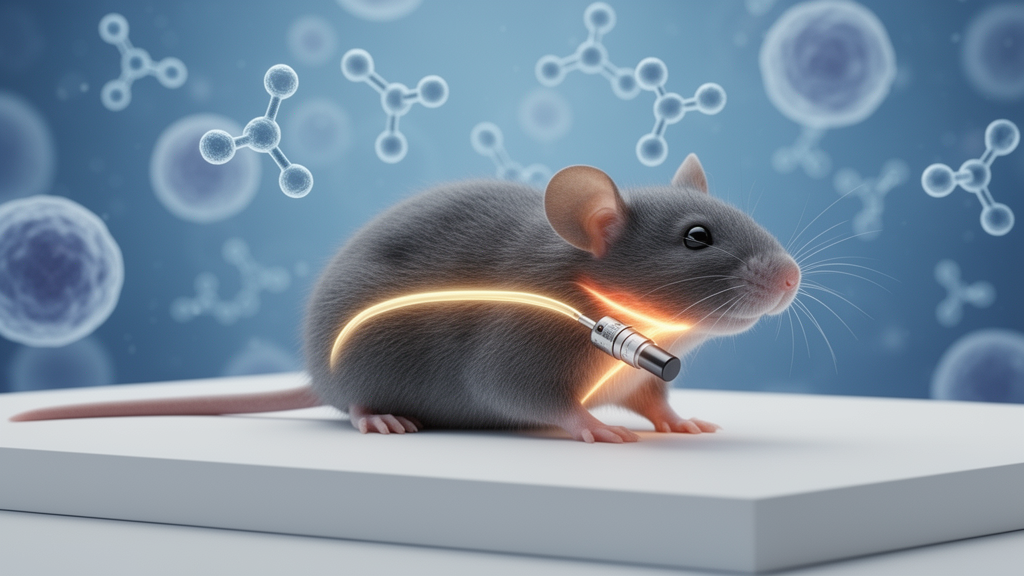
Vagus nerve stimulation has attracted growing interest as a way to calm inflammation, but a new study in mice suggests that how the stimulation is delivered matters enormously. When researchers delivered chronic vagus nerve stimulation continuously in short bursts around the clock, immunized animals produced fewer high-affinity antibodies, lost body weight and developed smaller spleens with reduced cellularity. A twice-daily stimulation schedule lowered high-affinity antibody production as well, but without the weight loss and splenic changes seen with continuous delivery. The findings, published as a Brief Report in Bioelectronic Medicine, highlight how a single stimulation parameter, the timing of stimulation trains, can reshape both immune and metabolic outcomes.
The research team, led by Michael Gerber, Ibrahim Mughrabi and senior author Stavros Zanos, set out to model two different states of vagal activity. Twice Daily stimulation, consisting of five-minute trains delivered twice during waking hours, was intended to model intermittently elevated vagal tone. Continuous Burst stimulation, consisting of ten-second trains delivered every five minutes across the full 24-hour cycle, was intended to model chronically elevated vagal activity, a pattern the authors note may resemble the vagal activation observed during sepsis. Both schedules used 500-microsecond pulses at 30 hertz, a frequency previously shown to activate the efferent inflammatory reflex and to influence the antibody response.
Male C57BL/6 mice, aged 8 to 15 weeks, received the NP-CGG antigen emulsified in alum by intraperitoneal injection. Stimulation began 14 days before immunization and continued for 14 days after, so the animals experienced altered vagal activity both before and during the antibody response. Effective stimulation was verified daily by measuring the drop in heart rate induced by each train, with current intensity adjusted to achieve roughly a 20 to 30 percent reduction from baseline. Animals whose implants failed to reach this target even at the maximum intensity of 1.6 milliamps were excluded; this occurred in one mouse from the Continuous Burst group, and implant dysfunction was confirmed at autopsy.
Heart rate variability provided one of the clearest contrasts between the schedules. Before treatment began, HRV was equal across groups. During the first week of stimulation, Continuous Burst animals showed elevated HRV compared with unstimulated controls, driven mainly by the low-frequency component, which rose significantly, while the high-frequency component approached but did not reach significance. The high-frequency band is considered most representative of vagal activity, whereas the low-frequency band reflects a combination of sympathetic and parasympathetic control. By the second week, HRV in the Continuous Burst group had returned to levels matching the unstimulated animals and stayed there for the remainder of the study. Twice Daily animals showed no HRV differences at any time point.
The authors interpret the transient HRV rise as likely increased vagal activity from repetitive stimulation, and the later return to baseline as probable neural adaptation, since heart rate responses to the stimulation trains were maintained through weeks two and three, indicating that the vagal fibers were still being engaged. They suggest that HRV may therefore be a poor indicator of VNS response under repetitive stimulation, a point they flag as potentially clinically relevant if verified in humans.
The immune findings centered on antibodies against the NP-CGG antigen. The rising slope of high-affinity NP2 IgG titers over the two-week post-immunization period was significantly decreased in Continuous Burst animals compared with unstimulated controls, but not in Twice Daily animals. The authors had previously reported reduced NP2 IgG production with Twice Daily stimulation, and in this study they hypothesized that Continuous Burst would have a greater effect; the study was not designed to detect subtle decreases in the Twice Daily group, although a trend was present, with Twice Daily animals showing a smaller slope than controls but a larger one than the Continuous Burst group. Low-affinity NP25 IgG titers were unaffected by Continuous Burst, and total IgM and NP25 IgM were largely unchanged.
Total IgG told a different story. Continuous Burst animals showed a lower y-intercept, indicating lower total IgG levels before immunization even began, a difference not seen with Twice Daily stimulation. The authors attribute this pre-immunization reduction to weight loss rather than a direct effect on antibody-producing cells. Total IgG is maintained by a balance between production, largely from long-lived plasma cells in the bone marrow and short-lived plasma cells in secondary lymphoid organs, and clearance. Because the vagus nerve does not innervate the bone marrow or lymph nodes, the authors consider it unlikely that efferent cholinergic signaling directly modulates plasma cell survival. Instead, they point to indirect pathways: VNS can activate sympathetic reflex circuits through afferent fibers, and noradrenergic signaling in the bone marrow suppresses CXCL12 expression, which could affect plasma cell homing and differentiation. Metabolic effects of chronic VNS schedules may also influence antibody titers, overlapping with any direct neurotransmitter effects.
Body weight and spleen measurements reinforced the metabolic dimension. Continuous Burst stimulation caused a greater and more sustained reduction in body weight than Twice Daily stimulation, with significant differences between Continuous Burst and unstimulated animals from day minus seven to day 14. Twice Daily weights differed from controls only on day minus seven. Continuous Burst animals also had significantly smaller spleen weights, fewer total splenocytes and fewer non-lymphocyte splenocytes than Twice Daily animals. Absolute B cell counts were markedly reduced with Continuous Burst, as were total germinal center B cells and the NP-specific germinal center B cell subset, likely reflecting the smaller total B cell pool available to participate in germinal center formation. Among T cells, only the CD4-positive population was significantly reduced, while CD8-positive counts remained comparable to the other groups, suggesting that subset was less affected but not entirely spared, since its proportional representation in the spleen was not significantly elevated.
When the authors normalized cell populations to total splenocytes, the reduction proved proportional, with no differences in the percentage composition of the major splenic populations. Norepinephrine is known to cause splenic contracture by stimulating smooth muscle in the splenic capsule and to promote leukocyte egress from the spleen, and organ volume reduction accompanying weight loss offers further possible explanations. Immunohistochemistry measurements of B-cell, T-cell and red pulp areas showed lower means in Continuous Burst animals that aligned with the flow cytometry data, though the statistical comparison did not reach significance. The authors also note that body weight did not increase in unstimulated animals, which is atypical for mice of this age, likely due to changes in activity and eating habits associated with single housing and the headcap connector.
The authors conclude that both continuously and intermittently elevated vagal tone limits the antibody response, with chronically elevated activity producing the broader phenotype of transiently increased HRV, reduced spleen size, reduced splenocyte counts, reduced antibody titers and weight loss. They emphasize that nonselective, whole-nerve VNS produces multiple effects that can confound interpretation of specific immune effects at higher stimulation doses, since activation of autonomic reflexes related to appetite and metabolism can introduce off-target consequences. The findings underscore the need for more fiber-specific vagal activation models to study the effect of vagal-spleen signaling on the neuroimmune niche within the spleen, and for continued parametric studies to optimize clinical benefits against off-target effects of neurostimulation.
Subject of Research: Effects of continuous versus intermittent chronic vagus nerve stimulation on antibody production, heart rate variability and body weight in immunized mice
Article Title: Continuous vs. intermittent chronic vagus nerve stimulation: effects on T-cell dependent antibody response, heart rate variability and body weight in immunized mice
Article References: Gerber, M., Mughrabi, I., Kurata-Sato, I., Paliwoda, E., Vu, T. A., Diamond, B., & Zanos, S. (2026). Continuous vs. intermittent chronic vagus nerve stimulation: effects on T-cell dependent antibody response, heart rate variability and body weight in immunized mice. Bioelectronic Medicine, 12(1), Article 17. https://doi.org/10.1186/s42234-026-00211-1
Image Credits: AI Generated
DOI: 10.1186/s42234-026-00211-1
Keywords: vagus nerve stimulation, bioelectronic medicine, antibody response, heart rate variability, immunized mice, splenic B cells, germinal center B cells, total IgG, body weight loss, Twice Daily VNS, Continuous Burst VNS, neuroimmune interactions
Cite Scienmag News
Kristina Jarvis. (October 28, 2026). Continuous Vagus Nerve Stimulation Blunts Antibody Response in Immunized Mice. Scienmag. https://scienmag.com/continuous-vagus-nerve-stimulation-blunts-antibody-response-in-immunized-mice/
Kristina Jarvis. "Continuous Vagus Nerve Stimulation Blunts Antibody Response in Immunized Mice." Scienmag, 28 October 2026, https://scienmag.com/continuous-vagus-nerve-stimulation-blunts-antibody-response-in-immunized-mice/. Accessed 28 October 2026.
Kristina Jarvis. "Continuous Vagus Nerve Stimulation Blunts Antibody Response in Immunized Mice." Scienmag. October 28, 2026. https://scienmag.com/continuous-vagus-nerve-stimulation-blunts-antibody-response-in-immunized-mice/