


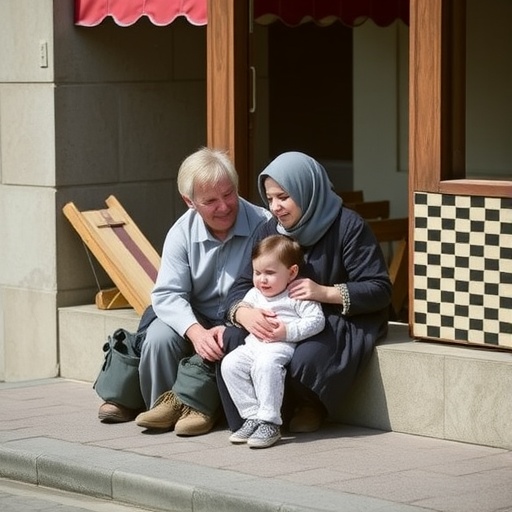
The juxtaposition of work and parenthood continues to be a significant issue for modern societies, particularly in the context of Europe, where diverse policies govern family structures and working environments. In a groundbreaking study titled “Balancing Work and Parenthood – A Comparative Analysis of Policies across European Countries,” researchers dive deep into how various European nations address the dual demands of professional life and parental responsibilities. This examination sheds light on the intricacies of work-life balance and the policies designed to support families in this delicate dance.
As societies evolve, the role of parents has transformed in numerous ways. Traditionally, the expectations surrounding motherhood and fatherhood have shifted dramatically, with increased emphasis now placed on co-parenting and shared responsibilities. The research highlights how policy frameworks can either facilitate this transition or create barriers that hinder parental involvement in child-rearing activities. Particularly, the study underscores the necessity for robust parental leave policies, flexible working arrangements, and the availability of childcare services, which are vital not only for parent satisfaction but also for children’s developmental needs.
In examining various policies across Europe, the authors utilized qualitative and quantitative data to offer a comprehensive overview of how different countries support parental roles. They specifically looked at how policies assess the balance of work and parenthood, with a focus on the financial, emotional, and physical repercussions of these decisions. As countries reveal their methodologies, the authors emphasize that one-size-fits-all solutions rarely apply, showcasing the unique cultural fabrics that shape each nation’s approach.
Among the countries studied, the Nordic model emerges as a benchmark for work-life balance policies. Countries such as Sweden and Norway take the lead, offering extended parental leave options financially supported by the state, promoting equality in parenting roles. The authors argue that these policies have created more engaged fathers and additionally have had positive cascading effects on children’s growth and society as a whole. The research posits that increased parental involvement can lead to enhanced cognitive and social development among children, creating a ripple effect that benefits future generations.
Conversely, nations with less comprehensive policies, such as some in Southern Europe, present challenges that often deter parents from fully engaging in both work and family life. The findings reveal that in these contexts, the lack of financial support for leaves and insufficient childcare options compel many to make harsh choices between career advancement and parental duties. This decision-making process can lead to detrimental long-term consequences for both parents’ careers and children’s well-being, indicating an urgent need for policy reform.
The report also provides attention to the growing importance of flexible work arrangements in modern employment. The rise of remote work options has significantly altered the landscape of work-life balance. However, while some countries have embraced this change, others lag behind, creating disparities that affect parental engagement. Embracing flexible work patterns can enhance the well-being of employees by allowing them to tailor their work hours around their family needs. The study illuminates that such arrangements can lead to increased productivity and reduced employee burnout.
Additionally, the research touches on employer attitudes toward parental leave and flexibility. Organizations that respect and support employees’ family obligations have shown to experience lower turnover rates and higher employee satisfaction. These findings strengthen the case for more businesses to adopt family-friendly policies in order to cultivate an environment where work and parenthood can coexist harmoniously. Highlighting real-world examples can encourage leaders across sectors to consider adopting practices that align with this paradigm.
Furthermore, the study does not shy away from discussing the socio-economic impacts of work-life balance policies. Investments in parental leave and childcare services often yield higher returns in terms of increased workforce participation and productivity rates. Countries that prioritize family support systems see an increased participation of women in the workforce as well, which is crucial for achieving gender equality and economic resilience. The authors present a compelling argument that prioritizing family policies not only benefits individual families but also strengthens national economies.
In some cases, cultural attitudes towards gender roles remain a significant barrier to achieving balance, regardless of the policy framework in place. The study suggests that ingraining cultural shifts and evolving gender norms is just as important as implementing policies. Education and community engagement efforts aimed at promoting shared parenting responsibilities can play a vital role in dismantling outdated societal expectations.
Moreover, the research has implications for political discourse and advocacy efforts at both national and European Union levels. It paves the way for informed conversations surrounding family policies and necessitates the prioritization of family-centric legislation in future discussions on labor reforms. By presenting empirical data and case studies from various countries, the authors empower policymakers to make informed decisions that can lead to significant advancements in work-life balance.
The researchers emphasize that the task of balancing work and parenthood does not rest solely on the shoulders of parents themselves; it is a structural issue that demands a multi-faceted response from society. The ongoing discourse should invest not just in policies but also in the cultural acceptance of shared family responsibilities across genders. This holistic approach is essential for creating an environment that nurtures not only individuals but also families as a collective unit.
The study closes by urging further research into the dynamic landscape of work and family policies across Europe. Continued scrutiny and analysis will be crucial as societal norms and economic contexts evolve. As the world grapples with unprecedented challenges and opportunities in the labor market, fostering a better understanding of work-life balance will remain at the forefront of social and political initiatives.
In conclusion, “Balancing Work and Parenthood – A Comparative Analysis of Policies across European Countries” stands as a substantial contribution to the ongoing discussions surrounding work-life integration. The findings call for urgent action and reflection, emphasizing the collective responsibility of governments, employers, and communities to ensure that parents and children can thrive in an increasingly complex world. The path towards achieving a comprehensive system of policies that support family life and professional aspirations is paved with opportunity and necessity.
Cite Scienmag News
Courtney Benton. (October 28, 2025). Comparing European Policies on Work and Parenthood. Scienmag. https://scienmag.com/comparing-european-policies-on-work-and-parenthood/
Courtney Benton. "Comparing European Policies on Work and Parenthood." Scienmag, 28 October 2025, https://scienmag.com/comparing-european-policies-on-work-and-parenthood/. Accessed 8 September 2026.
Courtney Benton. "Comparing European Policies on Work and Parenthood." Scienmag. October 28, 2025. https://scienmag.com/comparing-european-policies-on-work-and-parenthood/


