


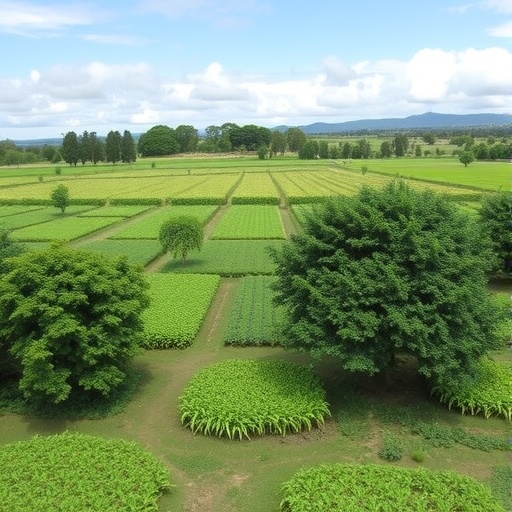
In a groundbreaking study examining sustainable farming practices in the Kilombero District of Tanzania, researchers focused on the comparative profitability between agroforestry systems and continuous monocropping methods. Specifically, the investigation centered on the intercropping of Acacia albida with pigeon peas, highlighting the significant impacts on agricultural productivity and environmental sustainability. The research conducted by William George sheds light on innovative farming strategies that could transform the livelihoods of farmers in the region, addressing both economic and ecological concerns.
The Kilombero District is well-known for its rich biodiversity and agricultural potential. However, traditional farming practices have frequently led to soil degradation and diminished crop yields over time. With an increasing population and a growing demand for food, the urgency for sustainable farming practices has never been more crucial. The study precisely addresses this need by juxtaposing the benefits of agroforestry against the drawbacks of monocropping—an approach that has been criticized for its sustainability issues.
Agroforestry systems like the one utilizing Acacia albida offer multiple advantages over continuous monocropping systems. The intercropping strategy not only enhances overall yield but also improves soil health, capturing nitrogen and enhancing nutrients for subsequent crops. This synergistic relationship between trees and crops creates a micro-ecosystem that fosters biodiversity while simultaneously protecting against pests and diseases, which is a significant advantage in places where agricultural inputs like fertilizers and pesticides are scarce or too expensive.
The methodology of the research involved meticulous data collection over multiple growing seasons to assess the profitability of both farming approaches. Researchers gathered data on labor hours, input costs, and yield outputs. They also considered various environmental factors—such as soil quality and local climate conditions—ensuring that the findings were based on a comprehensive understanding of the local agricultural landscape. The rigorous methodology ensures that the findings possess a high degree of significance and reliability, thereby providing practical recommendations for local farmers.
One of the key findings of the study was the stark contrast in profitability between the two systems. While monocropping may yield short-term economic benefits due to the ease of management and planting, in the long run, it falls short when compared to the multi-faceted advantages provided by agroforestry. The initial investment required for planting trees alongside crops may deter some farmers, but as indicated by the study, the long-term benefits—including increased productivity and resilience to climate change—far outweigh these initial costs.
Additionally, the research highlights the role of agroforestry in carbon sequestration. With climate change being a pressing global challenge, agricultural practices that contribute positively to the environment offer dual benefits: improved profitability for farmers and a healthier planet. Trees play a vital role in capturing carbon dioxide from the atmosphere, mitigating greenhouse gas emissions while simultaneously enhancing agricultural productivity through improved soil structure and health.
Collaboration with local farmers was a significant aspect of the study, allowing researchers to gain insights into their challenges and perspectives. Such participatory approaches are essential in ensuring that research outcomes are relevant and can be effectively integrated into existing farming practices. Through workshops and discussions, farmers expressed a need for educational resources on sustainable practices and greater access to financial support to transition to agroforestry systems. The study not only provides evidence for the effectiveness of agroforestry but also advocates for policy changes that support farmer education and resource allocation.
The impact of the findings extends beyond just the Kilombero District. As global agricultural systems face increasing pressures from population growth and climate change, the practices studied in Tanzania may serve as a model for other regions facing similar challenges. The success of the Acacia albida-pigeon peas intercropping model could inspire policy reforms and farming transition strategies in diverse climatic zones worldwide, thus enhancing global food security and sustainability.
Moreover, the study calls for a reevaluation of agricultural policies to promote sustainable practices such as agroforestry. Current policies often favor large-scale monocropping approaches, which can compromise smallholder farmer livelihoods and environmental health. By emphasizing the importance of crop diversity and agroforestry, effective agricultural policy reform can promote resilience and economic stability for farmers while fostering a healthier ecosystem.
Furthermore, educating the next generation of farmers about sustainable practices is crucial for the future of agriculture. The findings underline the need for innovative agricultural education programs that prioritize sustainable techniques and ecological stewardship. Through integrating this knowledge into curriculums, future farmers can be better equipped to tackle the complexities of modern agriculture and work towards a more sustainable food system.
In conclusion, this research shines a light on the transformative potential of agroforestry in improving both the economic and environmental landscapes for farmers in the Kilombero District of Tanzania and beyond. Emphasizing the importance of integrating trees into farming systems, the study presents a compelling case for sustainability that balances agricultural productivity with ecological integrity. As the world grapples with the challenges of food insecurity and climate change, strategies like the ones examined in this research could pave the way towards a more sustainable future.
By prioritizing practices like agroforestry and combining traditional knowledge with scientific innovation, farmers can be empowered to not only sustain their livelihoods but also actively contribute to a more resilient agricultural future. The implications of George’s research extend far beyond the fields of Kilombero, inspiring a global shift towards a more sustainable and profitable agricultural paradigm.
Cite Scienmag News
Alan Morgan. (October 22, 2025). Comparative Profitability of Agroforestry vs. Monocropping in Kilombero. Scienmag. https://scienmag.com/comparative-profitability-of-agroforestry-vs-monocropping-in-kilombero/
Alan Morgan. "Comparative Profitability of Agroforestry vs. Monocropping in Kilombero." Scienmag, 22 October 2025, https://scienmag.com/comparative-profitability-of-agroforestry-vs-monocropping-in-kilombero/. Accessed 4 September 2026.
Alan Morgan. "Comparative Profitability of Agroforestry vs. Monocropping in Kilombero." Scienmag. October 22, 2025. https://scienmag.com/comparative-profitability-of-agroforestry-vs-monocropping-in-kilombero/


