


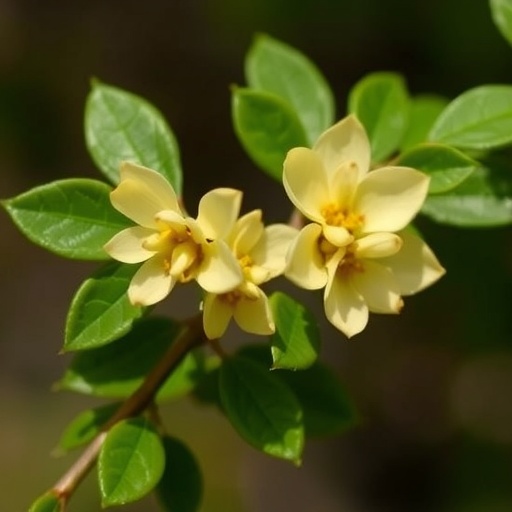
In a groundbreaking new study published in Medical Oncology, researchers have unveiled the potent anticancer properties of Commiphora myrrha extract, demonstrating significant therapeutic potential specifically against colorectal cancer. This discovery is particularly noteworthy in the context of a disease known for its aggressive progression and high mortality rates worldwide. The analysis meticulously details how the bioactive compounds within Commiphora myrrha influence critical cellular processes, including metastasis, cell cycle regulation, and apoptosis, thereby inhibiting cancer development both in vitro and in vivo.
Colorectal cancer remains one of the most challenging malignancies to treat due to its tendency to spread rapidly and develop resistance to conventional therapies. The research team, led by Chien, JH., Chang, KF., and Chen, YC., focused on elucidating the molecular mechanisms by which the myrrh extract exerts its anticancer effects. By applying rigorous experimental methodologies, the study presents compelling evidence that the natural extract interrupts cancer cell proliferation through targeted modulation of cell cycle checkpoints, effectively halting uncontrolled cell division.
One of the most striking revelations from this research is the extract’s ability to regulate metastasis, the process by which cancer cells migrate from the primary tumor site to distant organs. Metastatic spread is a notorious factor in the poor prognosis of colorectal cancer patients. The study’s findings suggest that components of Commiphora myrrha downregulate several key markers involved in epithelial-to-mesenchymal transition (EMT), a critical step in the metastatic cascade. This inhibition limits the invasive potential of colorectal cancer cells, offering a promising new avenue for metastasis prevention.
Apoptosis, or programmed cell death, is another vital mechanism through which the myrrh extract exerts anticancer activity. Cancer cells typically exhibit resistance to apoptosis, allowing them to survive and proliferate indefinitely. The investigation confirmed that treatment with Commiphora myrrha extract increases the expression of pro-apoptotic proteins while suppressing anti-apoptotic factors within colorectal cancer cells. This dual action promotes cell death and reduces tumor viability, a crucial factor for effective cancer therapies.
The in vitro experiments utilized human colorectal cancer cell lines to systematically assess the effects of varying concentrations of the extract. Observations indicated a dose-dependent suppression of cell growth over extended treatment periods. Morphological analyses further confirmed changes consistent with apoptotic induction, strengthening the case for the therapeutic potential of Commiphora myrrha.
Extending these findings, in vivo studies conducted on mouse models demonstrated not only tumor growth inhibition but also a significant reduction in metastatic nodules. Treatment with the extract resulted in improved survival rates among the animal subjects, illustrating its promising applicability beyond the laboratory bench. These results underscore the extract’s efficacy in a complex biological system and its potential for translation into clinical settings.
The chemical constituents of Commiphora myrrha, known traditionally for their anti-inflammatory and antimicrobial properties, have been scrutinized for their role in cancer suppression. This study identifies specific active compounds responsible for modulating cellular pathways, pinpointing an intersection between traditional medicine and modern oncology research. The integrative approach employed opens numerous possibilities for developing novel anticancer agents derived from natural products.
Furthermore, the research addresses concerns regarding the toxicity and side effect profiles of the extract, demonstrating minimal adverse effects on normal cells and tissues in contrast to typical chemotherapeutic agents. This selective cytotoxicity highlights the therapeutic advantage of using phytochemicals with refined biological activity and safety margins suitable for prolonged treatments.
The implications of these findings are vast, proposing a new paradigm in colorectal cancer management that incorporates botanical extracts as adjunct or alternative therapies. The study advocates for further clinical trials to validate efficacy and optimize dosage, facilitating the progression toward human applications. Such natural compounds could revolutionize current treatment regimens, reducing dependency on harsh pharmaceuticals and improving patient quality of life.
Technological advances in metabolomics and molecular docking studies utilized in the research have further illuminated the interaction sites between Commiphora myrrha’s bioactive molecules and cancer-related proteins. This precision mechanistic insight not only enhances the credibility of the extract’s anticancer effects but also guides future drug design efforts aimed at maximizing therapeutic outcomes.
The discovery is timely, considering the rising global incidence of colorectal cancer and the increasing burden it places on healthcare systems. Integrating traditional medicinal knowledge with contemporary scientific rigor offers a sustainable and cost-effective strategy for cancer therapy development, particularly important in low-resource settings where access to expensive treatments is limited.
In summary, the research led by Chien and colleagues represents a significant advancement in oncological pharmacology, unveiling the multifaceted anticancer action of Commiphora myrrha extract on colorectal cancer. By effectively regulating metastasis, arresting cell cycle progression, and inducing apoptosis, the extract holds promise as a novel therapeutic agent. This work sets the stage for a new wave of studies into plant-derived compounds as viable options for combating one of the most prevalent and deadly forms of cancer worldwide.
The scientific community eagerly anticipates the next phases of investigation, especially clinical trials that will provide critical data on safety, efficacy, and potential integration into standard care protocols. Should these promising results be replicated in humans, Commiphora myrrha could emerge as a cornerstone in the future of colorectal cancer therapy, combining the wisdom of nature with the precision of modern medicine to deliver impactful patient outcomes.
Cite Scienmag News
Nathaniel Bowman. (November 11, 2025). Commiphora myrrha Extract Fights Colorectal Cancer Metastasis. Scienmag. https://scienmag.com/commiphora-myrrha-extract-fights-colorectal-cancer-metastasis/
Nathaniel Bowman. "Commiphora myrrha Extract Fights Colorectal Cancer Metastasis." Scienmag, 11 November 2025, https://scienmag.com/commiphora-myrrha-extract-fights-colorectal-cancer-metastasis/. Accessed 3 September 2026.
Nathaniel Bowman. "Commiphora myrrha Extract Fights Colorectal Cancer Metastasis." Scienmag. November 11, 2025. https://scienmag.com/commiphora-myrrha-extract-fights-colorectal-cancer-metastasis/


