


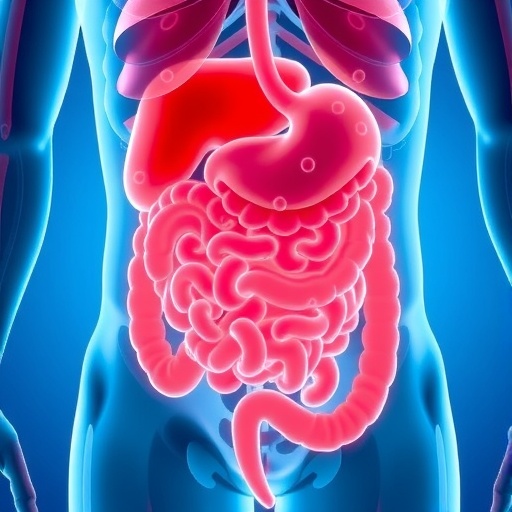
Clostridioides difficile, widely known as C. diff, afflicts nearly half a million people in the United States annually, presenting a formidable clinical challenge due to its capacity to cause severe diarrheal disease and life-threatening colitis. Particularly susceptible to its devastating effects are older adults, who face an elevated risk of severe complications and mortality. Despite its significance in healthcare settings as a leading cause of infectious diarrhea, comprehensive understanding of the pathogen’s behavior within the gut milieu has remained elusive, hindering the development of highly effective prevention and treatment strategies.
A fundamental difficulty in controlling C. diff lies in its resilience and ability to thrive under conditions that thwart many other microbes. Notorious for withstanding common disinfectants, this bacterium colonizes healthcare environments with alarming persistence. Upon ingestion, C. diff traverses to the colon where it sets up residence and secretes toxic factors that compromise intestinal tissue integrity. Alarmingly, the threat of recurrence looms large; nearly one in nine patients who recover from an initial C. diff infection experience relapse—a phenomenon complicated by the emergence of antibiotic-resistant strains that undermine front-line therapeutic regimens.
At the forefront of efforts to demystify this bacterium’s in vivo behavior is a multidisciplinary team at Tufts University School of Medicine. Their approach integrates advanced molecular microbiology with cutting-edge imaging technology to probe C. diff infections from the microbe’s intracellular gene expression dynamics to overarching infection patterns within host tissue. By illuminating previously inaccessible facets of pathogen biology, their work is poised to expose vulnerabilities that could revolutionize diagnostic, prognostic, and therapeutic approaches to this persistent healthcare threat.
Central to this endeavor is a novel imaging modality capable of resolving gene activity at the single-cell level within infected gut tissue. Utilizing engineered fluorescent reporter constructs that tag toxin gene expression, researchers can visualize which C. diff cells activate disease-causing genes and precisely where they localize within the complex architecture of inflamed colon tissue. In infected mice, this technique revealed widespread bacterial dissemination, including proximity to the gut epithelium, a finding that challenges prior assumptions about spatial constraints on bacterial positioning during infection.
Intriguingly, not all C. diff cells within the gut engage in toxin production simultaneously. This heterogeneous expression pattern indicates that pathogenicity may be driven not by the sheer abundance of bacteria but by a specialized subset of cells expressing toxins. Adding to this complexity, certain hypervirulent strains demonstrated filamentous morphologies during peak infection phases, a morphological adaptation that dissipates as the infection evolves. This dynamic structural plasticity may render toxin-overproducing cells uniquely vulnerable to environmental or immune-mediated stresses, suggesting potential windows for targeted intervention.
The granular insights afforded by this imaging strategy hold promise for clinical translation. For instance, identifying phenotypic signatures of toxin-expressing subpopulations may enable predictive biomarkers that stratify patients by risk of severe or recurrent disease. Moreover, therapeutics that selectively neutralize these virulent subsets while preserving the protective gut microbiota could mitigate collateral damage often associated with broad-spectrum antibiotics, thereby reducing chances of relapse.
An additional cornerstone of C. diff’s infectious success lies in its formation of environmentally resilient spores. These dormant forms act as cryptic seeds, impervious to many disinfection methods and capable of persisting in hospital environments for extended durations. Spore ingestion initiates a crucial germination phase marked by awakening and resumption of pathogenic growth, tightly regulated by intricate molecular signaling mechanisms responsive to host-derived bile acids and other gastrointestinal cues.
Researchers at Tufts have uncovered pivotal molecular players orchestrating this germination switch. Specifically, a protein complex composed of CspC and CspA acts as a molecular sentinel that integrates environmental inputs to modulate spore revival sensitivity. Detailed structural characterization and functional assays elucidated how this signaling hub serves as a control panel dictating the precise timing of spore emergence from dormancy. Targeting this control nexus with novel pharmacological agents to maintain spores in their inert state represents a conceptual breakthrough that could drastically reduce infection initiation.
Expanding on these advances, ongoing investigations into unique reproductive mechanisms employed by C. diff seek to uncover further pathogen-specific vulnerabilities. Unlike many bacteria, C. diff exhibits distinct cellular division processes that may serve as highly selective drug targets. Unraveling these idiosyncratic biological pathways hopes to facilitate the design of precision therapeutics capable of disrupting pathogen propagation without collateral harm to the beneficial gut microbial community essential for host health.
Collectively, this body of work heralds a paradigm shift in understanding C. diff infections, transforming a previously opaque clinical challenge into one informed by molecular detail and spatial context. By capturing the dynamic heterogeneity of pathogen behavior and decoding the molecular circuitry governing spore biology, these studies lay the foundation for next-generation interventions that prioritize specificity, efficacy, and microbiome preservation.
As this research evolves, it underscores a broader lesson: the pathogenesis of persistent infections is rarely uniform or static but a tapestry woven from diverse microbial phenotypes responding to complex environmental signals. Harnessing sophisticated imaging and molecular tools to dissect this complexity opens new vistas in infectious disease management, offering hope for improved outcomes in conditions long plagued by diagnostic uncertainty and therapeutic inadequacy.
In summary, through pioneering single-cell fluorescence imaging and molecular dissection of spore germination controls, scientists are piecing together the multifaceted biology of C. diff within its human host. These insights not only redefine the pathogen’s life cycle but also highlight strategic intervention points that might one day transform clinical practice for this stubborn and dangerous foe.
Cite Scienmag News
Kristina Jarvis. (March 5, 2026). Combating a Threatening Gut Infection: New Advances in Treatment. Scienmag. https://scienmag.com/combating-a-threatening-gut-infection-new-advances-in-treatment/
Kristina Jarvis. "Combating a Threatening Gut Infection: New Advances in Treatment." Scienmag, 5 March 2026, https://scienmag.com/combating-a-threatening-gut-infection-new-advances-in-treatment/. Accessed 4 September 2026.
Kristina Jarvis. "Combating a Threatening Gut Infection: New Advances in Treatment." Scienmag. March 5, 2026. https://scienmag.com/combating-a-threatening-gut-infection-new-advances-in-treatment/


