


COLUMBUS, Ohio – Although lung cancer is traditionally thought of as a “smoker’s disease,” a surprising 15-20% of newly diagnosed lung cancers occur in people who have never smoked, many of whom are in their 40s or 50s.

Credit: The Ohio State University Comprehensive Cancer Center
COLUMBUS, Ohio – Although lung cancer is traditionally thought of as a “smoker’s disease,” a surprising 15-20% of newly diagnosed lung cancers occur in people who have never smoked, many of whom are in their 40s or 50s.
Doctors say this concerning rise in non-smoking lung cancer cases is likely linked to long-term, high exposures of radon gas. This colorless, odorless gas is emitted from the breakdown of radioactive material naturally occurring underground that then seeps through building foundations. The gas can linger and accumulate in people’s homes and lungs silently unless they know to test for it.
Although the U.S. Environmental Protection Agency (EPA) recommends regular radon testing and corrective measures to lower exposure levels in homes, a new consumer survey conducted on behalf of The Ohio State University Comprehensive Cancer Center – Arthur G. James Cancer Hospital and Richard J. Solove Research Institute (OSUCCC – James) showed that a stunning 75% of Americans have not had their homes tested for radon, and over half (55%) are not concerned about radon exposure in their homes, community or schools.
“Anyone with lungs can develop lung cancer, and as a community we should be aware and concerned about radon exposure because it’s thought to be one of the leading causes of lung cancer in never-smokers – and there is something we can do reduce our risk,” said David Carbone, MD, PhD, a thoracic medical oncologist and director of the OSUCCC – James Thoracic Oncology Center. “There are relatively simple tests to measure radon in the home and actions to reduce radon exposure.”
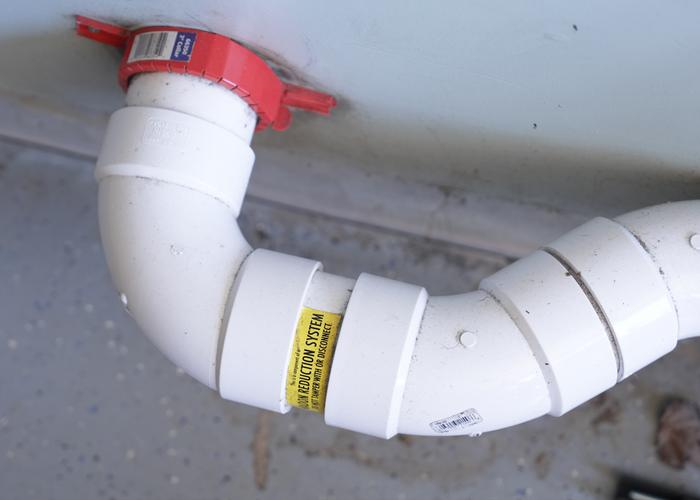
This includes installing outside the home a radon remediation system that sucks air from the basement, where radon gas typically lingers. Increasing air flow by opening windows and using fans/venting in your home, and sealing cracks in the floors, walls and foundation is also important.
Lung cancer rising in young non-smokers
The No. 1 risk factor for lung cancer is long-term cigarette smoking; however, rates of lung cancer among non-smokers continue to rise. The symptoms of the disease are the same regardless of whether the person has smoked: generally not feeling well or feeling tired all the time, frequent cough, chest pain, wheezing, shortness of breath or coughing up blood. These symptoms happen with other illnesses too, but Carbone notes anyone – regardless of age – who has a lingering symptom that doesn’t resolve despite initial treatment should insist on having it checked out.
Lung cancer screening is currently available only to people at the highest risk for the disease – that means people aged 50 to 80 who also have a 20 pack-year history (one pack of cigarettes per day for 20 years, are current smokers or someone who has quit within the past 15 years.
If detected in its earliest stages, the cure rate for lung cancer can be 90-95%. The bulk of cases, however, are not detected until the disease has spread throughout the lung or to other parts of the body, when treatments aren’t as effective. It is important that anyone deemed at risk for lung cancer get timely screening, and that people who might be at increased risk due to secondhand smoke, radon or occupational exposures (like firefighting) talk to their doctors about testing.
“Your health and the health of your family are the most important things you have. Really push to get your concerns addressed if your symptoms aren’t resolving, even if you don’t fit the typical ‘picture’ of lung cancer. It could truly save your life,” said Carbone.
Requiring radon testing in homes, schools and workplaces
Carbone noted that having high levels of radon exposure at school or work is just as much a health hazard as having high-level exposure in your basement.
He says he strongly supports potential legislation to require radon testing at schools, at places of business and during home sales to help reduce community risk. The effects of radon on your lungs is cumulative and can be delayed by decades.
“So your children playing in your basement or going to school today, exposed to unknown levels of radon, could be at risk for developing lung cancer 10, 20, 30 years from now,” Carbone said. “And because the gas is totally colorless and odorless, you would have no idea you were being exposed unless you knew the importance of proactively testing.”
Survey methodology and results
This survey was conducted by SSRS on its Opinion Panel Omnibus platform. The SSRS Opinion Panel Omnibus is a national, twice-per-month, probability-based survey. Data collection was conducted from February 2– February 4, 2024, among a sample of 1,006 respondents. The survey was conducted via web (n=976) and telephone (n=30) and administered in English. The margin of error for total respondents is +/- 3.5 percentage points at the 95% confidence level. All SSRS Opinion Panel Omnibus data are weighted to represent the target population of U.S. adults ages 18 or older.
More information
To learn more about estimated radon levels in your state, visit epa.gov. Free home testing kits are available in many states through the EPA, including Ohio. To learn more about cancer treatment and research at the OSUCCC – James, visit cancer.osu.edu/lungcancer.
###
Method of Research
Survey
Subject of Research
People
Cite Scienmag News
Nathaniel Bowman. (April 11, 2024). Colorless, odorless gas likely linked to alarming rise in non-smoking lung cancer. Scienmag. https://scienmag.com/colorless-odorless-gas-likely-linked-to-alarming-rise-in-non-smoking-lung-cancer/
Nathaniel Bowman. "Colorless, odorless gas likely linked to alarming rise in non-smoking lung cancer." Scienmag, 11 April 2024, https://scienmag.com/colorless-odorless-gas-likely-linked-to-alarming-rise-in-non-smoking-lung-cancer/. Accessed 3 September 2026.
Nathaniel Bowman. "Colorless, odorless gas likely linked to alarming rise in non-smoking lung cancer." Scienmag. April 11, 2024. https://scienmag.com/colorless-odorless-gas-likely-linked-to-alarming-rise-in-non-smoking-lung-cancer/

