


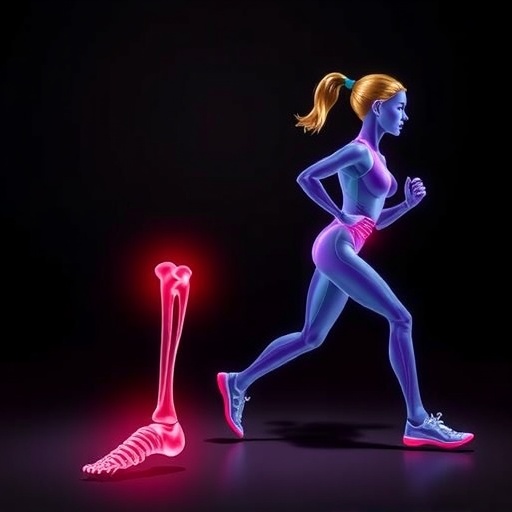
Collagen is a structural protein abundant in connective tissues, forming a major part of the organic matrix of bones. Because endurance training repeatedly loads the skeleton, runners face a cycle of bone breakdown and rebuilding that must be tightly supported by nutrition. When total energy intake falls short—whether intentionally or not—bone-forming cells may not receive the resources needed to restore damaged tissue efficiently.
A new pilot study led by Jennifer Fields, an assistant professor in nutritional sciences at the University of Connecticut (CAHNR), examines whether collagen peptides can help female distance runners maintain healthier bone turnover. The work was published in Frontiers in Nutrition on 13-May-2026 and targets a largely understudied group: premenopausal women who may be at heightened risk for maladaptive remodeling and stress-related injuries.
Endurance running activates osteoclast activity to remove micro-damaged bone. Ideally, osteoblasts then rebuild using collagen-rich materials. But hormonal regulation adds another layer: insufficient caloric intake can reduce estrogen and progesterone, shifting the balance toward greater bone breakdown and reduced bone formation. This is one reason fueling strategies are so critical for female athletes.
Fields and collaborators tested collagen peptides because 90–95% of the bone’s organic matrix is collagen. Unlike many “complete” dietary proteins, collagen peptides contain dipeptides and tripeptides with a repetitive amino-acid pattern that may engage osteoblast and osteoclast pathways. Notably, some of these small peptide fragments may be absorbed intact in the gut, potentially influencing bone-cell signaling more directly than intact proteins.
In randomized experimental work, participants receiving collagen peptides showed improved bone turnover signals based on blood biomarkers. Markers linked to bone formation increased, while inflammatory markers decreased in the supplement group, suggesting a shift toward a more favorable remodeling profile.
Because the study observed meaningful changes within four weeks, the findings raise the possibility that early nutritional modulation could counter acute markers of risk. Previous research has largely focused on postmenopausal populations, leaving female runners largely uncovered by evidence.
With women accumulating most of their bone mass by early adulthood, supporting bone health before menopause could influence lifelong skeletal outcomes. The study also aligns with collagen peptides’ broader appeal, as they are associated with additional benefits spanning hair, skin, joints, and gastrointestinal health.
While these results are preliminary, they provide viral, high-impact momentum: a simple dietary supplement strategy might help female endurance athletes better protect their skeleton—especially when training stress and energy availability do not perfectly match. More large-scale trials will be needed, but the biomarker trend is a promising start.
Cite Scienmag News
Daisy Hatcher. (July 27, 2026). Collagen Peptides Boost Bone Health in Female Runners, Study Finds. Scienmag. https://scienmag.com/collagen-peptides-boost-bone-health-in-female-runners-study-finds/
Daisy Hatcher. "Collagen Peptides Boost Bone Health in Female Runners, Study Finds." Scienmag, 27 July 2026, https://scienmag.com/collagen-peptides-boost-bone-health-in-female-runners-study-finds/. Accessed 4 September 2026.
Daisy Hatcher. "Collagen Peptides Boost Bone Health in Female Runners, Study Finds." Scienmag. July 27, 2026. https://scienmag.com/collagen-peptides-boost-bone-health-in-female-runners-study-finds/


