


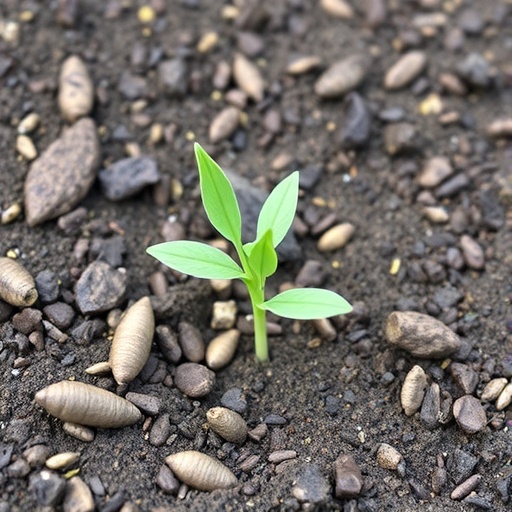
In the ever-evolving field of genomics and plant biology, scientists have turned their attention to hulless barley, a crop known for its adaptability to harsh environments. Recent research led by a team comprising Qi Ren, Jun Wang, and Liang Gong offers a pioneering look into the intricate biological and microbial mechanisms that enable cold-tolerant germination in hulless barley. Their study, titled “Integrated 16 S rRNA and transcriptome analysis reveal molecular and microbial mechanisms of cold-tolerant germination in hulless barley,” promises to shed light on how certain strains of this cereal can thrive, even when exposed to extreme cold temperatures.
Cold tolerance is a critical trait for cereal crops, particularly in the face of global climate change, which has introduced unpredictable weather patterns into farming systems. The research team’s innovative approach combined two powerful techniques: 16 S rRNA sequencing and transcriptome analysis. By utilizing these methods, the researchers were able to identify a rich tapestry of microbial communities and gene expressions associated with cold tolerance.
16 S rRNA sequencing, a widely used technique for studying microbial diversity, allowed the researchers to assess the bacterial communities present in the rhizosphere of hulless barley plants. This step was crucial for understanding how symbiotic relationships with soil microbes could influence plant resilience. Soil bacteria play an essential role in nutrient acquisition and stress management for plants, setting the stage for a deeper understanding of plant-microbe interactions.
To complement their microbiome study, the researchers conducted transcriptome analysis, which involves examining the complete set of RNA transcripts produced by a genome under specific conditions. This methodology provided insights into the gene expressions associated with cold tolerance during germination. The transcriptomic data revealed key players among the genes that are activated when hulless barley seeds encounter low temperatures. Their findings pointed to particular pathways involved in stress response and metabolic processes that enhance survival.
The research highlighted unique microbiomes associated with cold-tolerant hulless barley strains compared to their less resilient counterparts. The cold-tolerant strains hosted a distinct array of beneficial bacteria that could produce growth hormones and facilitate nutrient uptake even under chilled conditions. Such microbial partners can be essential in mitigating the adverse effects of cold weather on seed germination and seedling establishment.
Furthermore, the gene expression profiles identified significant upregulation of stress-responsive genes in cold-tolerant barley. These gene expressions were responsible for enhancing cellular resilience, promoting metabolic stability, and enabling survival during freezing temperatures. The intricate interplay between the plant’s genetic potential and its microbial allies forms a dynamic system where both parties contribute to improved growth performance under stress.
One particularly striking finding was the discovery of specific microbial taxa that seemed to have a direct correlation with enhanced cold tolerance. The researchers noted that certain bacteria could produce exopolysaccharides, substances that protect plant roots from frost damage while improving hydration and nutrient absorption. This relationship underscores nature’s complexity, revealing how both plant and microbial adaptation mechanisms are intertwined for survival.
Moreover, the study’s multifaceted approach provides implications for agricultural practices, especially in regions that routinely face cold spells. Understanding the microbial communities associated with hulless barley can inform cultivation practices that enhance plant resilience. Farmers may be able to utilize microbial inoculants or select particular strains for sowing, ultimately leading to more robust crops that can withstand freezing weather.
The implications of the findings extend beyond just hulless barley, signaling potential pathways for developing other cold-tolerant crops. The knowledge gleaned from the intersection of transcriptomic and microbiome data sets could inspire innovative breeding strategies, allowing for genetic improvements across a spectrum of crops to enable them to face climatic challenges more efficiently.
In addition, with climate change becoming an ever-pressing challenge, research such as this highlights the urgent need for sustainable agricultural practices. Fostering plant-microbe interactions that enhance resilience will be pivotal in ensuring food security for future generations. Innovative practices, including the use of microbial fertilizers, could revolutionize farming and lead to crops that not only survive but thrive in adverse conditions.
This research also emphasizes the broader ecological considerations that arise from understandings such as these. With the loss of biodiversity posing threats to ecosystem stability, fostering soil health through beneficial microbial populations can contribute to the resilience of agricultural systems. Thus, by marrying genomics with ecological considerations, researchers can pave the way for a holistic approach to agriculture.
In conclusion, the groundbreaking work of Ren, Wang, and Gong opens numerous avenues for exploration within the realms of plant biology and microbial ecology. Their investigation into the cold-tolerant mechanisms of hulless barley marks a significant contribution to the scientific understanding of plant adaptations. As research continues to unravel the complex relationships between plants and their microbial companions, the potential for sustainable agricultural practices grows ever more tangible.
The findings from this study invite further inquiry into the genetic and microbial interplay that underpins plant resilience. Such research is not merely academic; it has the potential to revolutionize how we think about crop production in a rapidly changing world. By focusing on the symbiotic relationships that facilitate cold tolerance, the study hints at a future where crops are engineered for resilience, ensuring food security despite climatic uncertainties.
As we look toward that future, studies like these remind us of the intricacies of life that exist beneath the surface. It celebrates the invisible forces that empower plants to fight against the odds, promoting a deeper appreciation for the interconnected web of life that sustains us all.
Through continuous exploration and application of these scientific findings, we are one step closer to understanding how to enhance cold tolerance in crops globally. This not only benefits agriculture but also the ecosystems and communities that rely on these vital crops.
The researchers’ work stands as a testament to the importance of interdisciplinary approaches in addressing the major challenges posed by climate change, integrating microbial ecology with plant genetics. The enduring question remains: how can we further harness the power of microbes and genetics to build a more resilient agricultural landscape? This study affirms that the answers partially lie within the rich diversity of life that surrounds us.
In the end, the journey of unlocking cold tolerance in hulless barley and other crops is only just beginning, with immense possibilities awaiting the curiosity and creativity of future researchers.
Ren, P., Wang, J. & Gong, L. Integrated 16 S rRNA and transcriptome analysis reveal molecular and microbial mechanisms of cold-tolerant germination in hulless barley.
BMC Genomics 26, 906 (2025). https://doi.org/10.1186/s12864-025-12124-5
Cite Scienmag News
Alan Morgan. (October 10, 2025). Cold-Tolerant Germination in Hulless Barley Uncovered! Scienmag. https://scienmag.com/cold-tolerant-germination-in-hulless-barley-uncovered/
Alan Morgan. "Cold-Tolerant Germination in Hulless Barley Uncovered!" Scienmag, 10 October 2025, https://scienmag.com/cold-tolerant-germination-in-hulless-barley-uncovered/. Accessed 5 September 2026.
Alan Morgan. "Cold-Tolerant Germination in Hulless Barley Uncovered!" Scienmag. October 10, 2025. https://scienmag.com/cold-tolerant-germination-in-hulless-barley-uncovered/


